How to Teach Kids Gratitude in Islam (A 7-Day Lesson)
The short answer: gratitude grows when children learn to notice what they already have and say “Alhamdulillah” for it, out loud, at specific moments of the day. One verse promises more to the grateful, one story walks through a whole grateful day, and a week of small habits makes it automatic.
This is Lesson 11, the final lesson of My Akhlaq Journey, Level 1. It connects nicely with Lesson 4 on thanking people: there we thank the people around us, here we thank Allah.
The verse: if you are grateful, I will give you more
وَإِذْ تَأَذَّنَ رَبُّكُمْ لَئِن شَكَرْتُمْ لَأَزِيدَنَّكُمْ
“And remember when your Lord proclaimed: if you are grateful, I will surely give you more.” (Qur’an 14:7)
Children understand this verse immediately: be thankful and Allah gives more. It also quietly answers the “I want more” phase every child goes through. The way to more isn’t complaining, it’s noticing what you already have.
For older children, the Prophet ﷺ described how wonderful the affair of the believer is: when something good happens, he is grateful, and that is good for him (Sahih Muslim). Gratitude is something that only benefits the one who has it.
Five gratitude habits
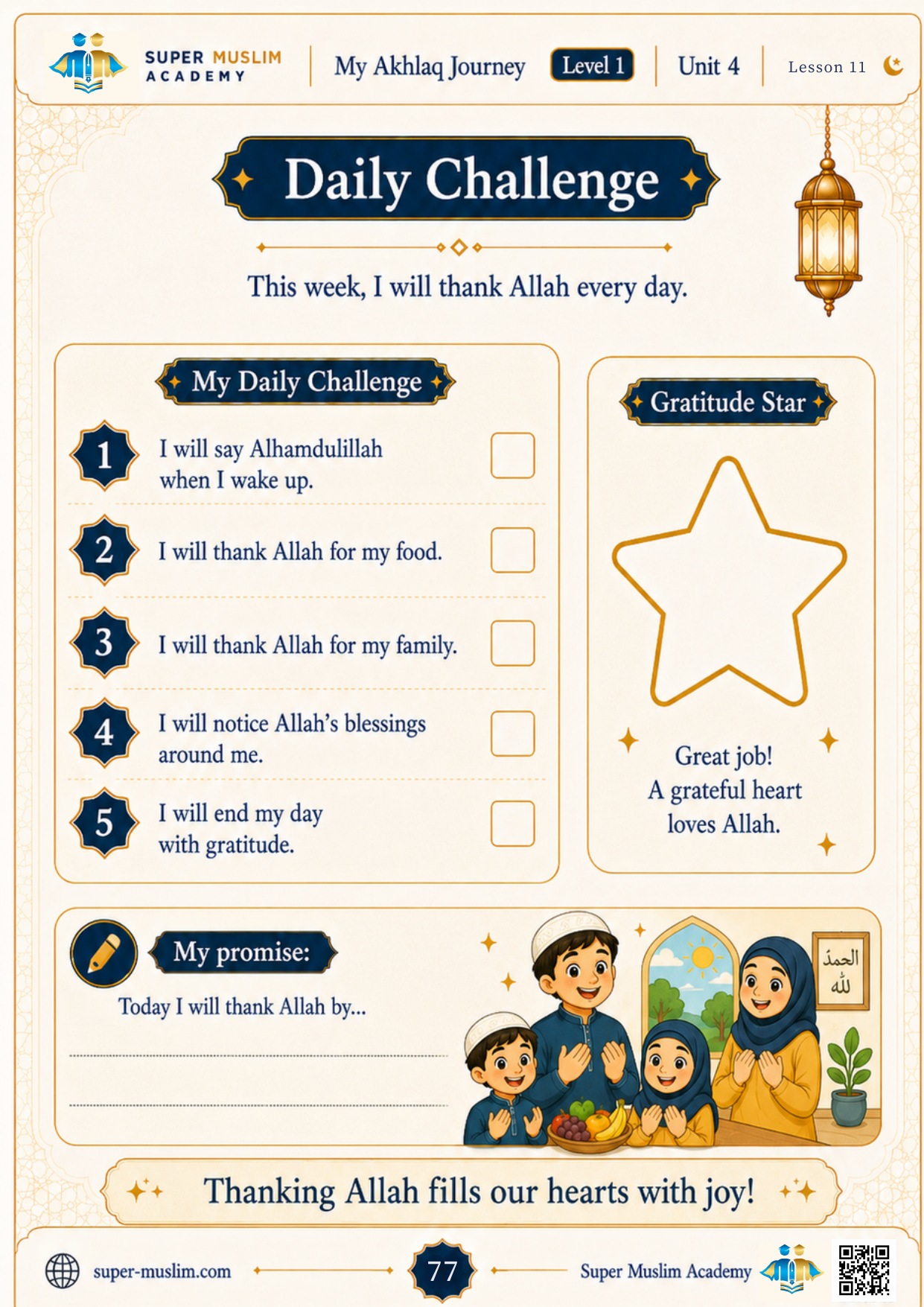
- Say Alhamdulillah when I wake up.
- Thank Allah for my food.
- Thank Allah for my family.
- Notice Allah’s blessings around me.
- End my day with gratitude.
Step 1: Warm-up questions
- What blessings has Allah given you?
- When do you say Alhamdulillah?
- How can you thank Allah every day?
Let them list as many blessings as they can in one minute. Most kids start with toys and end with “Mama”, “my eyes”, “water”. That shift is the lesson.
Step 2: Read the story of Amina’s grateful day
Amina wakes up early, sees the bright sun and says, “Alhamdulillah for a new day.” At breakfast her mother gives her warm bread and milk, and she says, “Alhamdulillah for food.” At school she learns new things and plays with her friends: “Alhamdulillah for my teacher and my friends.” When she comes home, she hugs her family and thanks Allah for His many blessings. Amina learns that a grateful heart remembers Allah in happy moments every day.
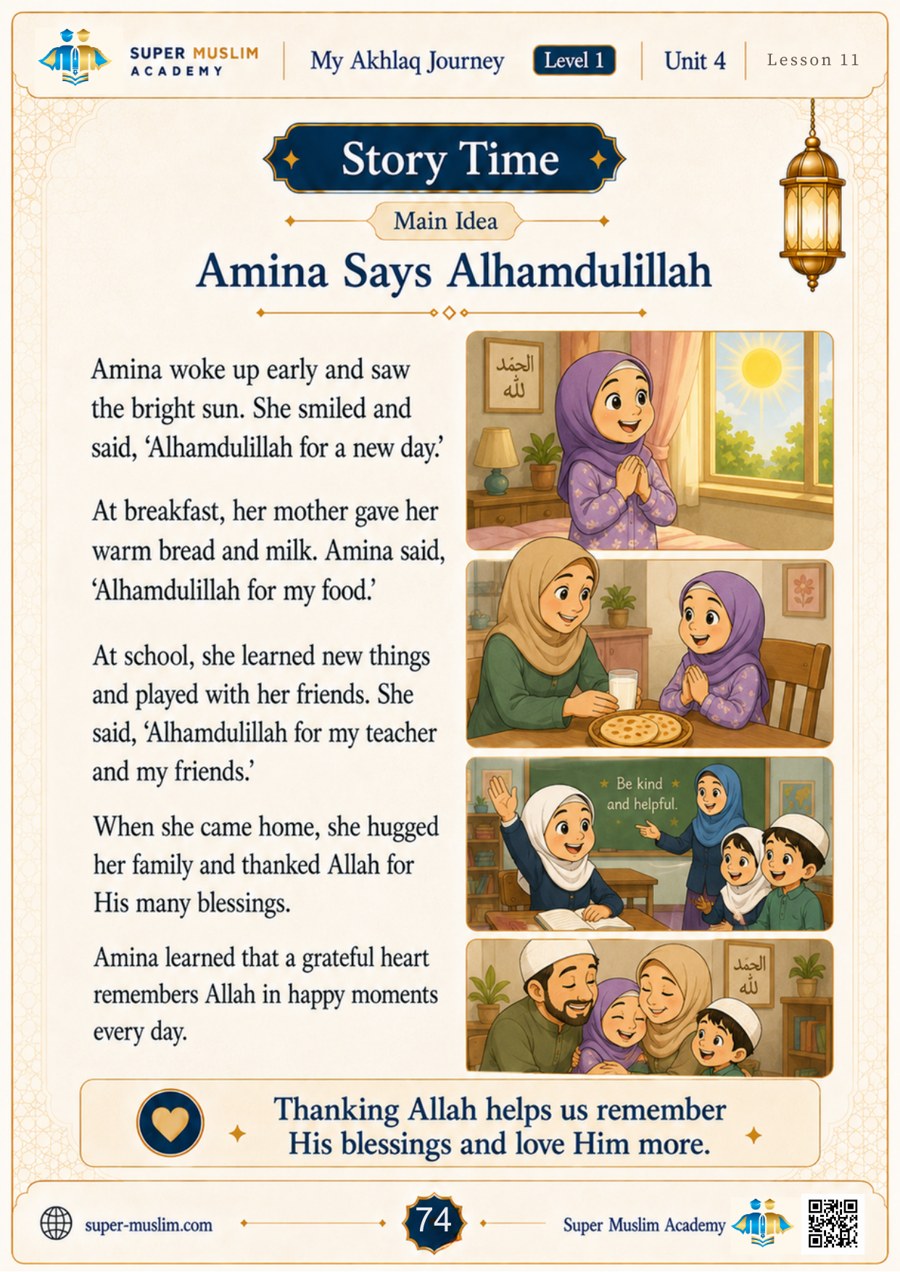
The story is built around ordinary moments, and that’s the point. Gratitude isn’t saved for big gifts. Walk through your child’s own day the same way: wake up, breakfast, school, home. Where could they say Alhamdulillah?
Step 3: Find the thankful actions
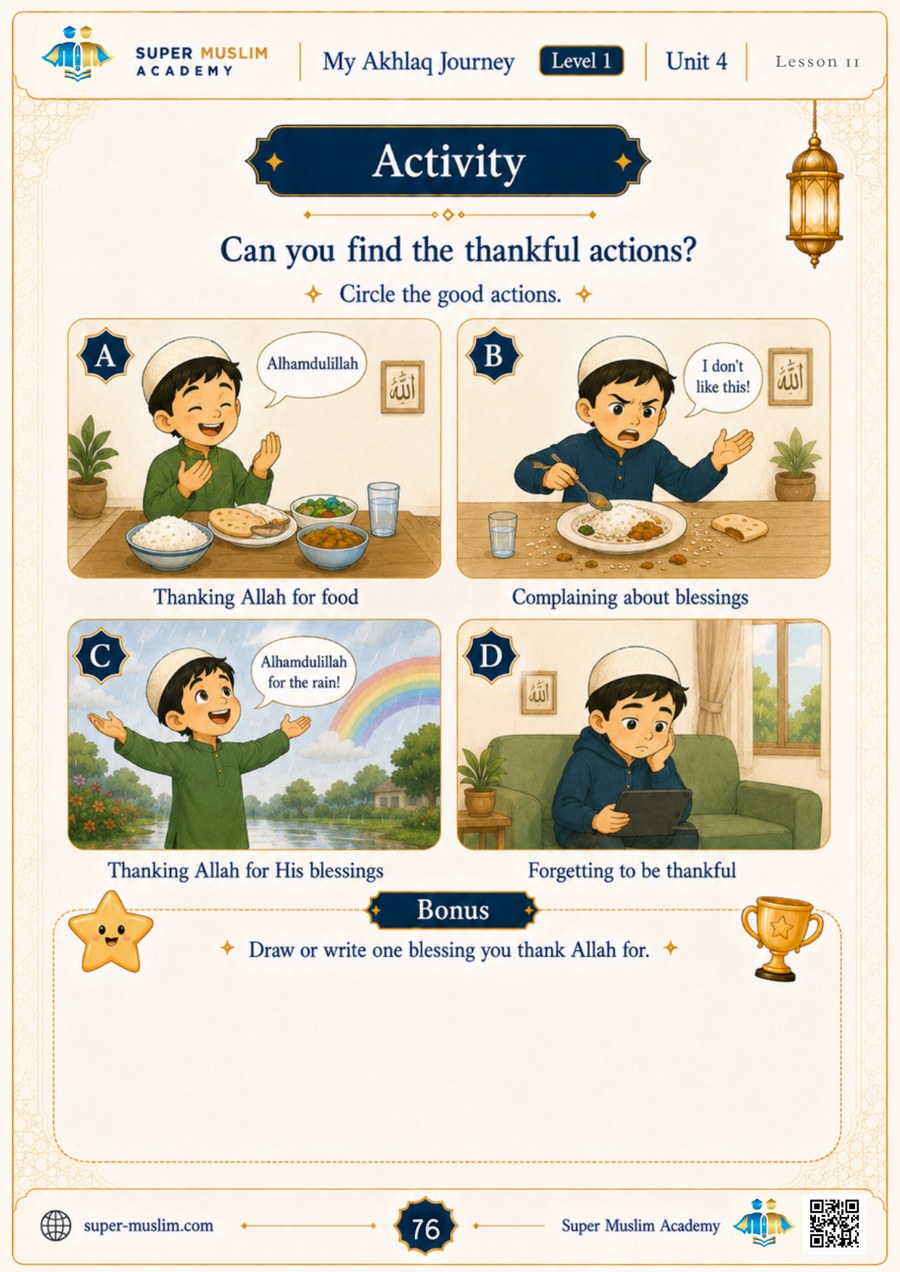
The activity shows thanking Allah for food, complaining about blessings, thanking Allah for His blessings and forgetting to be thankful. Your child circles the grateful moments and draws one blessing they’re thankful for.
Step 4: The 7-day gratitude challenge (free printable)
Five habits, a box per day, and a “Gratitude Star” at the end of the week.
Small routines that build a grateful child
Three blessings at bedtime. Each person names three things from today they’re thankful for. It takes two minutes and changes how kids end their day.
Say it out loud yourself. “Alhamdulillah, we found parking” or “Alhamdulillah, the rain stopped” shows them that gratitude is for small things too.
Notice, don’t compare. Gratitude fades fastest when we compare with what others have. Keep the focus on what’s in front of you.
Finished Level 1? Here’s what’s next
Thanking Allah closes My Akhlaq Journey, Level 1. If your child has worked through the lessons, the earlier ones are worth revisiting as a family: respecting parents, helping at home, kindness to siblings, please and thank you, speaking kindly, sharing, telling the truth, trustworthiness, keeping promises and smiling.
In our one-on-one Zoom classes, a teacher takes your child through every lesson in the series and follows up on each weekly challenge.
Looking for an online Islamic school for kids? Our one-on-one Zoom classes teach akhlaq alongside the Quran, with online Quran classes for kids led by Al-Azhar trained teachers.
Frequently asked questions
What does the Qur’an say about gratitude?
“If you are grateful, I will surely give you more” (Qur’an 14:7). Gratitude to Allah brings more blessings, and the Prophet ﷺ taught that being grateful in good times is always good for the believer (Muslim).
How do I raise a grateful child in a world that always wants more?
Build small daily routines: Alhamdulillah when they wake up and after meals, three blessings at bedtime, and you saying it out loud for small things. Avoid comparing with what others have.
Is the checklist free to print?
Yes. Open it above at full size and print it.

You may also like
Teaching Kids That Smiling Is Sunnah: A 7-Day Lesson
How to Teach Kids to Keep Promises in Islam (A 7-Day Lesson)