How to Teach Kids to Help at Home in Islam (A 7-Day Lesson)
The short answer: children help at home willingly when helping is tied to something bigger than “because I said so”. Islam gives you that reason in one short hadith. Pair it with a story they can picture and one small job a day for a week, and helping starts to feel like their idea.
This is Lesson 2 of our My Akhlaq Journey curriculum. It sits between respecting parents and kindness to siblings, and like the rest of the series you can run it at home in seven days.
The hadith that turns chores into good deeds
خَيْرُكُمْ خَيْرُكُمْ لِأَهْلِهِ
“The best of you are those who are best to their families.” (Sunan al-Tirmidhi)
Kids light up at the idea of being “the best” at something. This hadith tells them where to look: not on a sports field, but at home. Folding a towel, setting a plate, putting toys away. Small chores, real reward.
It’s also worth telling them that the Prophet ﷺ himself helped at home. Aisha (may Allah be pleased with her) was asked what he did in his house, and she said he used to serve his family (Sahih al-Bukhari). A child who hears that the Prophet ﷺ helped at home rarely argues that chores are beneath them.
Five ways a young child can help
- Make your bed. Messy is fine. Done is the point.
- Put your toys away before moving on to the next thing.
- Help set the table for one meal a day.
- Keep your room tidy, or at least the floor.
- Ask “Can I help?” This one is the real goal, because it means they’re noticing.
Step 1: Warm-up questions
Ask your child what jobs they already do at home and what they think would make the family happiest. You might hear “nothing” to the first one. That’s fine. It makes the week’s challenge feel like a fresh start rather than a correction.
Step 2: Read the story of Mariam
Mariam notices the living room is messy. She picks up the toys and puts them in the basket, then helps her mother fold the clothes. Before dinner she places the plates on the table. Her mother smiles and says, “Masha’Allah, Mariam!” and Mariam feels proud, because helping at home is a kind deed.
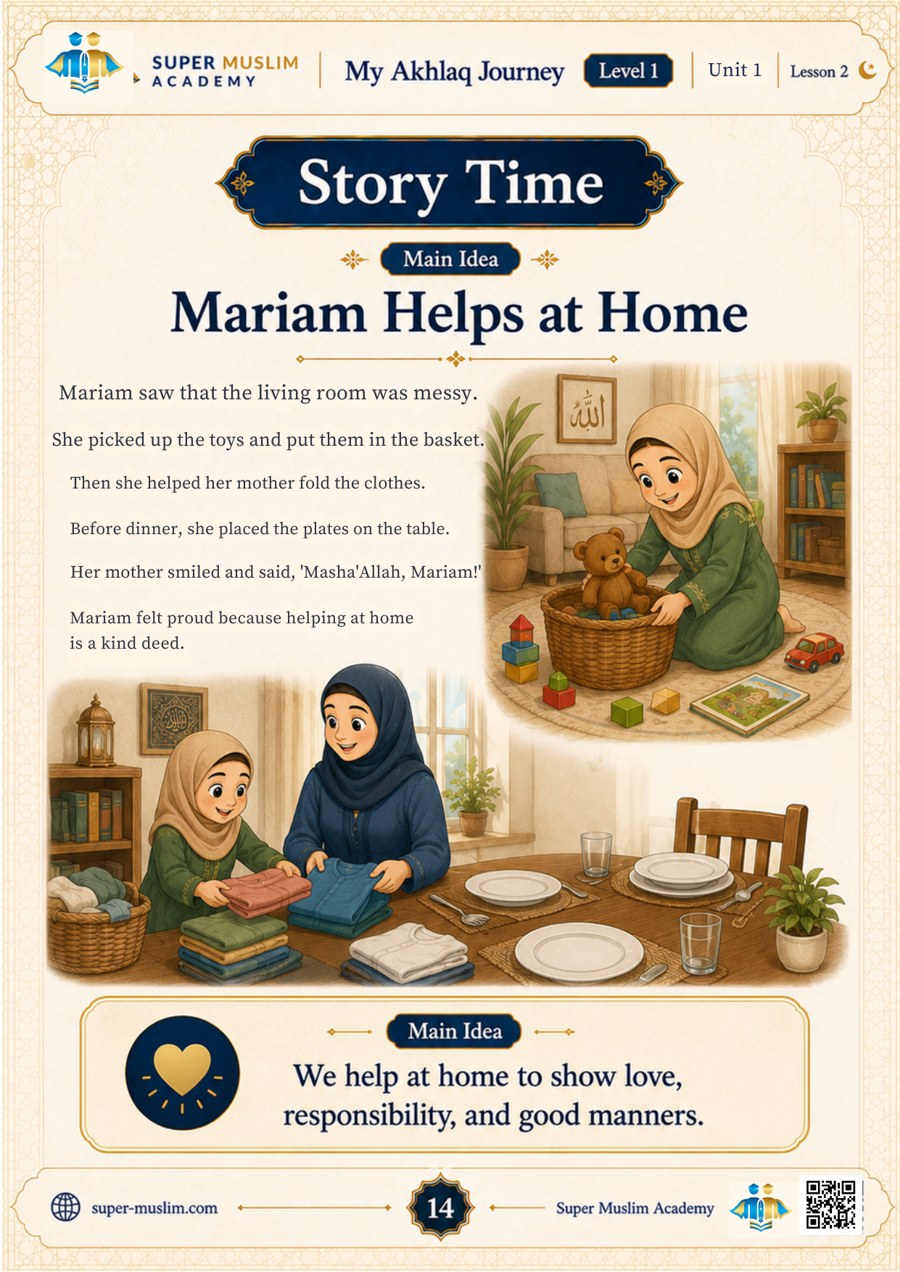
Point out the first word of the story: Mariam saw. Nobody asked her. She noticed. That’s the difference between doing chores and actually helping, and it’s the skill this lesson is really after.
Step 3: Find the helpful actions
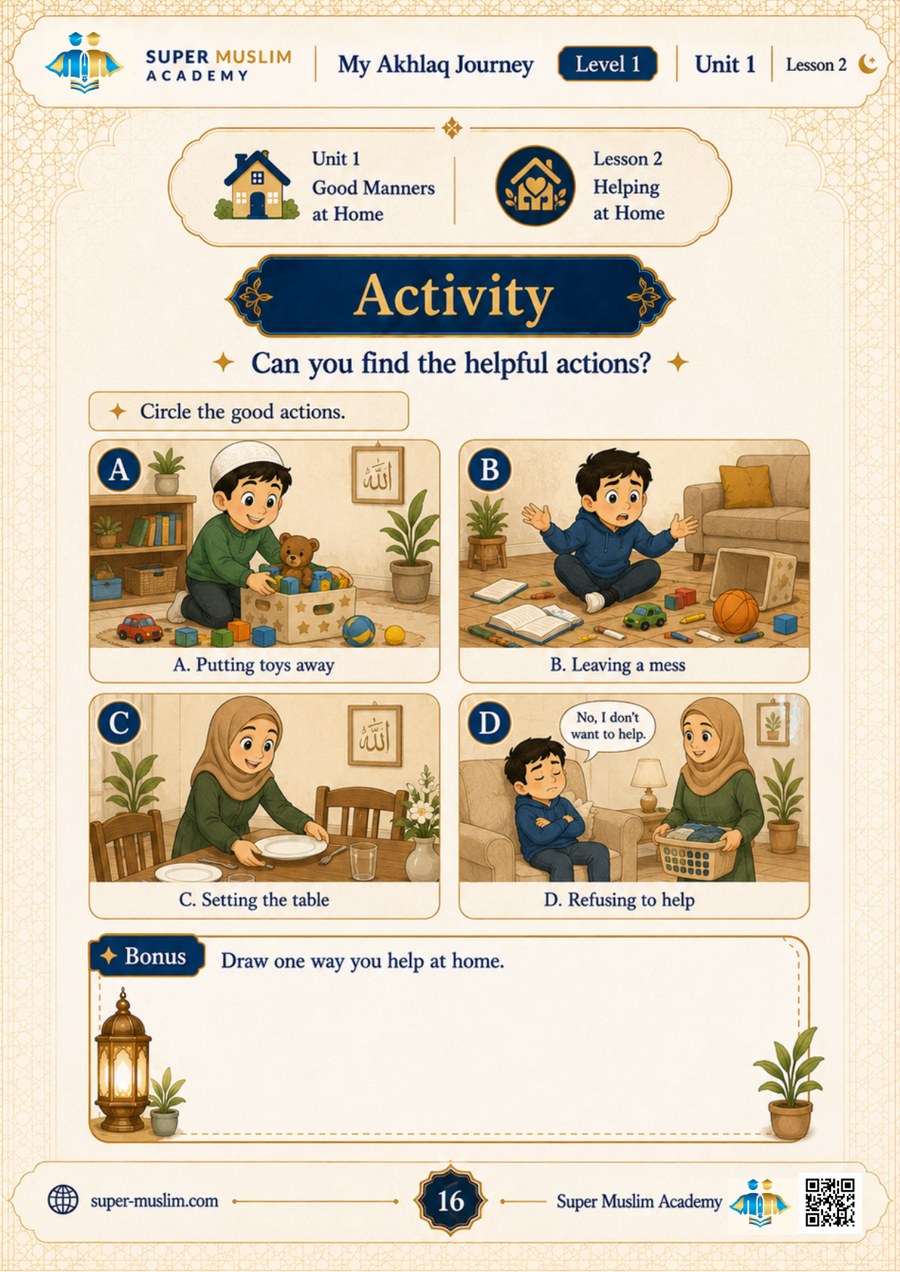
Four pictures: putting toys away, leaving a mess, setting the table and refusing to help. Your child circles the helpful ones and talks about what the other two children could do instead. The bonus box asks them to draw one way they help at home.
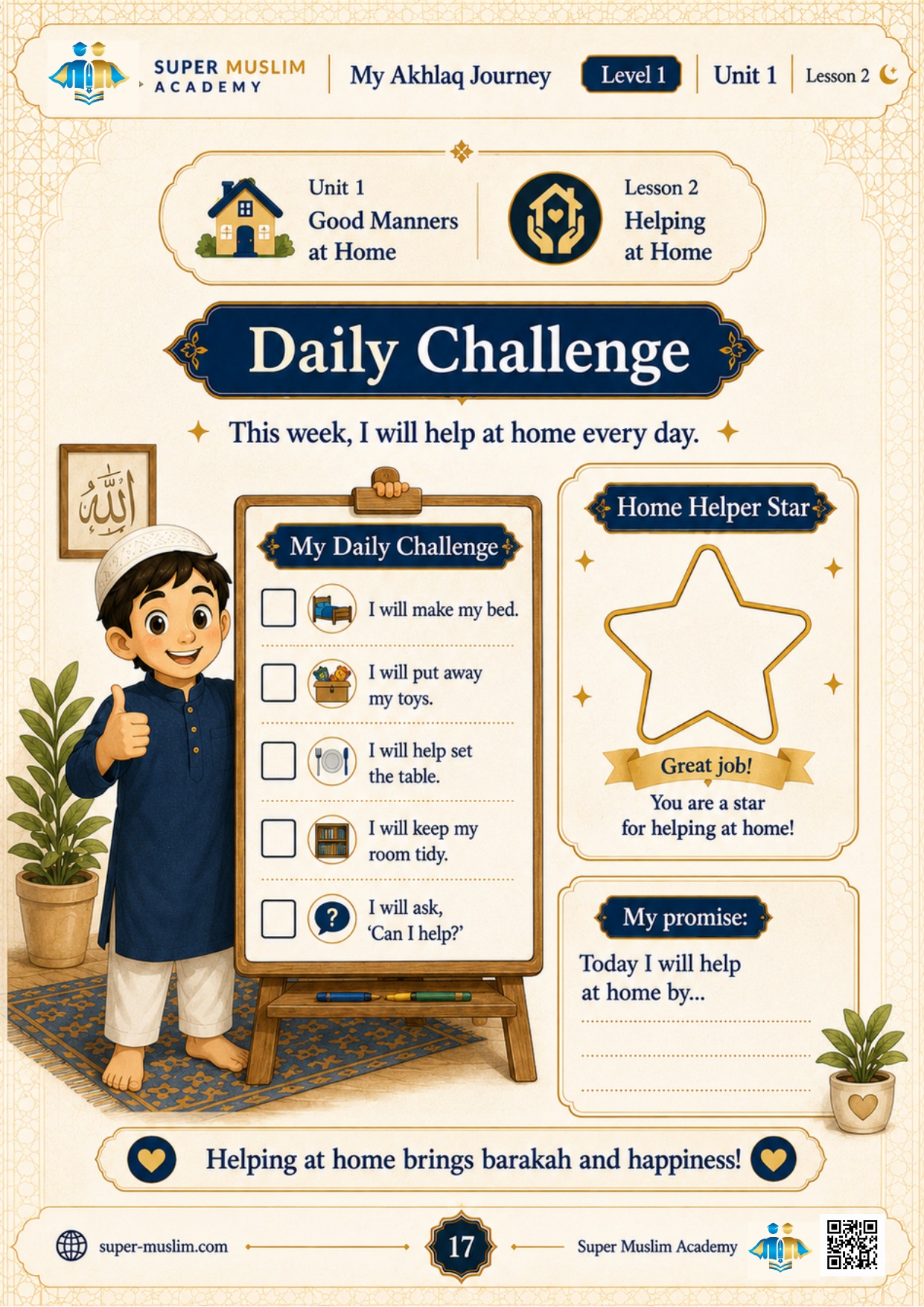
Step 4: The 7-day helping at home challenge (free printable)
Each day your child ticks a box for every job they do. At the end of the week they earn the “Home Helper Star”, and the promise line reads: “Today I will help at home by…”
Making it last past the first week
Accept imperfect help. If you remake the bed after them, they learn their help doesn’t count. Let the wonky bed stand.
Give real jobs, not fake ones. Kids can tell when a task is invented to keep them busy. Setting the actual dinner table matters more to them than sorting a box nobody needs sorted.
Connect it back to the hadith. A quiet “you’re one of the best to your family today” at bedtime means more than a sticker.
Learn the whole series with a teacher
Helping at Home is one of eleven lessons in My Akhlaq Journey, Level 1. In our one-on-one Zoom classes, a teacher goes through the story and hadith with your child and follows up on the weekly challenge. The next lesson in the series covers saying please and thank you.
Looking for an online Islamic school for kids? Our one-on-one Zoom classes teach akhlaq alongside the Quran, with online Quran classes for kids led by Al-Azhar trained teachers.
Frequently asked questions
What does Islam say about helping at home?
The Prophet ﷺ said, “The best of you are those who are best to their families” (Sunan al-Tirmidhi), and Aisha reported that he used to serve his family at home (Sahih al-Bukhari).
What chores can a 5 year old do?
Making their bed, putting toys away, helping set the table and keeping their room floor clear are all realistic for most five year olds.
How do I get my child to help without nagging?
Give them a reason they care about, like the hadith above, a story to picture, and a short daily checklist they fill in themselves for a week. Praise the times they help without being asked.
Is the checklist free to print?
Yes. Open it above at full size and print it.

You may also like
How to Teach Kids Please and Thank You in Islam (A 7-Day Lesson)
How to Teach Kids Kindness to Siblings in Islam (A 7-Day Lesson)