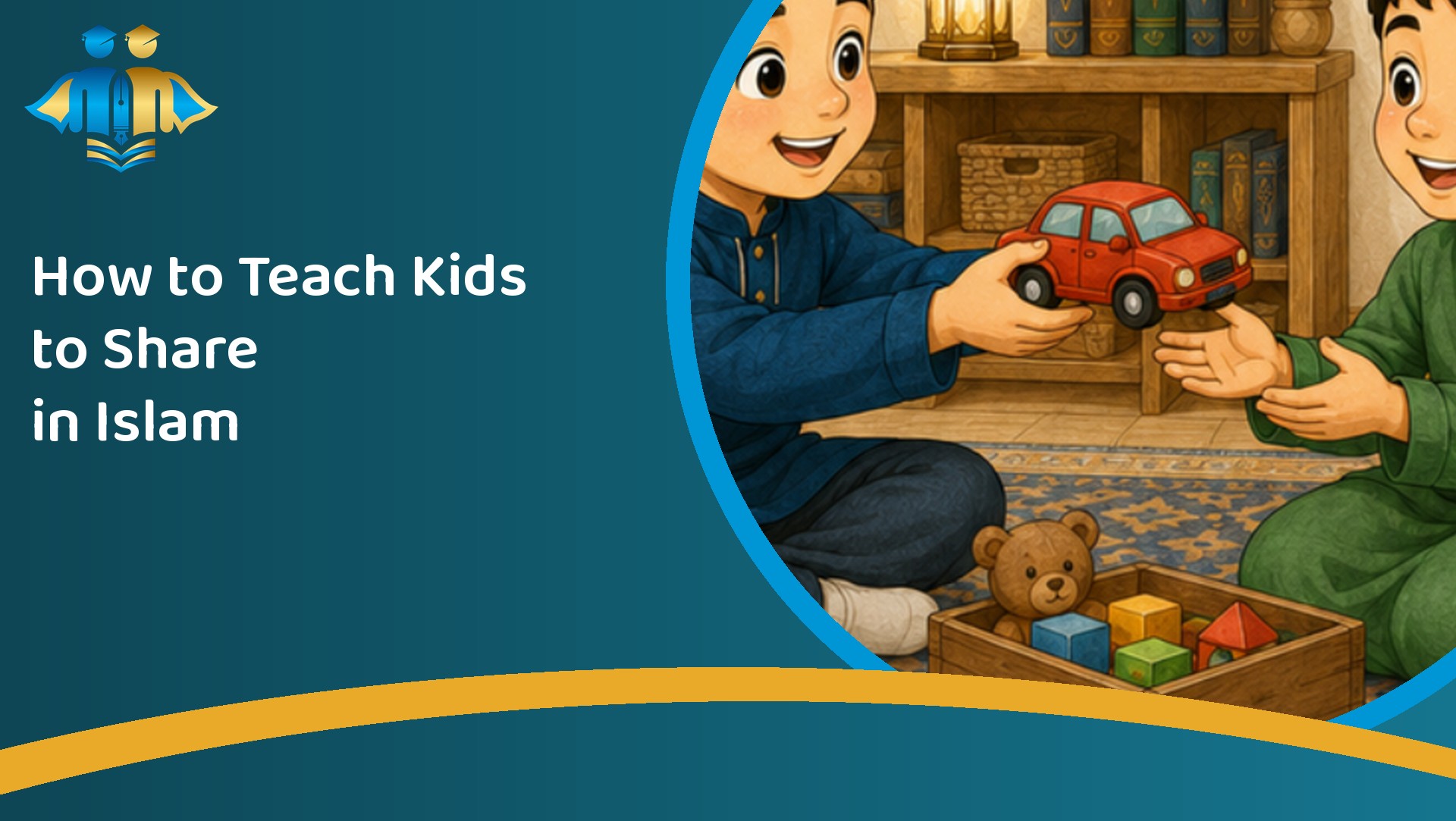
How to Teach Kids to Share in Islam (A 7-Day Lesson)
The short answer: forcing a child to hand over a toy teaches them that sharing means losing. What works better is giving them a reason to want it for the other person, one story where sharing makes things better, and a week of small, fair habits like taking turns. Islam gives the reason in one of the most famous hadiths there is.
This is Lesson 6 of our My Akhlaq Journey curriculum. It follows Lesson 5 on speaking kindly and closes Unit 2, “Good Manners with Others”.
The hadith: love for your brother what you love for yourself
لَا يُؤْمِنُ أَحَدُكُمْ حَتَّى يُحِبَّ لِأَخِيهِ مَا يُحِبُّ لِنَفْسِهِ
“None of you truly believes until he loves for his brother what he loves for himself.” (Sahih al-Bukhari and Sahih Muslim)
For a child, this turns sharing into a question they can answer: “Would you like it if your friend let you use their colours? Then you’d want that for them too.” It doesn’t ask them to give everything away. It asks them to notice what the other person needs.
Five sharing habits
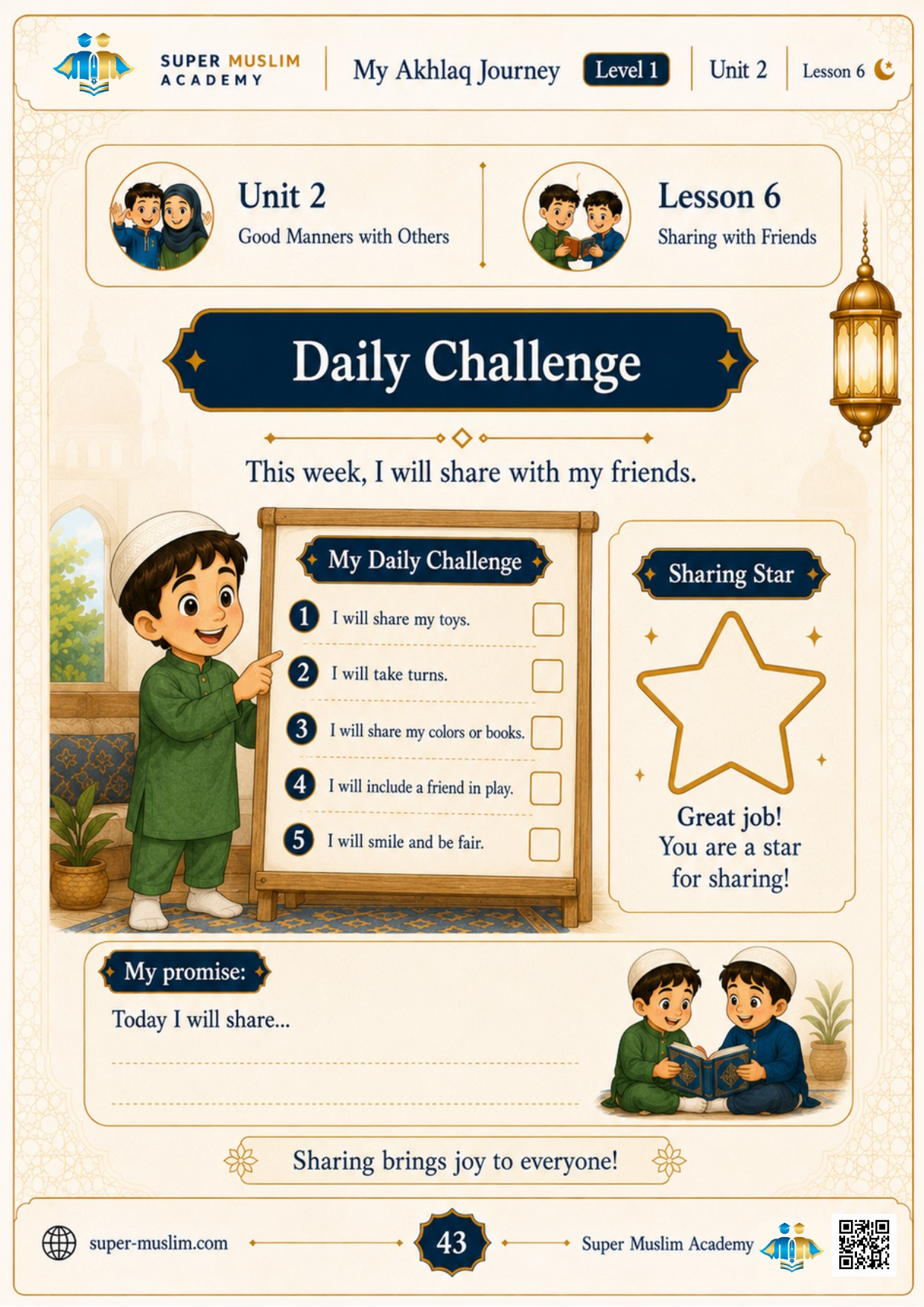
- Share my toys.
- Take turns. Often easier than sharing, and just as kind.
- Share my colours or books when a friend forgets theirs.
- Include a friend in play, especially one who’s standing on the side.
- Smile and be fair.
Step 1: Warm-up questions
- What can you share with a friend?
- How do you feel when a friend shares with you?
- Why is taking turns important?
Spend the most time on question two. Kids remember the warm feeling of being shared with far better than the abstract idea of being generous.
Step 2: Read the story of Omar’s coloured pencils
Omar is drawing at school with his coloured pencils. His friend Sami has forgotten his colours and looks sad. Omar smiles and says, “You can use mine.” They take turns and colour together. Sami says, “Thank you, Omar!” and both boys feel happy, because sharing made their friendship stronger.
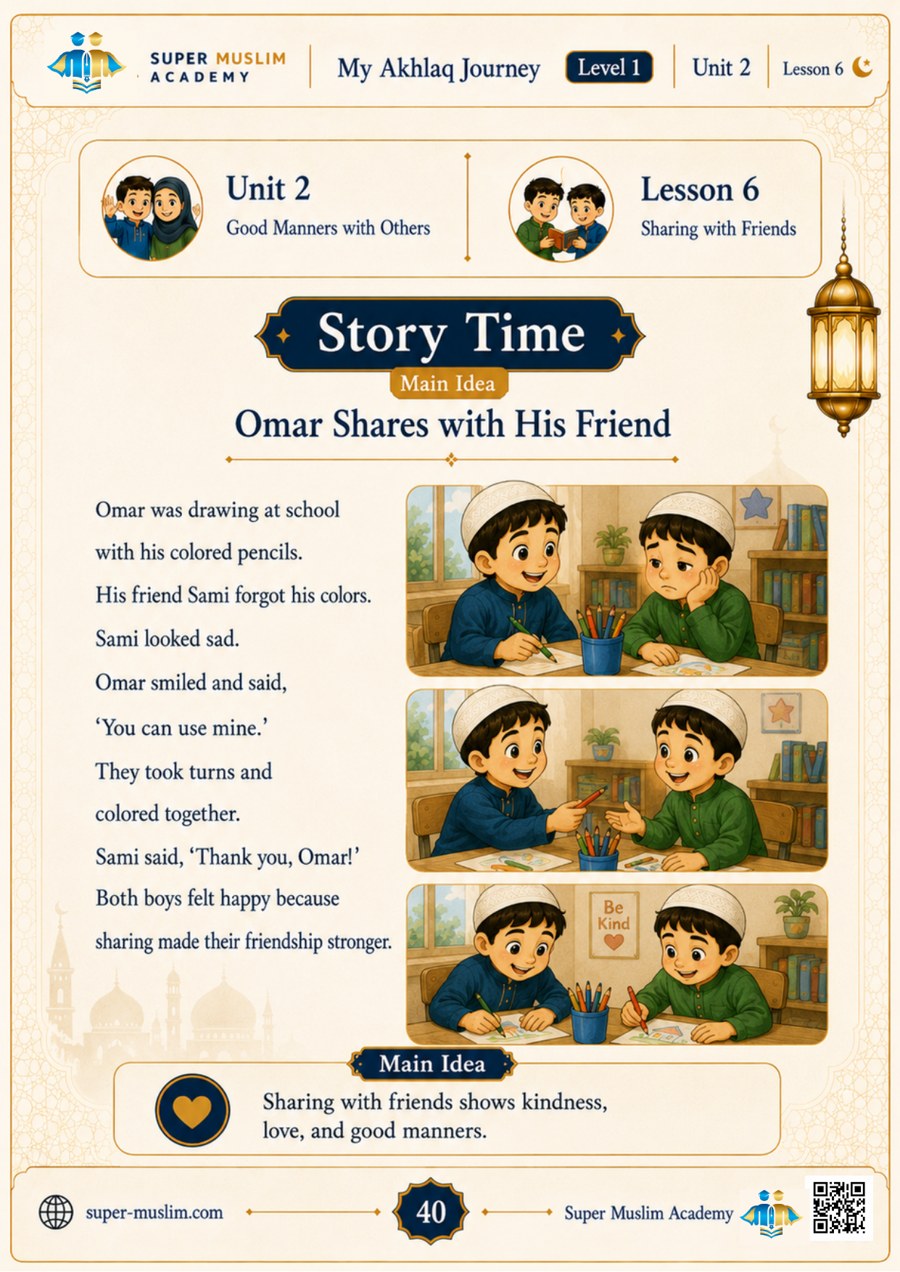
Notice that Omar doesn’t give the pencils away. They take turns. That’s an important detail for young kids, who often refuse to share because they think it means losing the thing for good.
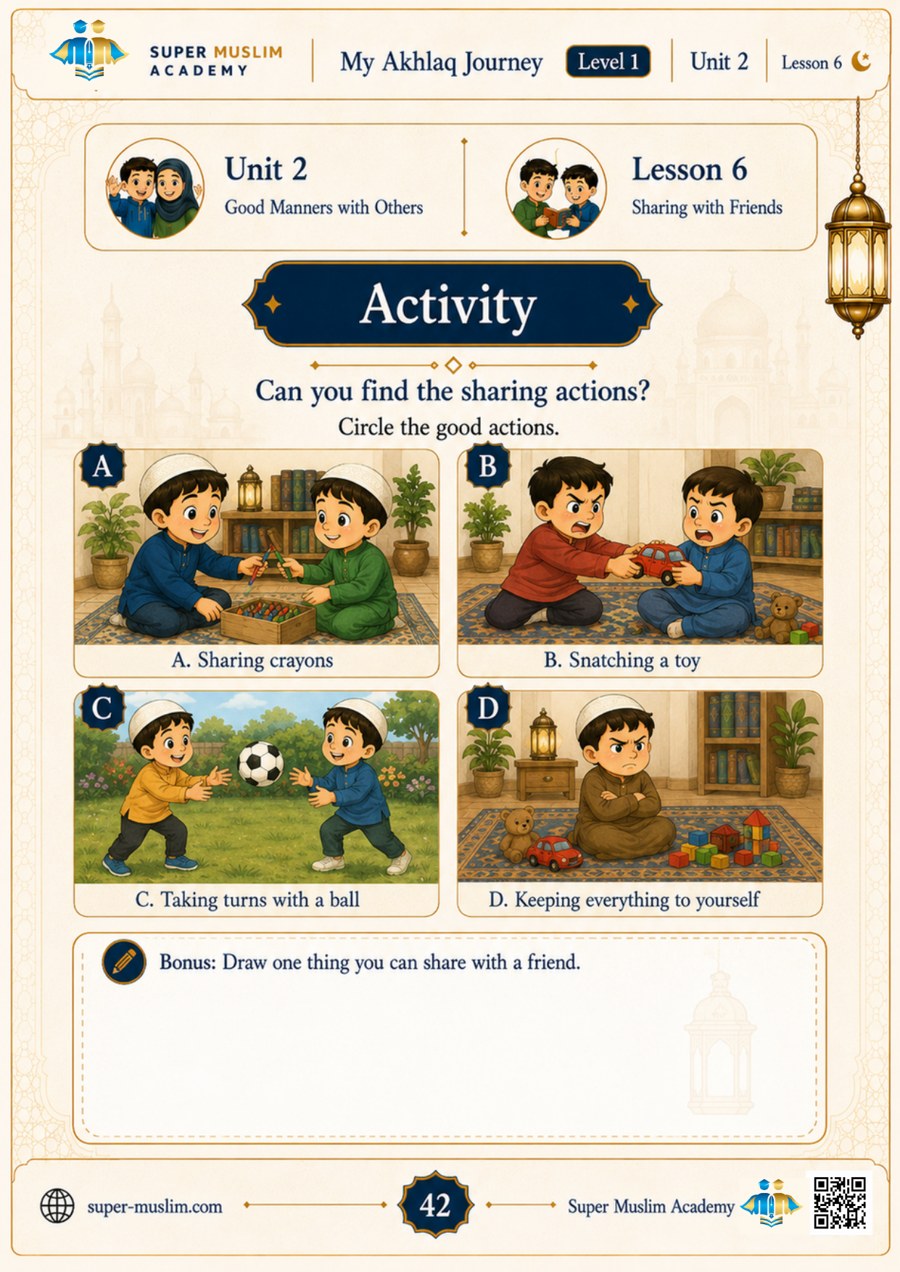
Step 3: Find the sharing actions
The activity shows sharing crayons, snatching a toy, taking turns with a ball and keeping everything to yourself. Your child circles the good actions, then draws one thing they can share with a friend this week.
Step 4: The 7-day sharing challenge (free printable)
Five boxes, seven days, and a “Sharing Star” at the end. The promise line reads: “Today I will share…”
A few things that make sharing easier
Let them keep one special thing. Before a playdate, let your child put away the one toy they really don’t want to share. Everything else is fair game. Most kids share far more willingly once their favourite is safe.
Use a timer for turns. “Two minutes each” removes the argument about who’s had it longer.
Point out the feeling afterwards. “Did you see Sami’s face when you gave him the pencils?” That’s the moment the hadith becomes real.
Learn the whole series with a teacher
Sharing with Friends is one of eleven lessons in My Akhlaq Journey, Level 1. Our teachers go through the story and hadith one on one over Zoom and follow up on the weekly challenge. The next lesson moves on to telling the truth.
Earlier in the series: respecting parents, kindness to siblings and please and thank you.
Looking for an online Islamic school for kids? Our one-on-one Zoom classes teach akhlaq alongside the Quran, with online Quran classes for kids led by Al-Azhar trained teachers.
Frequently asked questions
What does Islam say about sharing?
The Prophet ﷺ said, “None of you truly believes until he loves for his brother what he loves for himself” (Bukhari and Muslim). Sharing is one of the simplest ways children can live this out.
Should I force my child to share?
Forcing often backfires. It works better to teach taking turns, let them keep one special item aside, and praise them when they share by choice.
Is the checklist free to print?
Yes. Open it above at full size and print it.

You may also like
How to Teach Kids to Speak Kindly in Islam (A 7-Day Lesson)
How to Teach Kids to Help at Home in Islam (A 7-Day Lesson)