How to Teach Kids to Speak Kindly in Islam (A 7-Day Lesson)
The short answer: children learn to speak kindly when they have a simple rule they can use in the heat of the moment. Islam gives them one in a single sentence: say something good, or stay quiet. Practise it through a story and a week of small habits, and it starts showing up exactly when it’s needed, when they’re upset.
This is Lesson 5 of our My Akhlaq Journey curriculum, part of Unit 2, “Good Manners with Others”. It builds on Lesson 4 on please and thank you, and moves from polite words to kind ones.
The hadith: speak good or stay silent
مَنْ كَانَ يُؤْمِنُ بِاللَّهِ وَالْيَوْمِ الْآخِرِ فَلْيَقُلْ خَيْرًا أَوْ لِيَصْمُتْ
“Whoever believes in Allah and the Last Day should speak good or stay silent.” (Sahih al-Bukhari and Sahih Muslim)
What makes this hadith so useful for kids is the second option. Children often can’t think of something nice to say when they’re angry. Nobody can. But they can stay quiet for a few seconds, and that alone stops most hurtful words before they come out.
Some families turn it into a hand signal: a finger on the lips means “good words or no words”. It’s quicker than a lecture and the child doesn’t feel told off in front of others.
Five kind-word habits
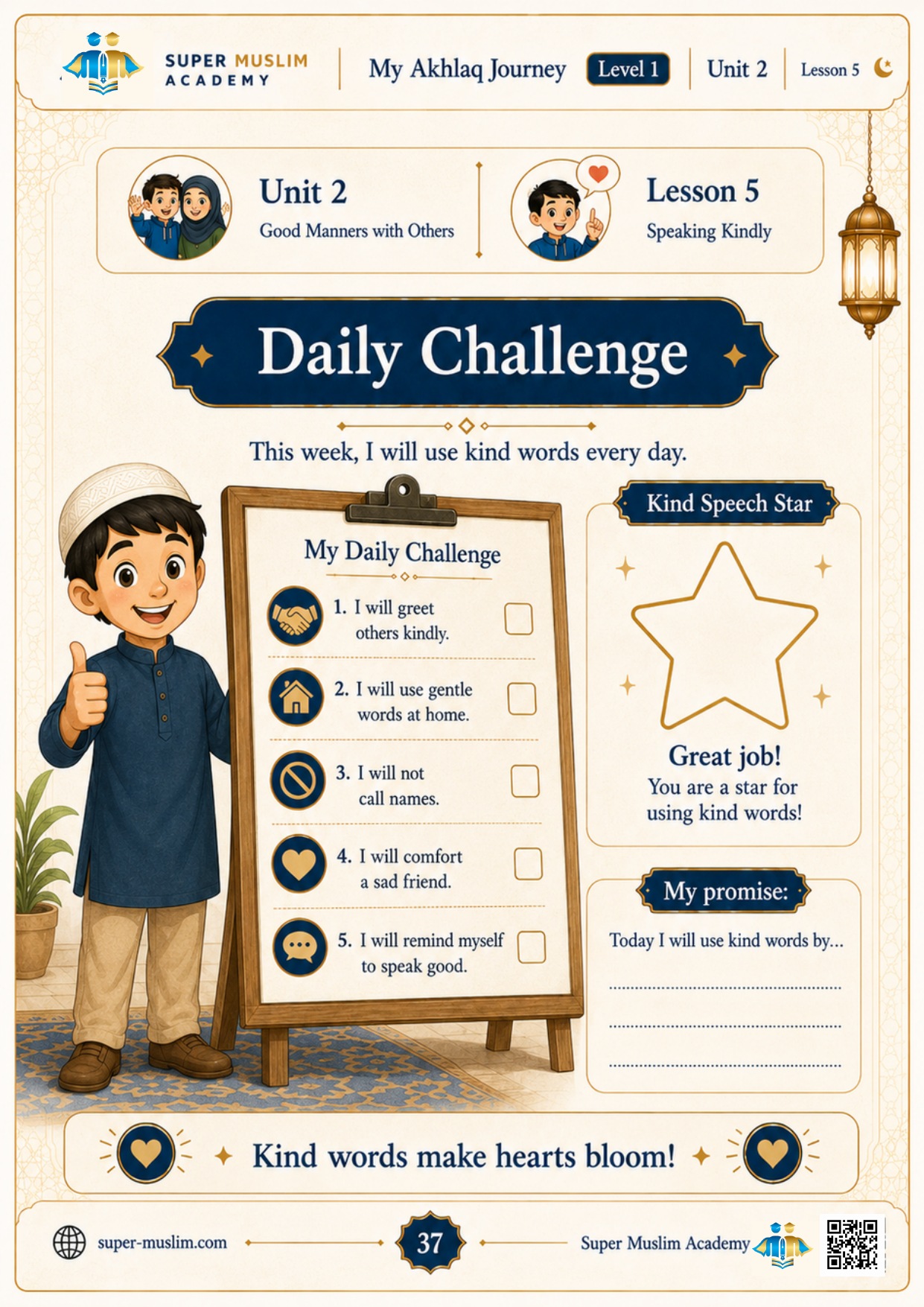
- Greet others kindly. A salam and a smile.
- Use gentle words at home, where we tend to be the least careful.
- Don’t call names, even as a joke.
- Comfort a sad friend with a few kind words.
- Remind yourself to speak good, or stay silent.
Step 1: Warm-up questions
- What kind words can you say to a friend?
- How can kind words help someone who feels sad?
- What words should we avoid saying?
Question three tends to get honest answers. Let your child list the words they know are hurtful without telling them off. Naming them out loud, calmly, takes away some of their power.
Step 2: Read the story of Omar and the blocks
Omar is playing with his friend Sami when Sami makes a mistake and knocks the blocks down. Omar feels upset, but he takes a deep breath. He says, “It’s okay. We can build it again.” Sami smiles and feels better, and their teacher says, “Kind words make hearts calm and strong.”
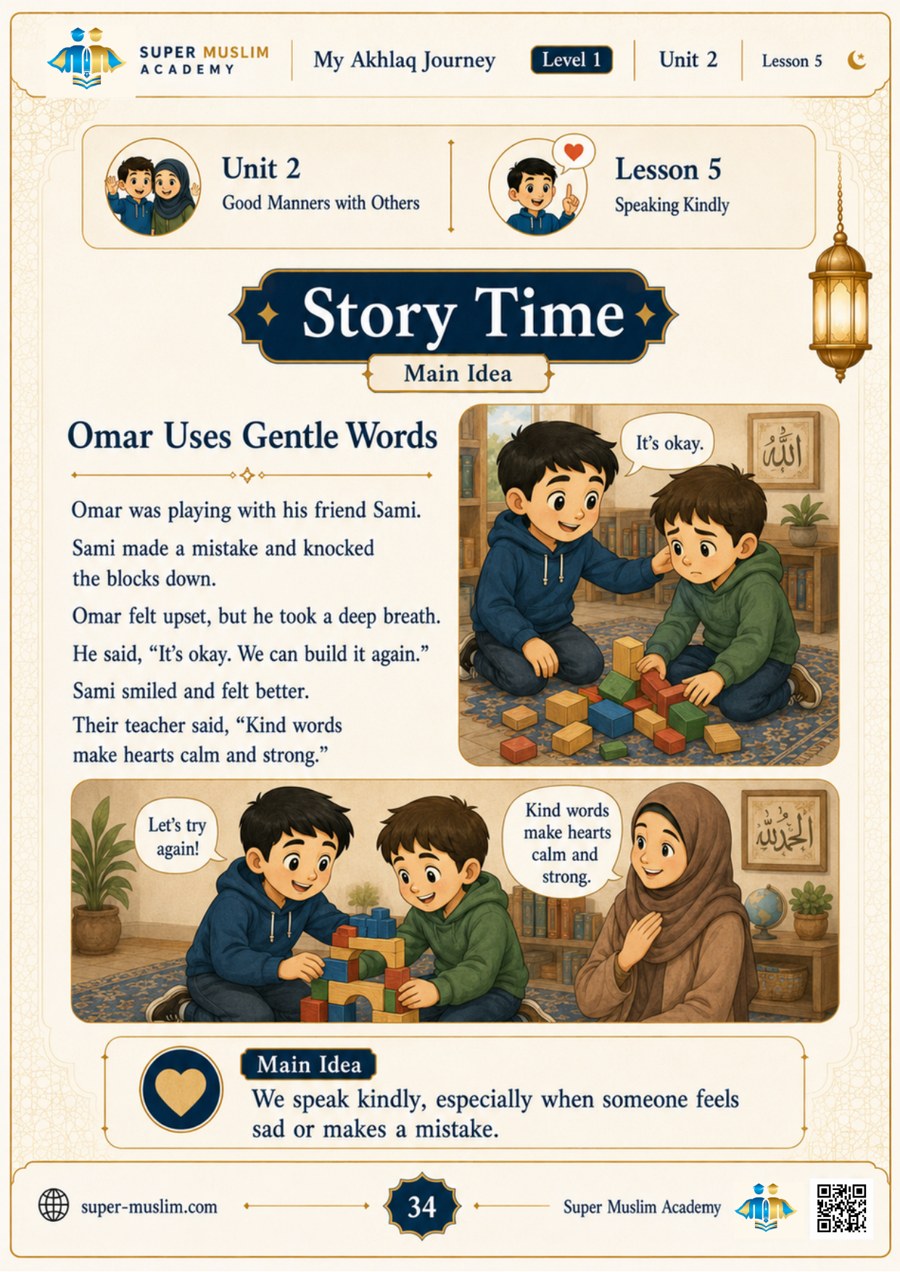
The deep breath is the whole lesson in one action. Practise it with your child: take one big breath together before answering. It feels silly the first few times. By the end of the week, you may catch them doing it on their own.
Step 3: Find the kind words
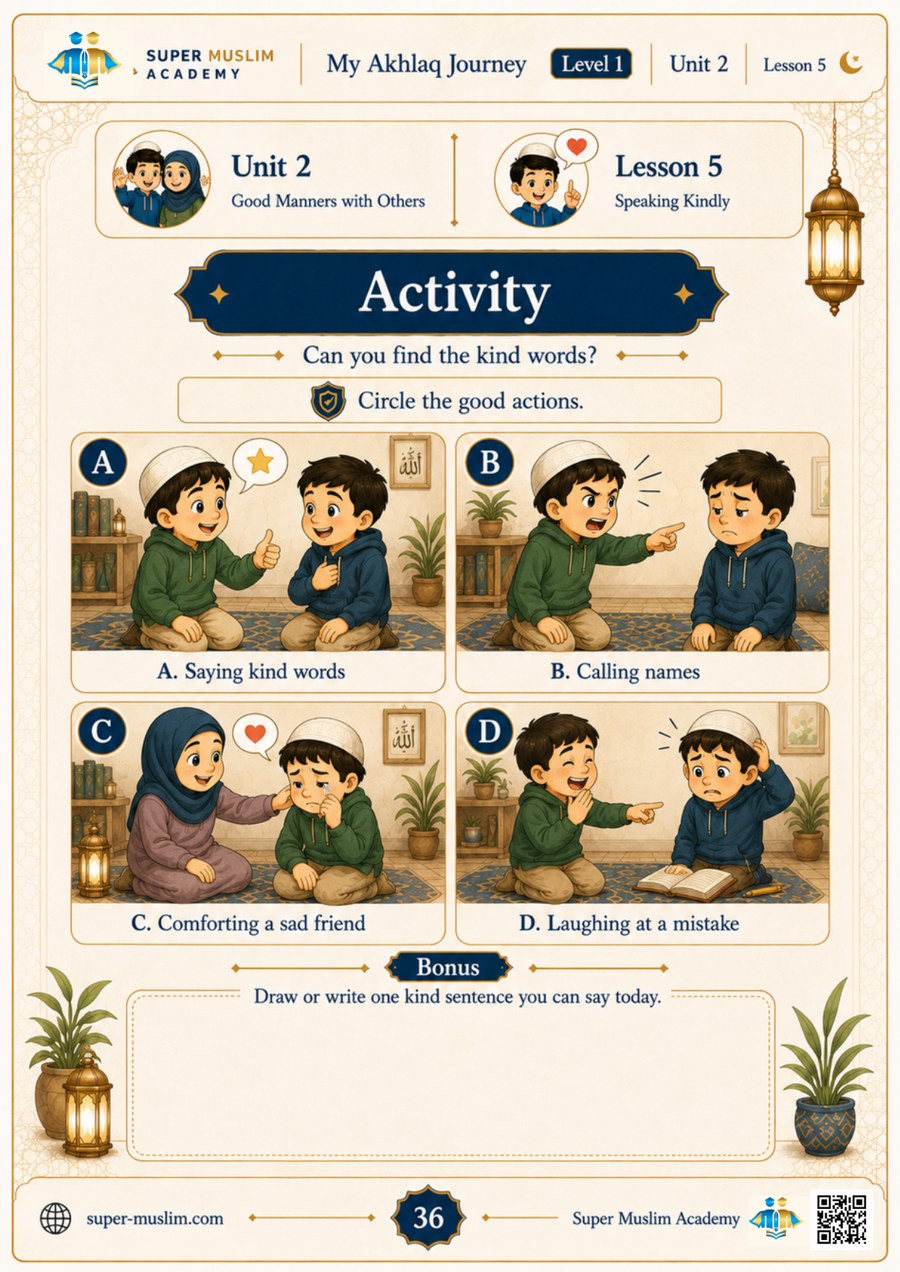
Four scenes this time: saying kind words, calling names, comforting a sad friend and laughing at a mistake. The last one is a good one to talk about, because laughing doesn’t feel unkind to a child until they imagine being the one laughed at.
Step 4: The 7-day kind words challenge (free printable)
Your child ticks a box every time they use one of the five habits, and earns the “Kind Speech Star” at the end of the week.
When hurtful words still slip out
Respond to the feeling first. A child who shouts “I hate you” at a sibling is usually saying “I’m really frustrated”. Name that, then come back to the words once they’re calm.
Ask for a repair, not just a sorry. “What kind thing could you say to fix that?” teaches more than an automatic apology.
Watch our own words. How we talk when we’re tired or stuck in traffic is the version kids copy.
Let a teacher guide your child through the series
Speaking Kindly is one of eleven lessons in My Akhlaq Journey, Level 1. In our one-on-one Zoom classes, a teacher reads the story with your child, explains the hadith at their level and follows up on the weekly challenge.
More from the series: respecting parents, helping at home, kindness to siblings and please and thank you.
Looking for an online Islamic school for kids? Our one-on-one Zoom classes teach akhlaq alongside the Quran, with online Quran classes for kids led by Al-Azhar trained teachers.
Frequently asked questions
What does Islam say about speaking kindly?
The Prophet ﷺ said, “Whoever believes in Allah and the Last Day should speak good or stay silent” (Bukhari and Muslim). The Qur’an also tells believers to “speak kindly to people” (2:83).
How do I stop my child calling names?
Give them a simple rule they can follow when upset (speak good or stay quiet), practise a deep breath before answering, and use a short daily checklist for a week. Ask them to repair hurtful words with kind ones rather than only saying sorry.
Is the checklist free to print?
Yes. Open it above at full size and print it.

You may also like
How to Teach Kids to Help at Home in Islam (A 7-Day Lesson)
How to Teach Kids Please and Thank You in Islam (A 7-Day Lesson)