How to Teach Kids Please and Thank You in Islam (A 7-Day Lesson)
The short answer: kids learn “please” and “thank you” by hearing them, using them and being noticed when they do. Islam adds the part that makes them mean it: thanking people is connected to thanking Allah. One hadith, one short story and a week of small daily habits is usually enough to make good words automatic.
This is Lesson 4 of our My Akhlaq Journey curriculum, and the first lesson of Unit 2, “Good Manners with Others”. Below you’ll find the hadith, the story, the activity and the printable checklist we use with our students.
The hadith behind every “thank you”
مَنْ لَا يَشْكُرُ النَّاسَ لَا يَشْكُرُ اللَّهَ
“Whoever does not thank people does not thank Allah.” (Sunan al-Tirmidhi)
This changes how a child sees manners. “Say thank you” stops being a rule grown-ups invented to make them look polite. It becomes something Allah cares about. You can put it simply: “When you thank your friend for sharing, you’re also showing Allah that you’re grateful.”
It also works the other way. Many families already say “Alhamdulillah” after meals. Linking that habit to thanking the person who cooked makes both words feel more real.
Five good-word habits for kids
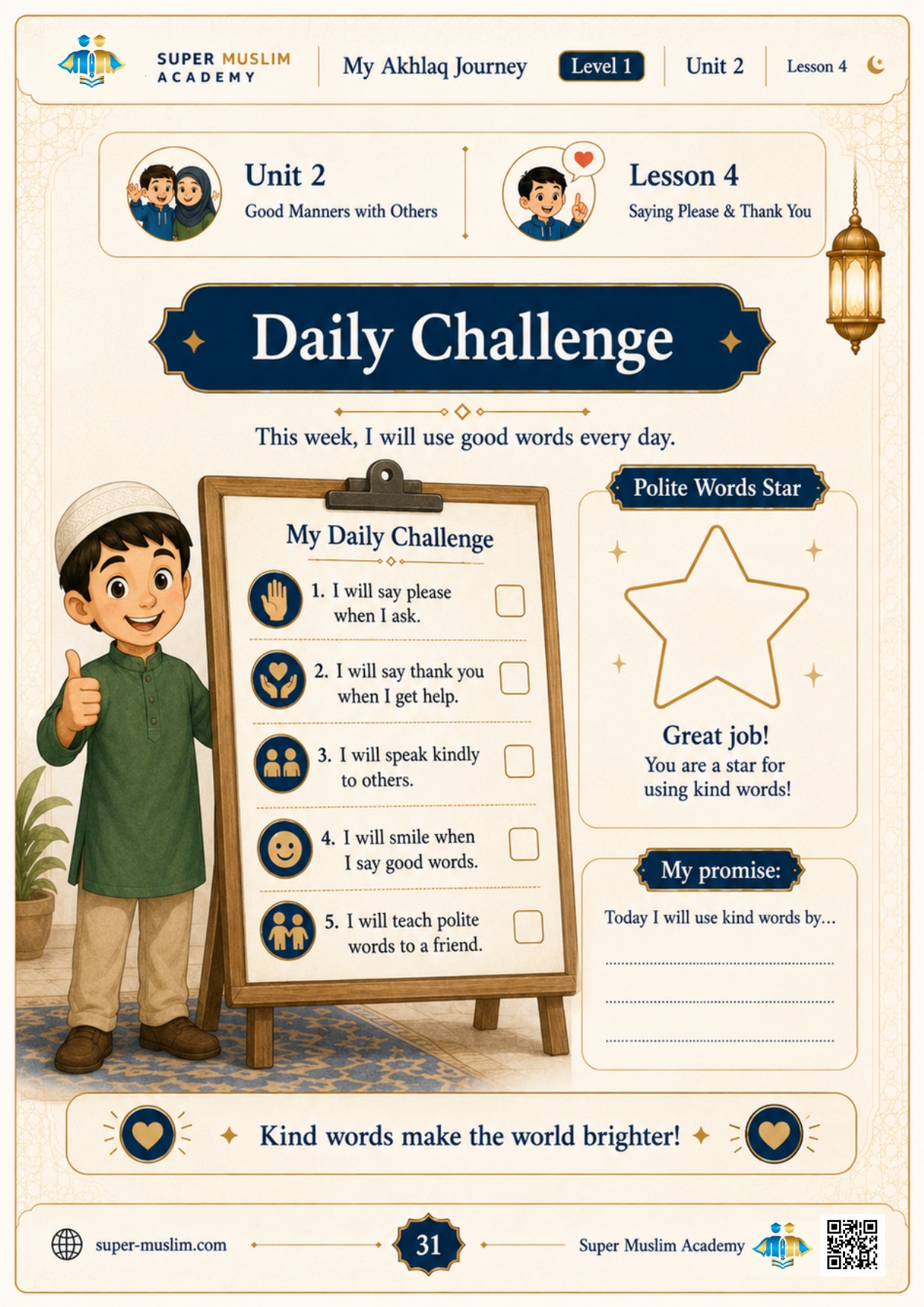
- Say please when asking for something.
- Say thank you when someone helps or shares.
- Speak kindly to others, including when you’re frustrated.
- Smile when you say good words. Tone matters as much as the word.
- Teach polite words to a friend. Kids remember what they teach.
Step 1: Warm up with three questions
- When do you say please?
- When do you say thank you?
- How do kind words make others feel?
The third question is the important one. Most kids can list when to say please. Fewer have thought about how it lands on the other person. Let them describe a time someone said thank you to them, and how it felt.
Step 2: Read the story of Amina’s crayons
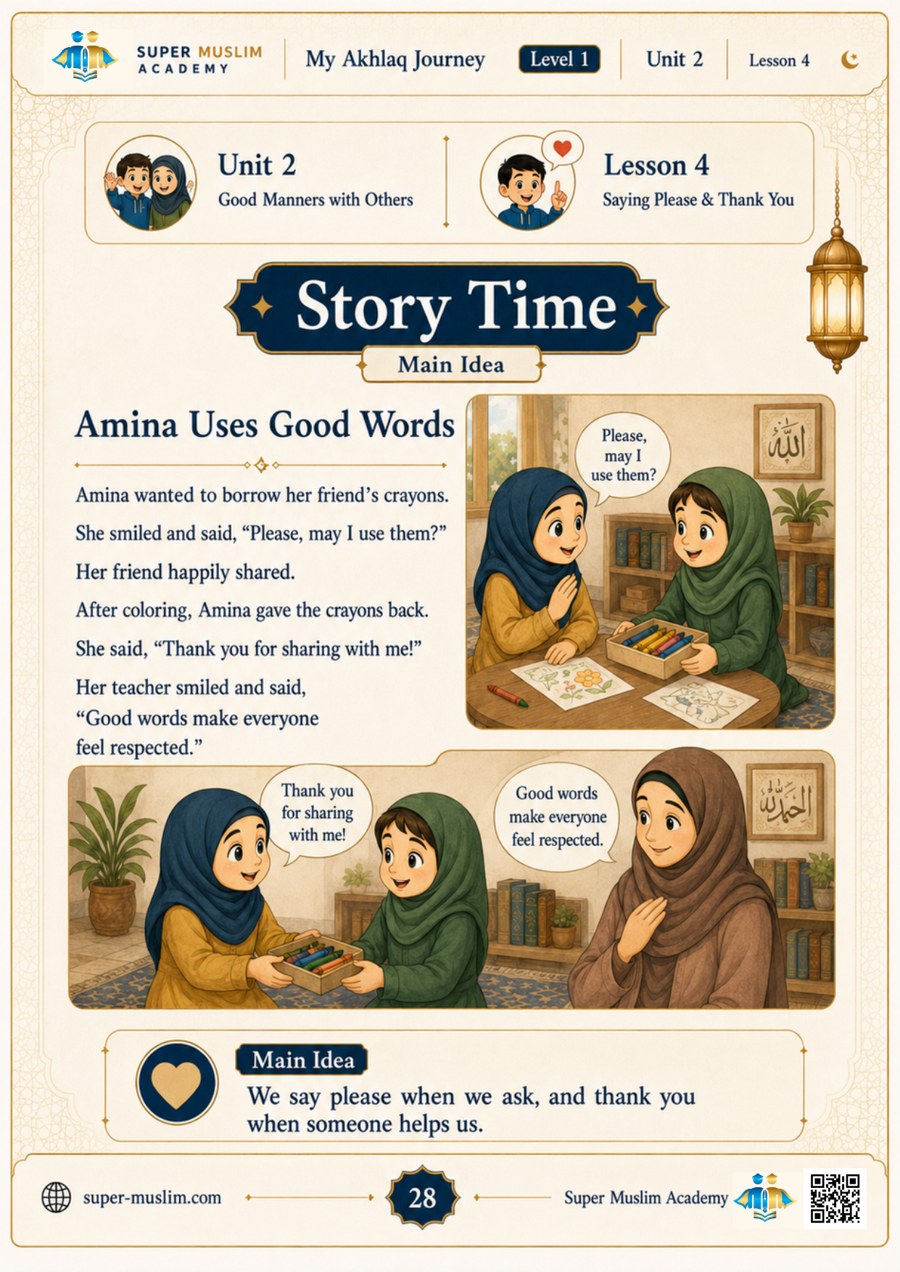
Amina wants to borrow her friend’s crayons. She smiles and asks, “Please, may I use them?” Her friend happily shares. When she’s done colouring, Amina gives the crayons back and says, “Thank you for sharing with me!” Her teacher smiles and says, “Good words make everyone feel respected.”
A quick role-play after reading works well. You be the friend with the crayons. Let your child ask. Then swap roles and see how it feels to be asked nicely, and then rudely. Kids usually get the point within two rounds, and they enjoy being the rude one far too much.
Step 3: Find the polite actions
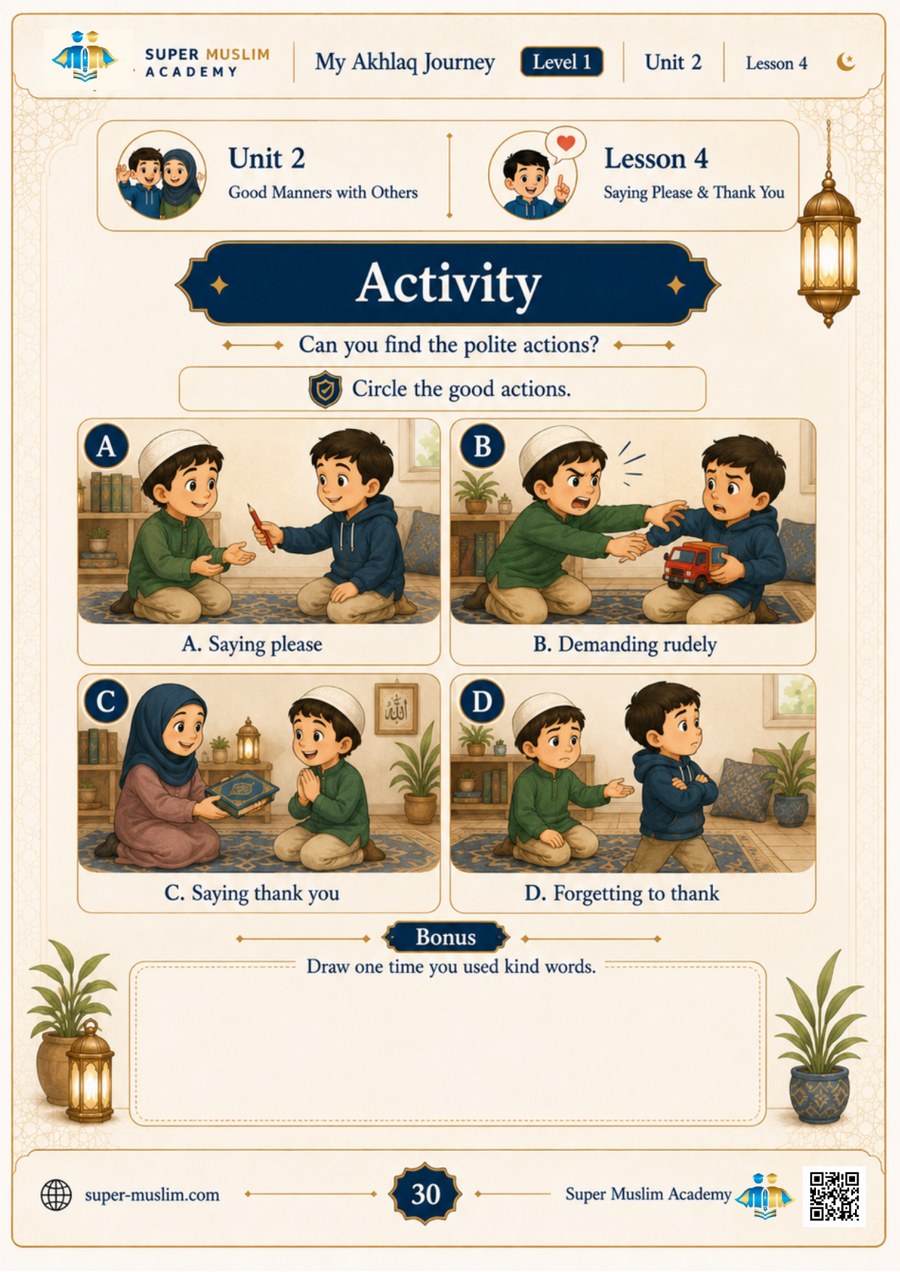
The activity shows four scenes: saying please, demanding rudely, saying thank you and forgetting to thank. Your child circles the polite ones and explains what’s wrong with the others. In the bonus box they draw one time they used kind words.
Step 4: The 7-day good words challenge (free printable)
For one week your child ticks a box each time they use one of the five habits. At the end they earn the “Polite Words Star”. The promise line reads: “Today I will use kind words by…”
Habits that make good words stick
Say it to them first. “Please pass the water” and “thank you for tidying” from a parent teach more than any reminder. Children copy the tone of the house.
Skip the “what’s the magic word?” It turns thanks into a password. A gentle pause and a look usually does the job, and the child gets to remember on their own.
Thank specifically. “Thank you for carrying the bag, that really helped” shows them what a real thank you sounds like.
Add jazakAllahu khayran. Once “thank you” is a habit, teach the dua that goes with it. Kids love having a grown-up word to use.
Want a teacher to guide your child through the series?
Please and Thank You is Lesson 4 of eleven in My Akhlaq Journey, Level 1. In our one-on-one Zoom classes, a teacher reads the story with your child, explains the hadith at their level and follows up on the weekly challenge.
Earlier lessons in the series: teaching kids to respect parents and teaching kids kindness to siblings. You might also like our Islamic parenting tips.
Looking for an online Islamic school for kids? Our one-on-one Zoom classes teach akhlaq alongside the Quran, with online Quran classes for kids led by Al-Azhar trained teachers.
Frequently asked questions
What does Islam say about saying thank you?
The Prophet ﷺ said, “Whoever does not thank people does not thank Allah” (Sunan al-Tirmidhi). Thanking people who help us is part of being grateful to Allah.
How do I teach my child to say please without constant reminders?
Model it yourself, read a short story where a child uses good words, then turn please and thank you into small daily habits your child ticks off for a week. Notice and praise it when they do it on their own.
What is the Islamic way to say thank you?
Many Muslims say “jazakAllahu khayran”, which means “may Allah reward you with good”. It’s a lovely phrase to teach once “thank you” has become a habit.
Is the checklist free to print?
Yes. Open the checklist above at full size and print it for your family or class.

You may also like
How to Teach Kids Kindness to Siblings in Islam (A 7-Day Lesson)
How to Teach Kids to Respect Parents in Islam (A 7-Day Lesson)