
Gossip and Hurtful Speech: What to Teach Muslim Kids
The short answer: teach children one clear rule: if you wouldn’t say it in front of the person, don’t say it behind their back. Pair it with a hadith they can remember, a story where kids stop a whisper chain, and five habits for the week. Just as important, teach the difference between gossip and telling a trusted adult when someone is being hurt.
This lesson comes from My Akhlaq Journey, Level 2, our Islamic manners curriculum for children.
The hadith: safe from your tongue
الْمُسْلِمُ مَنْ سَلِمَ الْمُسْلِمُونَ مِنْ لِسَانِهِ وَيَدِهِ
“A Muslim is the one from whose tongue and hand other Muslims are safe.” (Sahih al-Bukhari and Sahih Muslim)
Children understand “hand” immediately: no hitting, no pushing. The hadith puts the tongue first. That’s the surprise worth pointing out. Words can hurt as much as a push, and the hurt from words often lasts longer.
The story: The Whisper Chain
A new classmate, Aisha, joins the class. During break a few students start whispering about her. Sami is about to repeat what he heard, but he remembers that hurtful words can damage hearts. He says gently, “Let’s not talk about her behind her back. If something is wrong, we should speak kindly and directly.” The others stop. They go to Aisha, apologise and invite her to play. She smiles, and the friendship grows stronger.
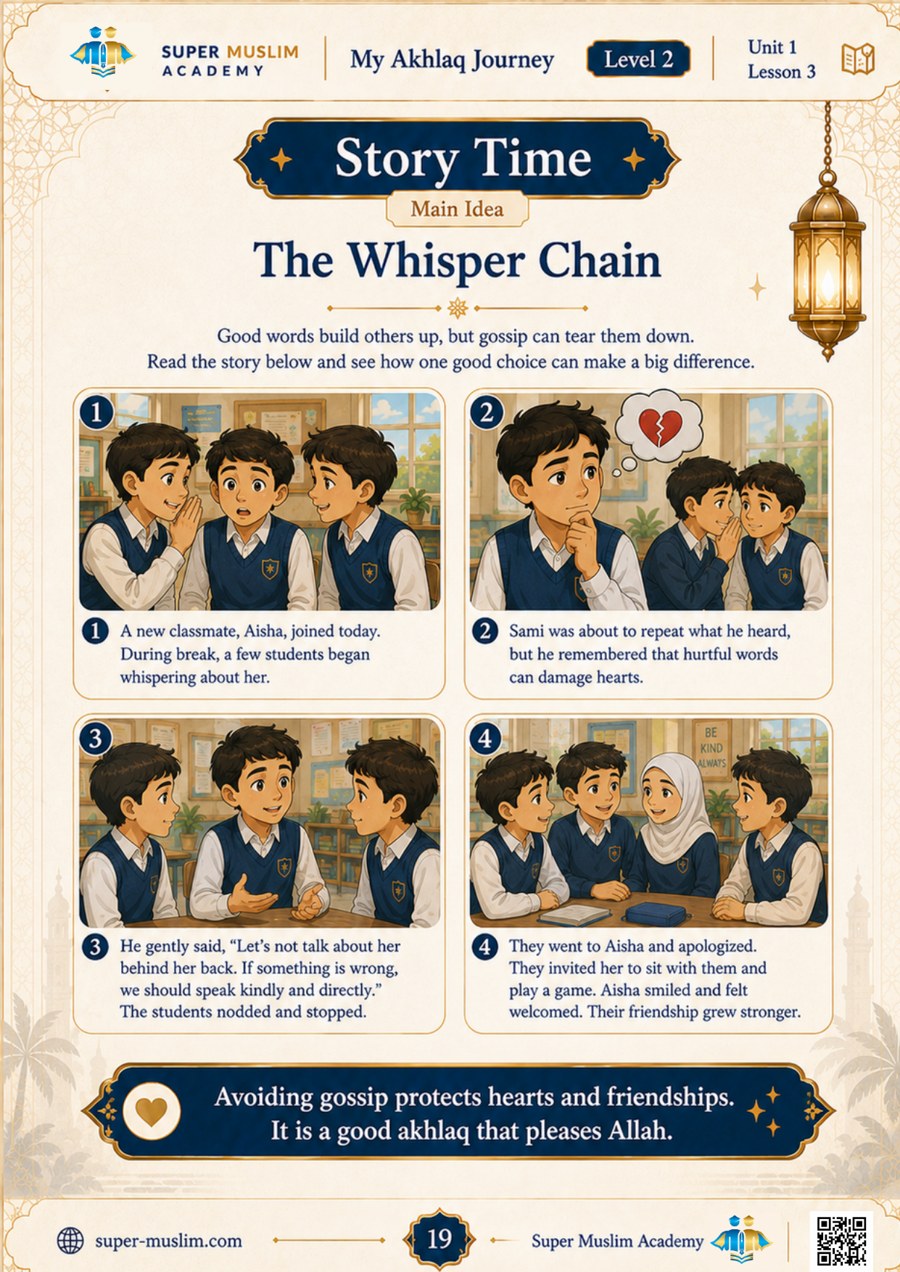
Sami doesn’t lecture anyone. He says one sentence and offers a better option. That’s a realistic model for a child: you don’t have to be the hero, you just have to not pass it on.
Gossip or getting help? Teach the difference
Some children hear “don’t talk about people” and conclude they shouldn’t tell anyone when something bad happens. Be clear: telling a parent or teacher that someone is being hurt, bullied or is in danger is not gossip. It’s helping. A simple test for kids: am I trying to make someone look bad, or trying to make things better?
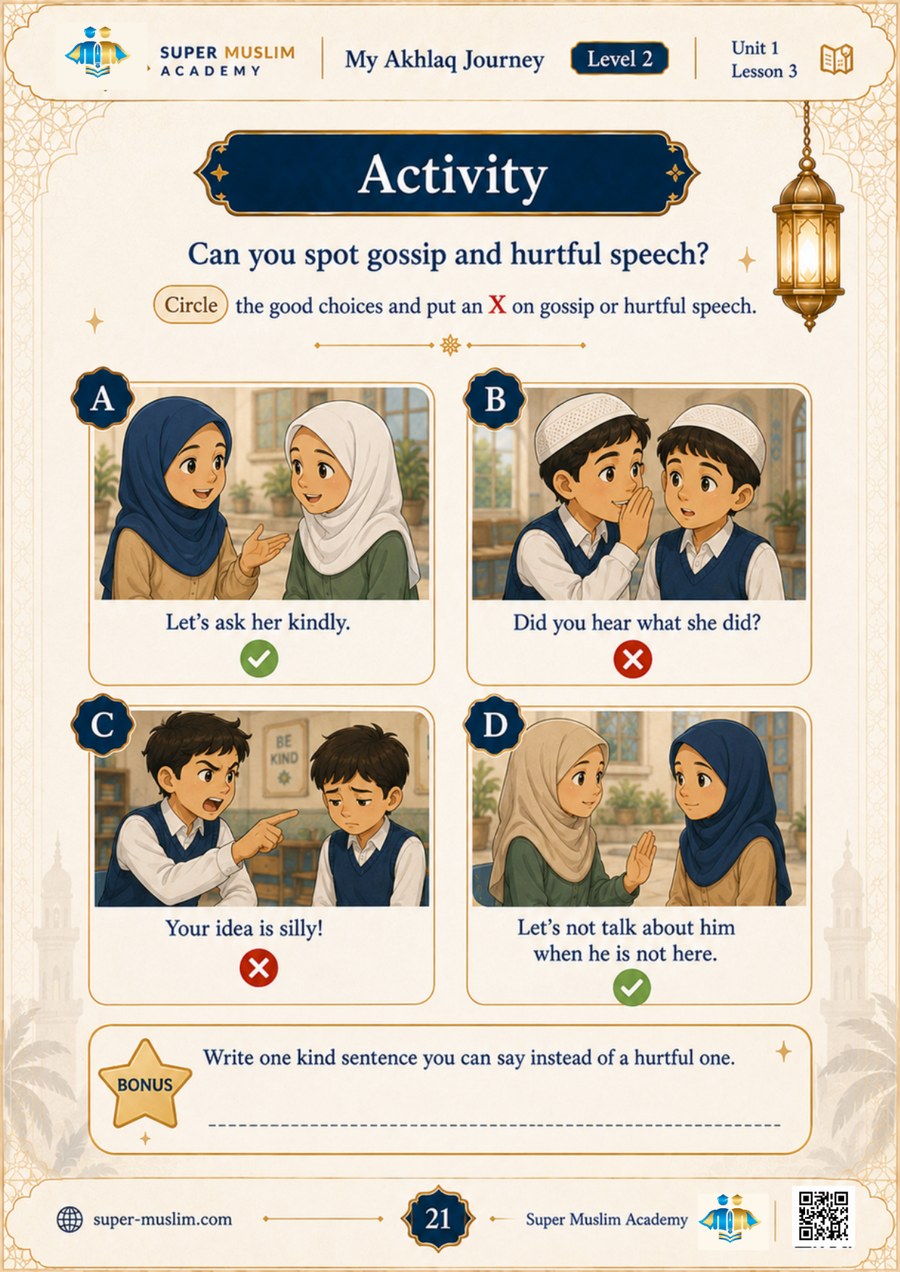
Spot the hurtful speech
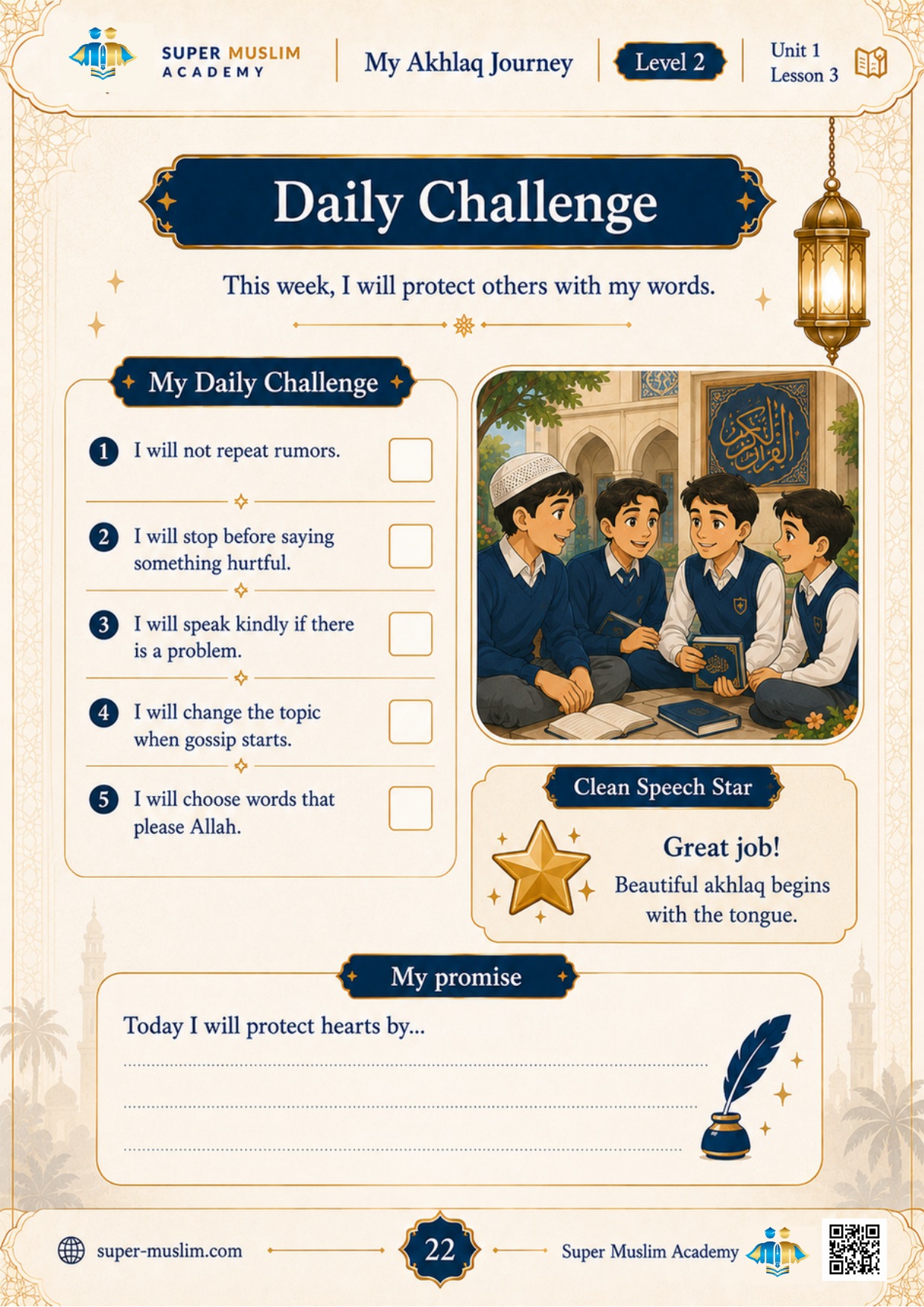
Free printable: 7 days of clean speech
Five habits: don’t repeat rumours, stop before saying something hurtful, speak kindly if there’s a problem, change the topic when gossip starts, and choose words that please Allah. The child earns a “Clean Speech Star” at the end of the week.
For parents: what we model matters most
Kids hear how we talk about relatives, neighbours and teachers. If a conversation at home starts drifting into talking about someone, say it out loud: “Let’s not talk about her when she’s not here.” Your child will remember that sentence far longer than any lesson.
Related lessons: speaking kindly and controlling anger. Our online Islamic school for kids teaches akhlaq like this one on one over Zoom, alongside online Quran classes for kids.
Frequently asked questions
What does Islam say about gossip?
Islam forbids backbiting, speaking about someone in their absence in a way they would dislike (Quran 49:12). The Prophet ﷺ said a Muslim is the one from whose tongue and hand others are safe (Bukhari and Muslim).
Is telling a teacher about bullying gossip?
No. Telling a trusted adult to stop harm is helping, not gossip. Children should always feel safe to do it.
Is the checklist free?
Yes. Open it above at full size and print it.

You may also like
How to Teach Kids to Listen Without Interrupting (Quran 7:204)
How to Help Kids Control Anger in Islam: 5 Sunnah Steps (Free Printable)