Islamic Eating Manners for Kids: 5 Sunnah Table Habits (Free Printable)
The short answer: the Sunnah table manners every Muslim child should know fit in one hadith: say Bismillah, eat with your right hand, and eat from what’s in front of you. Add saying Alhamdulillah afterwards and not wasting food, practise them at every meal for a week, and they stick for life.
This lesson comes from My Akhlaq Journey, Level 2, the follow-up to our Level 1 series on Islamic manners for kids. Level 2 moves from manners at home to manners with family, guests and the wider community, and the dinner table is where it starts.
The hadith: three manners in one sentence
يَا غُلَامُ، سَمِّ اللَّهَ، وَكُلْ بِيَمِينِكَ، وَكُلْ مِمَّا يَلِيكَ
“O young boy, mention Allah’s name, eat with your right hand, and eat from what is nearest to you.” (Sahih al-Bukhari and Sahih Muslim)
Children love this hadith once they hear who it was said to: Umar ibn Abi Salamah, a boy who grew up in the Prophet’s ﷺ household. He was a child, his hand was wandering all over the plate, and the Prophet ﷺ corrected him gently with three short instructions. Your child is getting the same lesson a boy got at the Prophet’s own table.
Five table manners from the Sunnah
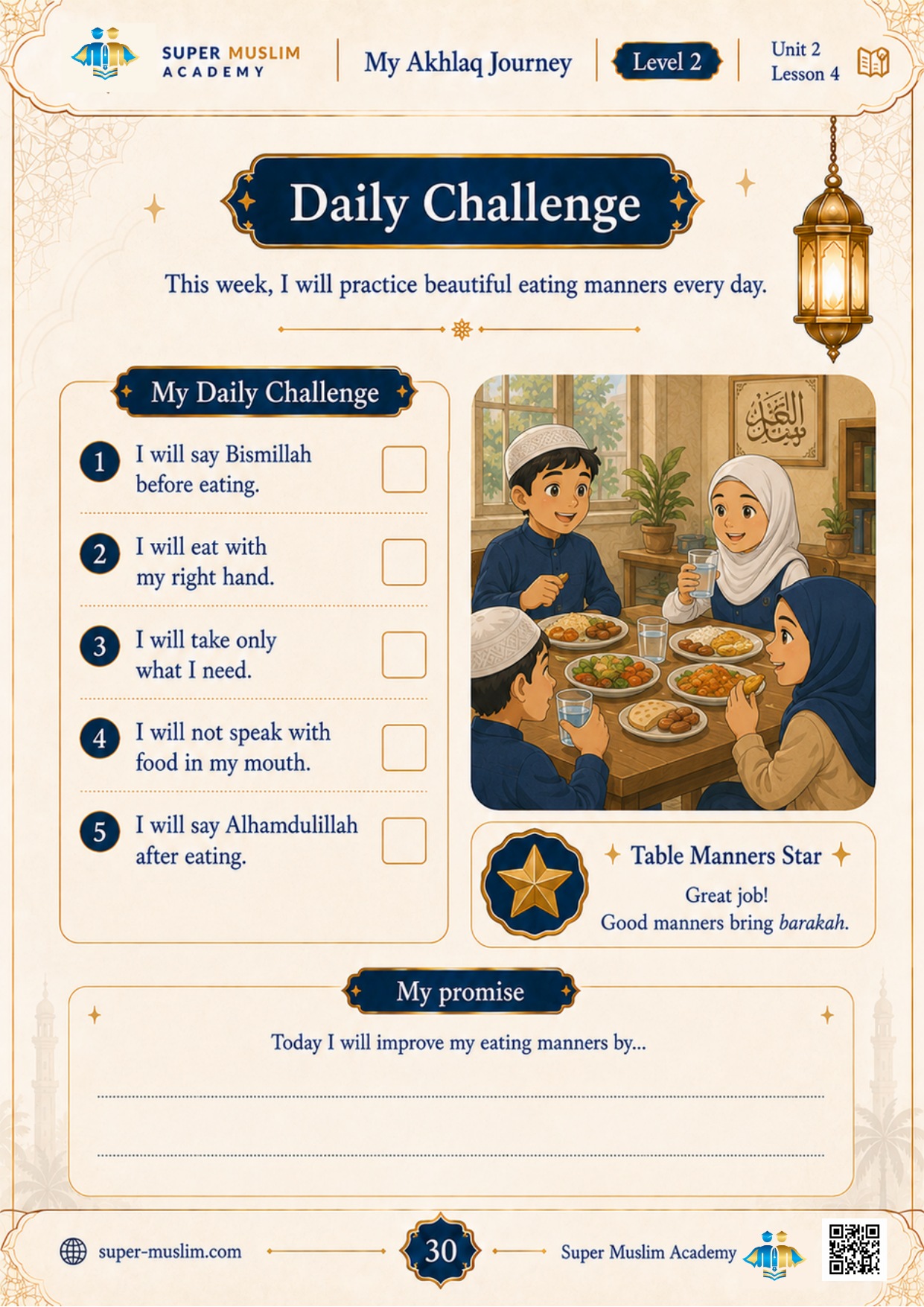
- Say Bismillah before eating. If you forget, say “Bismillahi awwalahu wa akhirahu” when you remember.
- Eat with your right hand.
- Take only what you need, and eat from what’s in front of you.
- Don’t talk with food in your mouth.
- Say Alhamdulillah after eating.
Step 1: Warm-up questions
- What should you say before you begin eating?
- Why is it important not to waste food?
- What are two polite manners we can use at the table?
Step 2: Read “The Blessed Meal”
At the weekend, Amina visits her grandmother with her brother Yusuf, and a delicious meal is ready on the table. Before eating, Yusuf says “Bismillah”, sits properly and uses his right hand, and Amina follows the Sunnah too. When Yusuf wants bread, he reaches only for what’s near him, takes a small portion and leaves enough for others. After the meal, the children say “Alhamdulillah”, help clear the table and thank their grandmother. Everyone feels happy and blessed.
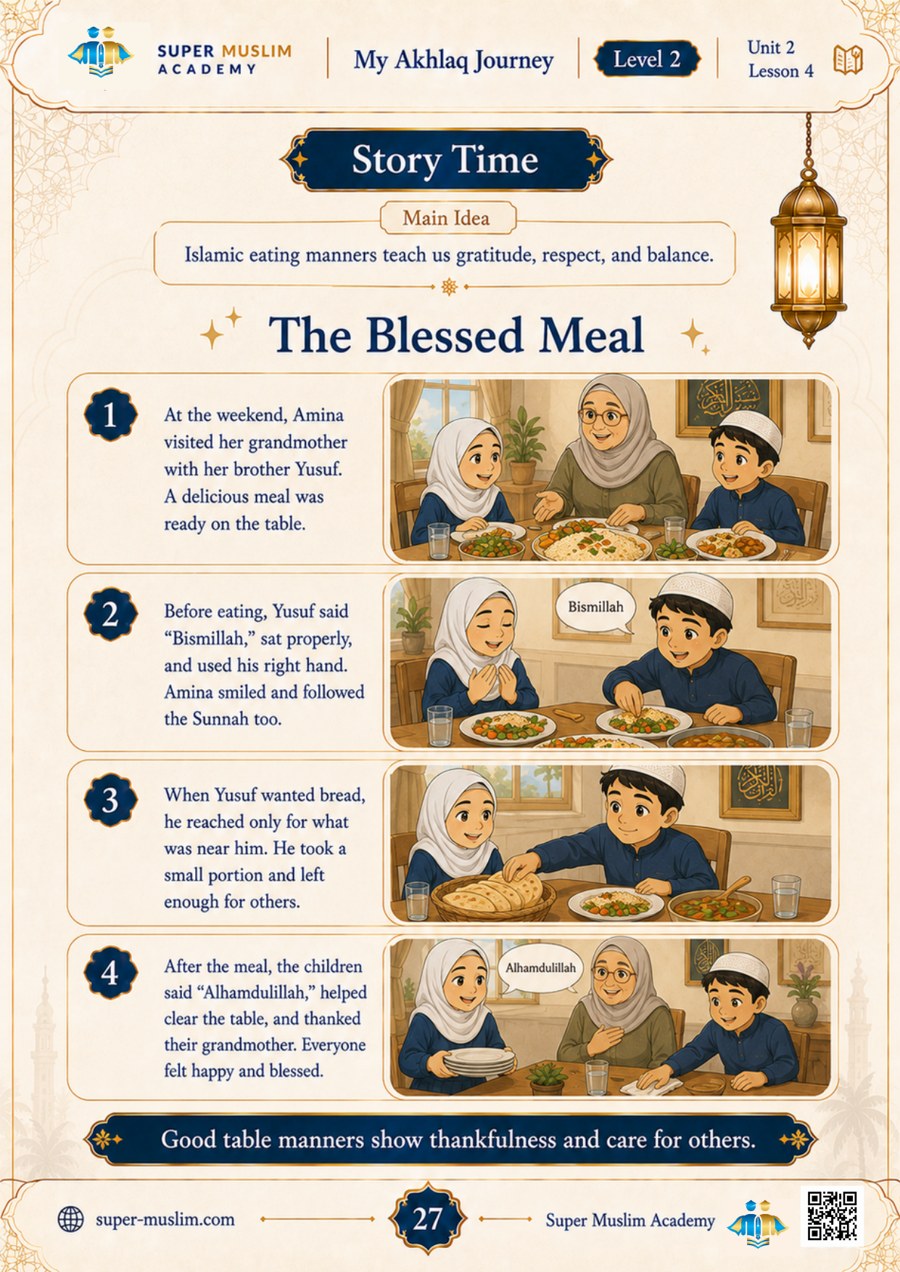
The detail worth pointing out: Yusuf “left enough for others”. Eating from what’s in front of you isn’t only about tidiness. It’s about noticing that other people are at the table too.
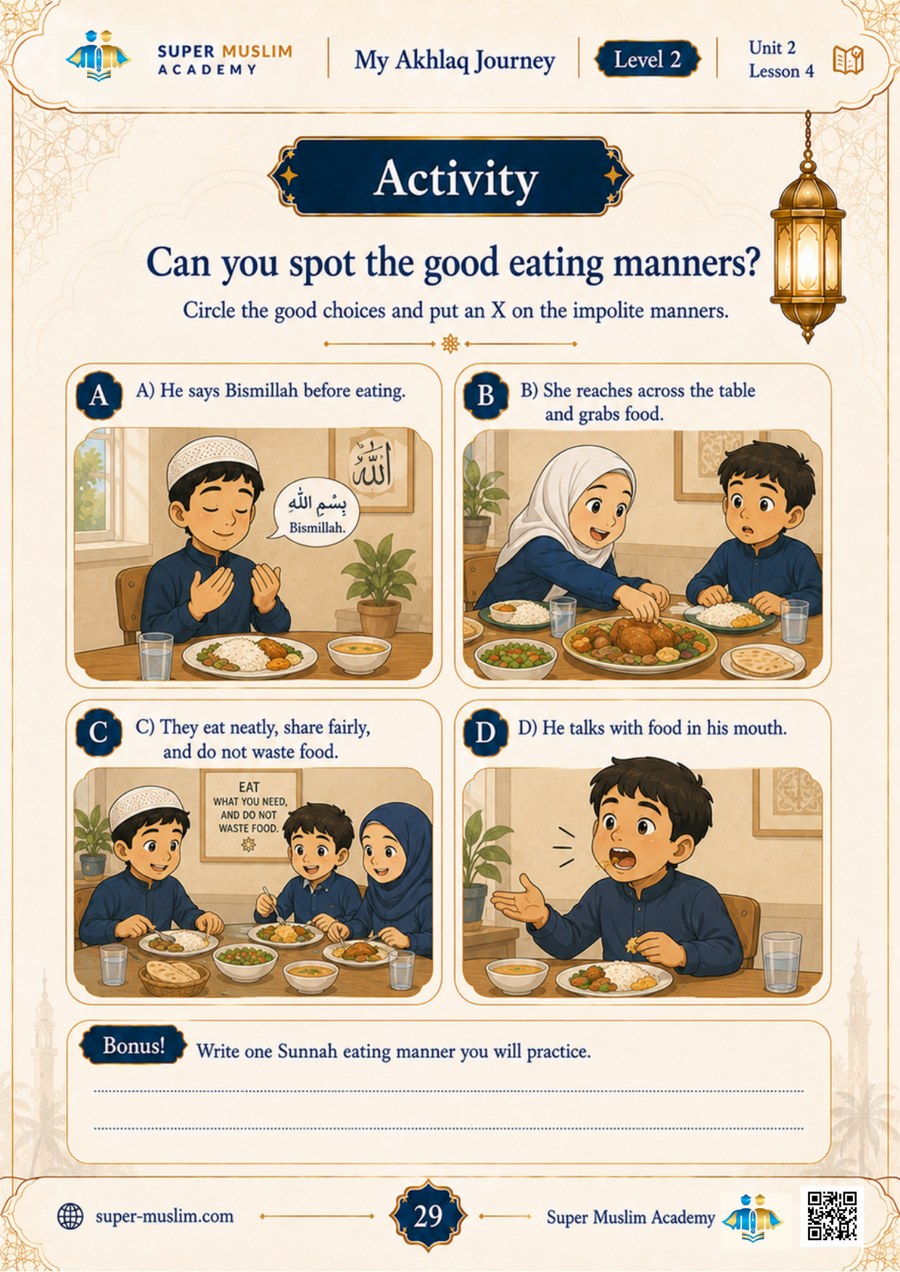
Step 3: Spot the good eating manners
Step 4: The 7-day table manners challenge (free printable)
Five Sunnah habits, a box for each meal day, and a “Table Manners Star” at the end of the week. Put it right next to the dining table.
What makes table manners actually stick
Eat together when you can. Kids can’t copy table manners if they eat alone in front of a screen. Even one shared meal a day makes a difference.
Say Bismillah out loud yourself. A whole family saying it together turns it into a moment instead of a rule.
Correct gently, the way the Prophet ﷺ did. Three short, kind instructions, not a lecture. “Right hand, habibi” works better than ten minutes on etiquette.
Smaller portions, seconds allowed. It’s much easier to “take only what you need” when kids know they can ask for more.
Learn the full series with a teacher
In our one-on-one Zoom classes, a teacher takes your child through every lesson of My Akhlaq Journey, explains each hadith at their level and follows up on the weekly challenge. Start with the complete Level 1 series if you haven’t yet, including please and thank you and gratitude.
Looking for an online Islamic school for kids? Our one-on-one Zoom classes teach akhlaq alongside the Quran, with online Quran classes for kids led by Al-Azhar trained teachers.
Frequently asked questions
What are the Islamic eating manners for kids?
Say Bismillah before eating, eat with the right hand, eat from what is nearest to you, avoid wasting food, and say Alhamdulillah afterwards. The first three come from one hadith in Bukhari and Muslim.
What if my child forgets to say Bismillah?
They can say “Bismillahi awwalahu wa akhirahu” (in the name of Allah at its beginning and its end) as soon as they remember, as taught in the Sunnah (Abu Dawud, Tirmidhi).
Is the checklist free to print?
Yes. Open it above at full size and print it.

You may also like

How to Teach Kids Gratitude in Islam (A 7-Day Lesson)