
How to Teach Kids to Listen Without Interrupting (Quran 7:204)
The short answer: most children interrupt because they’re afraid they’ll forget what they want to say, not because they’re rude. Give them a way to hold the thought, a simple signal for “my turn next”, and a reason to listen that comes from the Quran itself. Then practise for a week.
This lesson comes from My Akhlaq Journey, Level 2, our Islamic manners curriculum for children aged roughly 6 to 11.
Why kids interrupt (and why “stop interrupting” doesn’t work)
A seven year old has an idea, and in their head it’s urgent. Waiting feels like losing it. Telling them “don’t interrupt” removes the behaviour for about a minute, then it’s back, because the feeling behind it hasn’t been dealt with. What helps is giving the idea somewhere to wait.
The verse: listening as an act of worship
وَإِذَا قُرِئَ الْقُرْآنُ فَاسْتَمِعُوا لَهُ وَأَنصِتُوا لَعَلَّكُمْ تُرْحَمُونَ
“When the Quran is recited, listen to it and be silent, so that you may receive mercy.” (Quran 7:204)
The verse is about listening to the Quran, and that’s where the habit starts. A child who learns to be quiet and attentive when the Quran is recited is practising the exact skill they need with people: stop, face the speaker, and take in what’s said. And the verse ends with a promise children like: mercy.
The story: The Listener in the Circle
Mariam loves to share her ideas. During a class discussion she speaks before her friend Lina has finished, and then misses the teacher’s question about the last point. The teacher kindly reminds the class: “Let’s listen first, then speak.” Mariam makes a sincere dua to improve. The next day she looks at Lina, stays quiet and waits her turn. She understands the point and shares a thoughtful idea, and her friends feel heard. At home, when her brother is upset about a game, she listens without interrupting, and they solve the problem together.
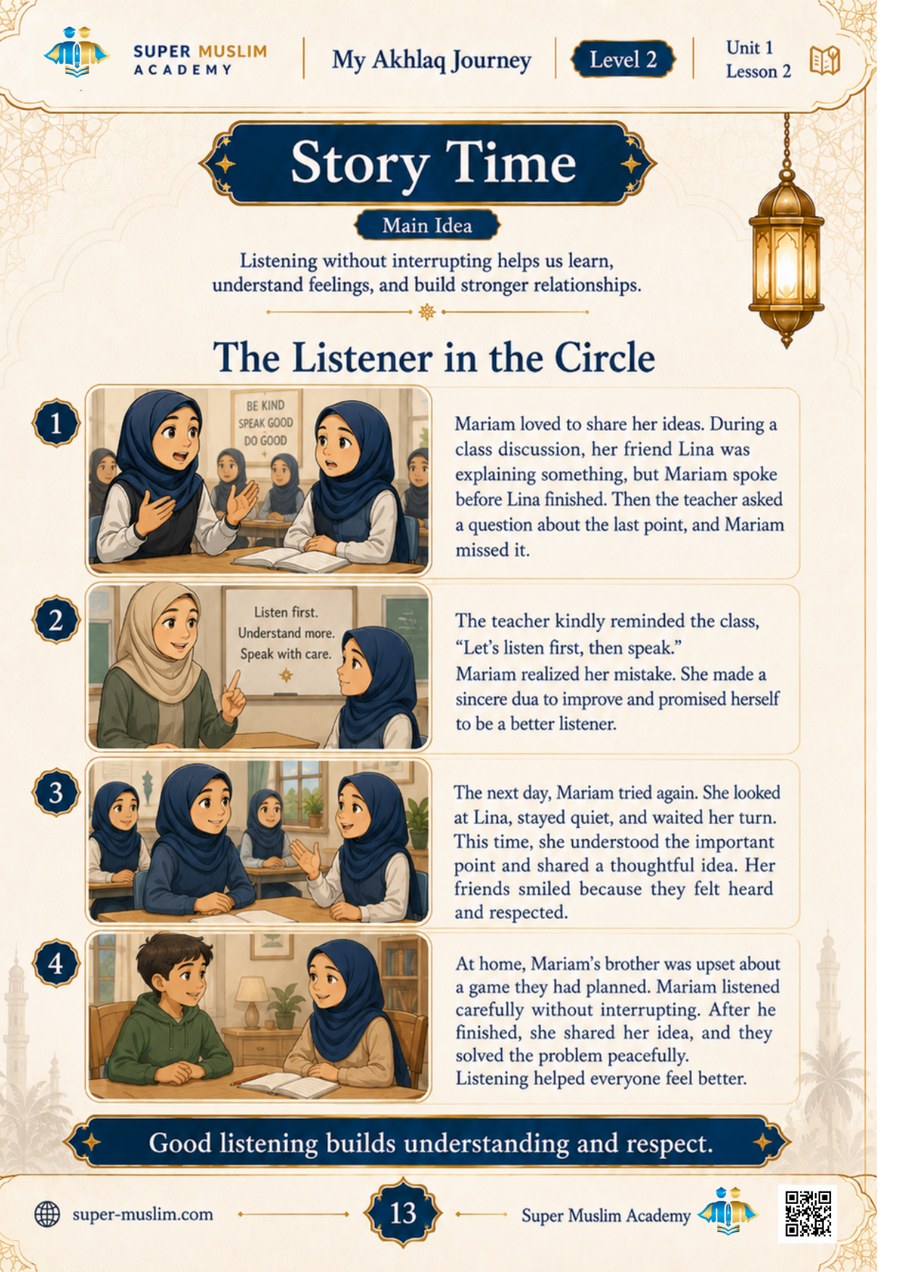
Notice what Mariam lost by interrupting: the answer to the teacher’s question. That’s the argument that lands with kids. Interrupting doesn’t just annoy people, it makes you miss things.
Three tools that actually help at home
The hand signal. When your child wants to speak, they put a hand gently on your arm. You put your hand on theirs to say “I’ve seen you, you’re next”. No words needed, and nobody’s sentence gets cut off.
Hold the thought. Teach them to “put the idea in their pocket”: hold up one finger and keep it there until it’s their turn. Silly, but it gives the idea a place to wait.
Repeat back. Before answering, they say one thing the other person said. It proves they listened and slows the conversation down.
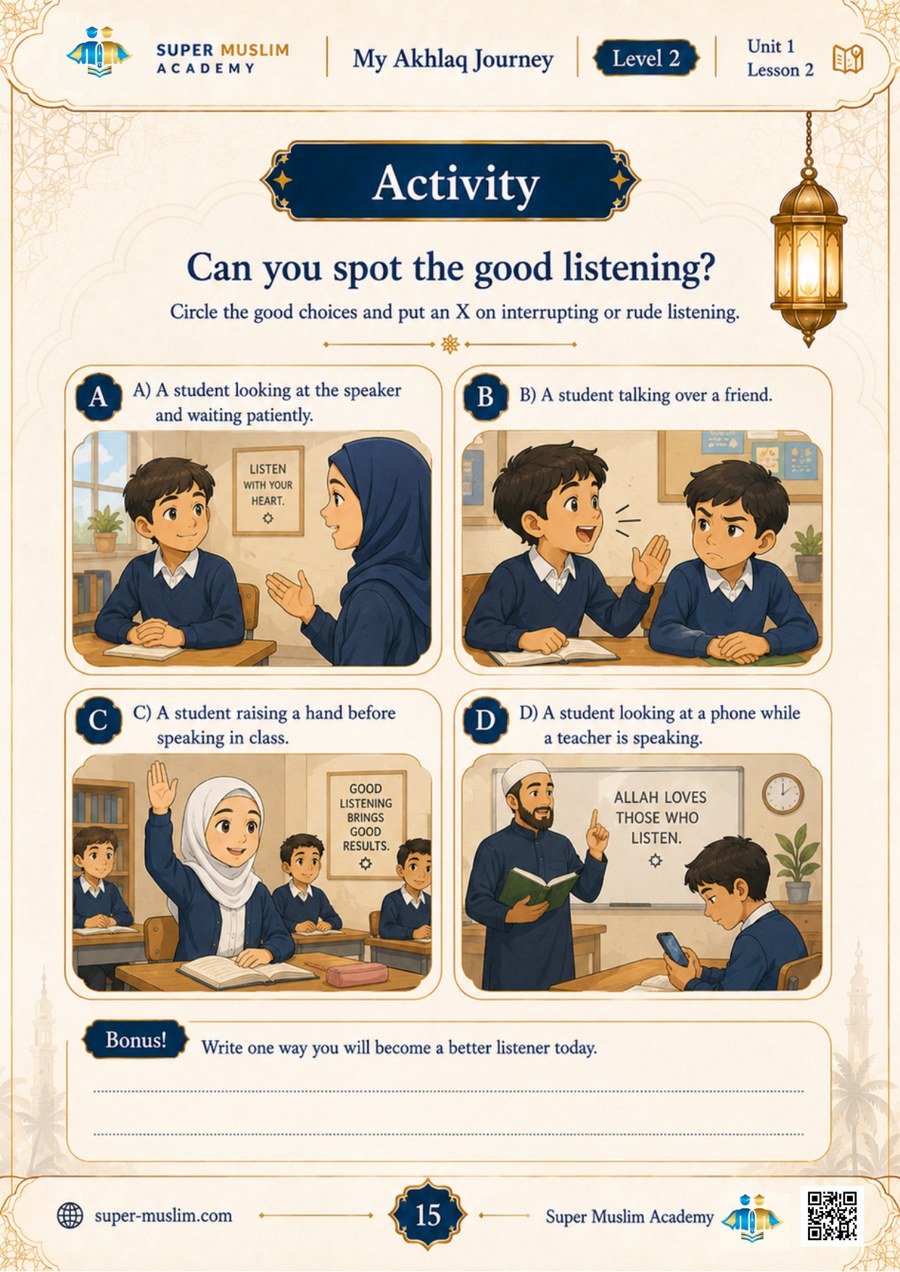
Spot the good listening
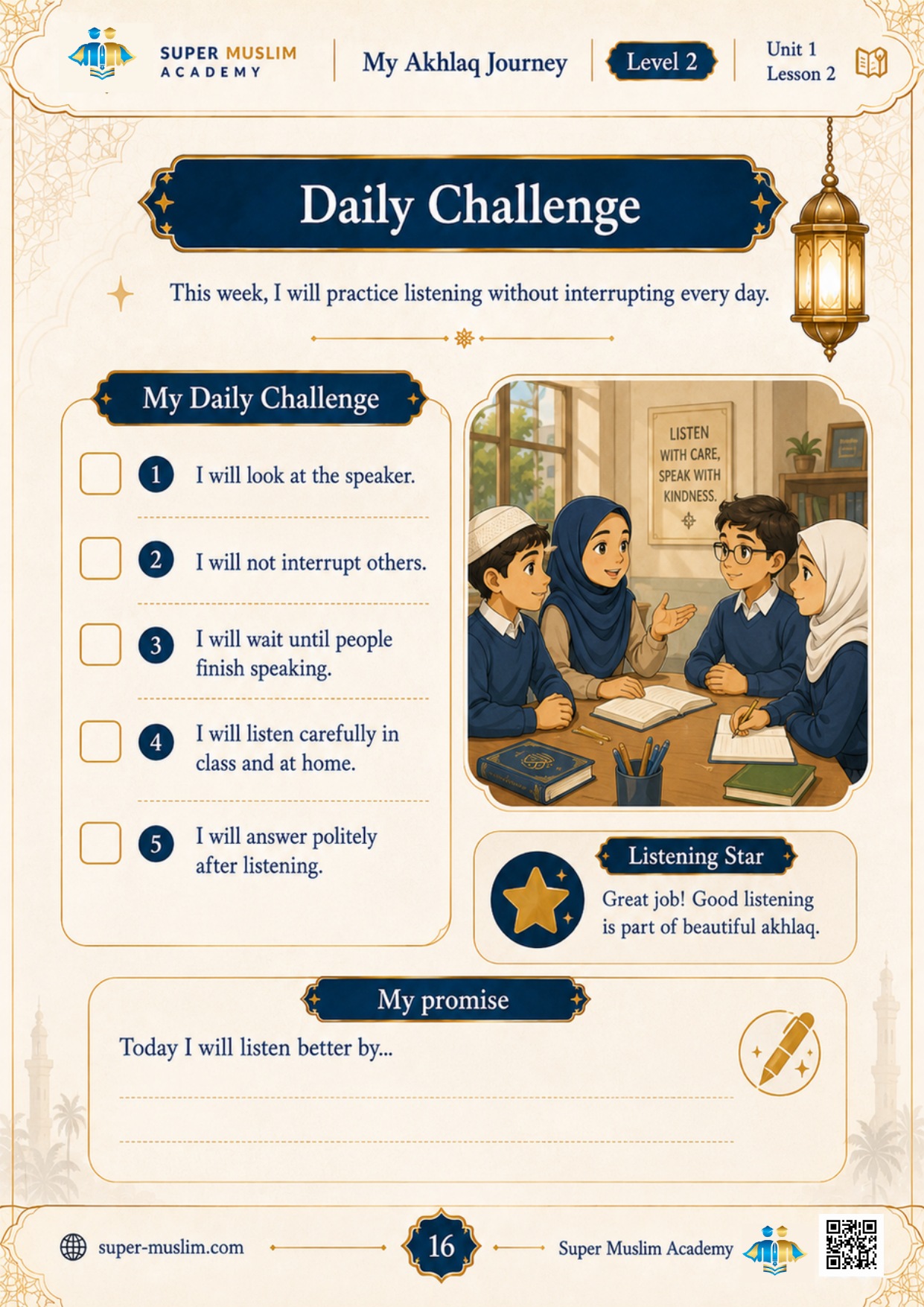
Free printable: the 7-day listening challenge
Five habits: look at the speaker, don’t interrupt, wait until people finish, listen carefully in class and at home, and answer politely after listening. One box a day each, and a “Listening Star” at the end of the week.
Related lessons: speaking kindly and respecting parents. The full Level 1 series is here: Islamic manners for kids.
Listening is also the first skill of a good Quran student. In our online Quran classes for kids, children learn to listen to their teacher’s recitation before repeating it, one on one with an Al-Azhar trained teacher.
Frequently asked questions
What does the Quran say about listening?
“When the Quran is recited, listen to it and be silent, so that you may receive mercy” (Quran 7:204). Attentive listening is part of the respect a Muslim shows to the Quran and to people.
At what age do children stop interrupting?
Most children can wait their turn reliably somewhere between 6 and 8, but only with practice. Simple tools like a hand signal help much earlier.
Is the checklist free?
Yes. Open it above at full size and print it.

You may also like

How to Help Kids Control Anger in Islam: 5 Sunnah Steps (Free Printable)