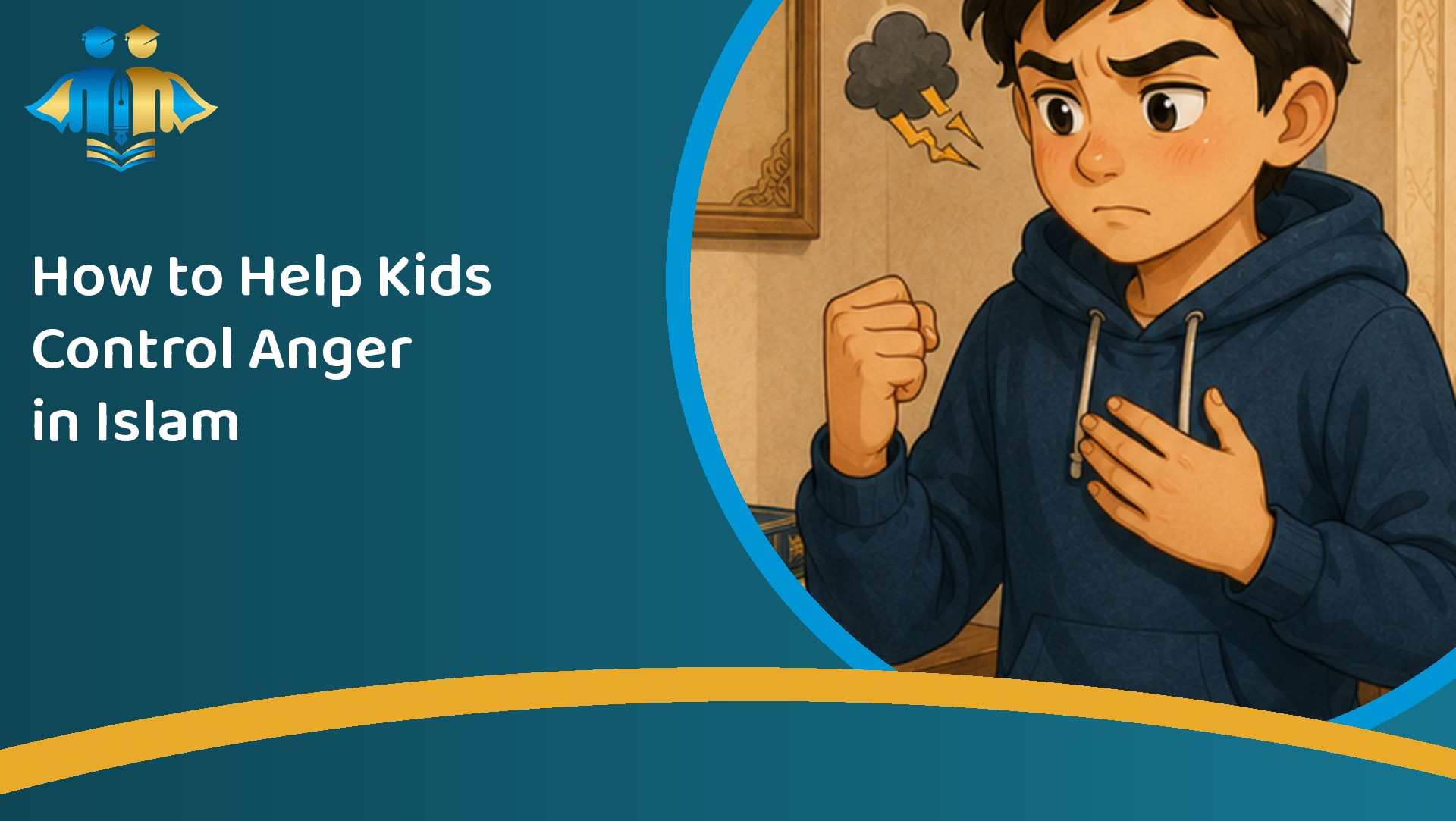
How to Help Kids Control Anger in Islam: 5 Sunnah Steps (Free Printable)
The short answer: children can’t avoid feeling angry, and Islam doesn’t ask them to. It teaches them what to do with the feeling: pause, breathe, seek refuge in Allah from Shaytan, speak kindly, and forgive when they can. The Prophet ﷺ called that real strength. Practise those steps for a week and your child has a plan for the next meltdown.
This lesson is from My Akhlaq Journey, Level 2, the follow-up to our Level 1 series on Islamic manners for kids.
The hadith: what real strength looks like
لَيْسَ الشَّدِيدُ بِالصُّرَعَةِ، إِنَّمَا الشَّدِيدُ الَّذِي يَمْلِكُ نَفْسَهُ عِنْدَ الْغَضَبِ
“The strong person is not the one who defeats others, but the one who controls himself when angry.” (Sahih al-Bukhari and Sahih Muslim)
Boys especially love to be strong. This hadith redefines strength in a way they can actually win at. The child who walks away from a fight isn’t weak. According to the Prophet ﷺ, he’s the strongest one in the room.
Five steps for when anger comes
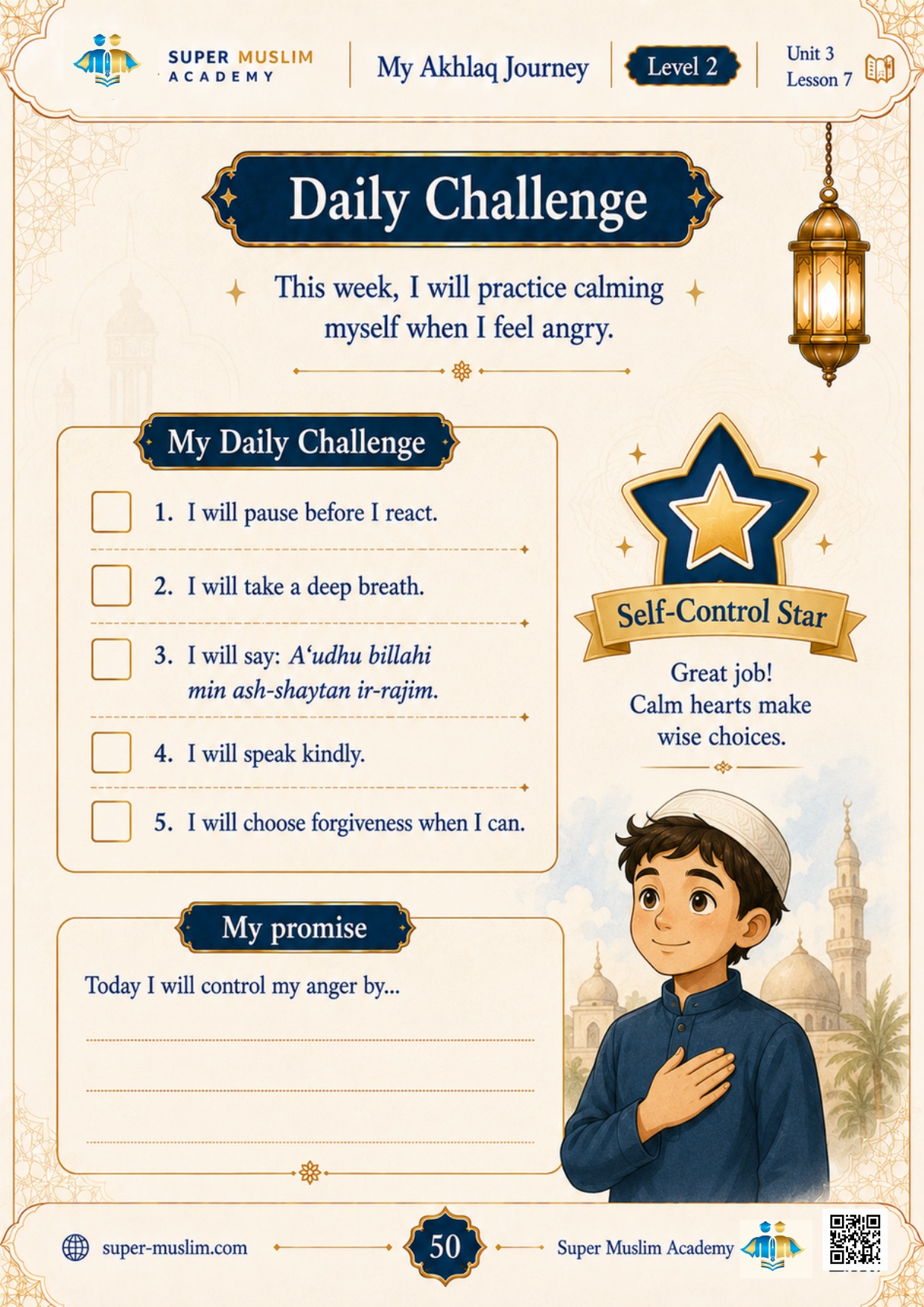
- Pause before you react.
- Take a deep breath.
- Say “A’udhu billahi min ash-shaytan ir-rajim” (I seek refuge in Allah from the accursed Shaytan). The Prophet ﷺ taught this for anger (Bukhari and Muslim).
- Speak kindly, or stay quiet until you can.
- Choose forgiveness when you can.
The Sunnah also teaches changing your position: if you’re standing, sit down, and if you’re sitting, lie down (Abu Dawud). Kids find this one surprisingly effective, mostly because it’s hard to stay furious while lying on the floor.
Step 1: Warm-up questions
- What things can make a person feel angry?
- How does your body feel when you are upset?
- What can you do before you speak or act?
Question two matters more than it looks. Kids who can name the signs (hot face, tight fists, fast heartbeat) can catch anger early, before it turns into shouting.
Step 2: Read “Yusuf and the Broken Tower”
Yusuf and his cousin are building a tower of blocks. Suddenly it falls, and Yusuf thinks his cousin did it on purpose. He feels hot and angry and wants to shout. Then he remembers: stop, breathe, and remember Allah. He steps back, takes a deep breath and speaks calmly. His cousin explains it was only an accident. Yusuf forgives him, they build the tower again together, and Yusuf learns that controlling anger protects friendship.
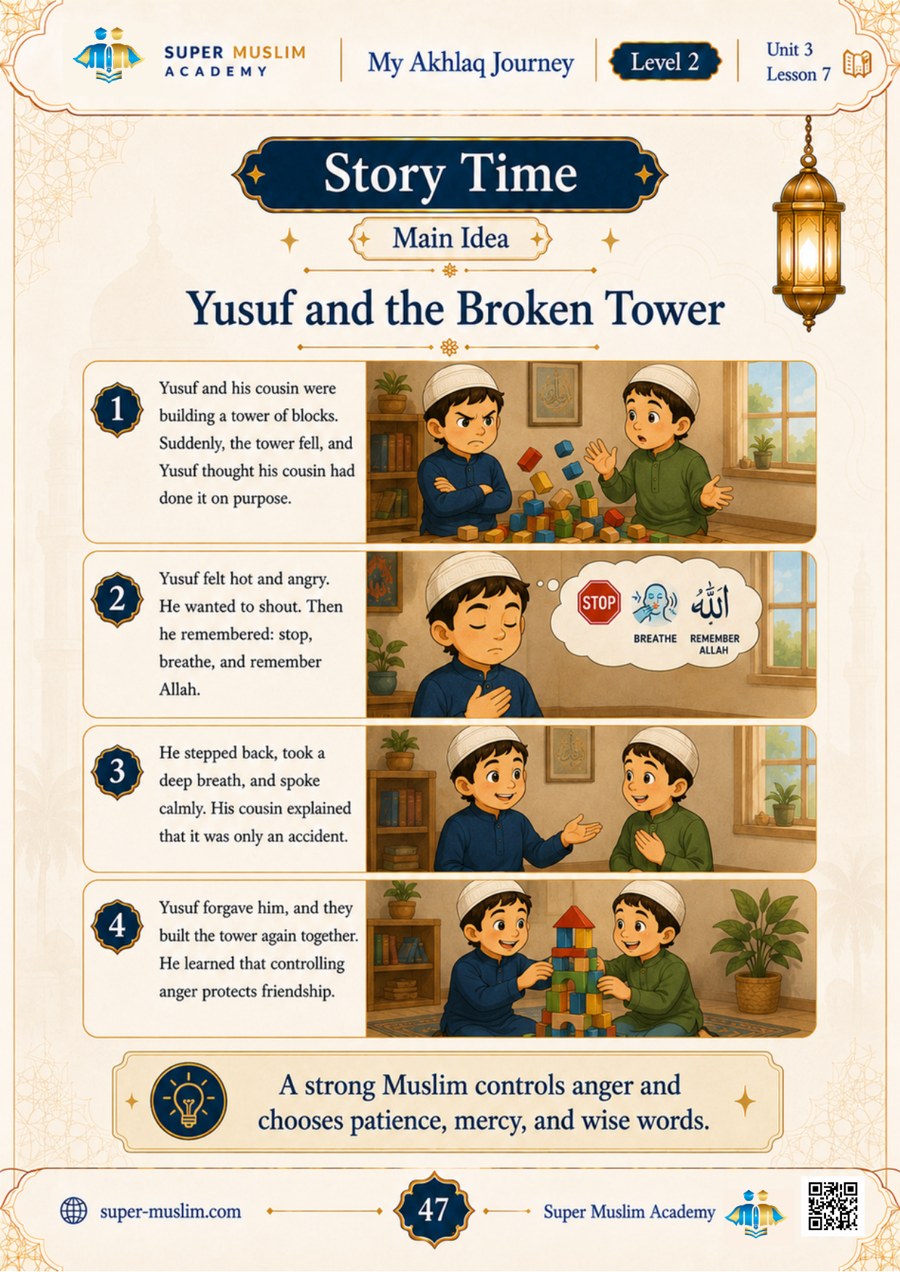
Point out the twist: it was an accident. Half of children’s anger comes from assuming someone did something on purpose. Pausing gives the truth time to come out.
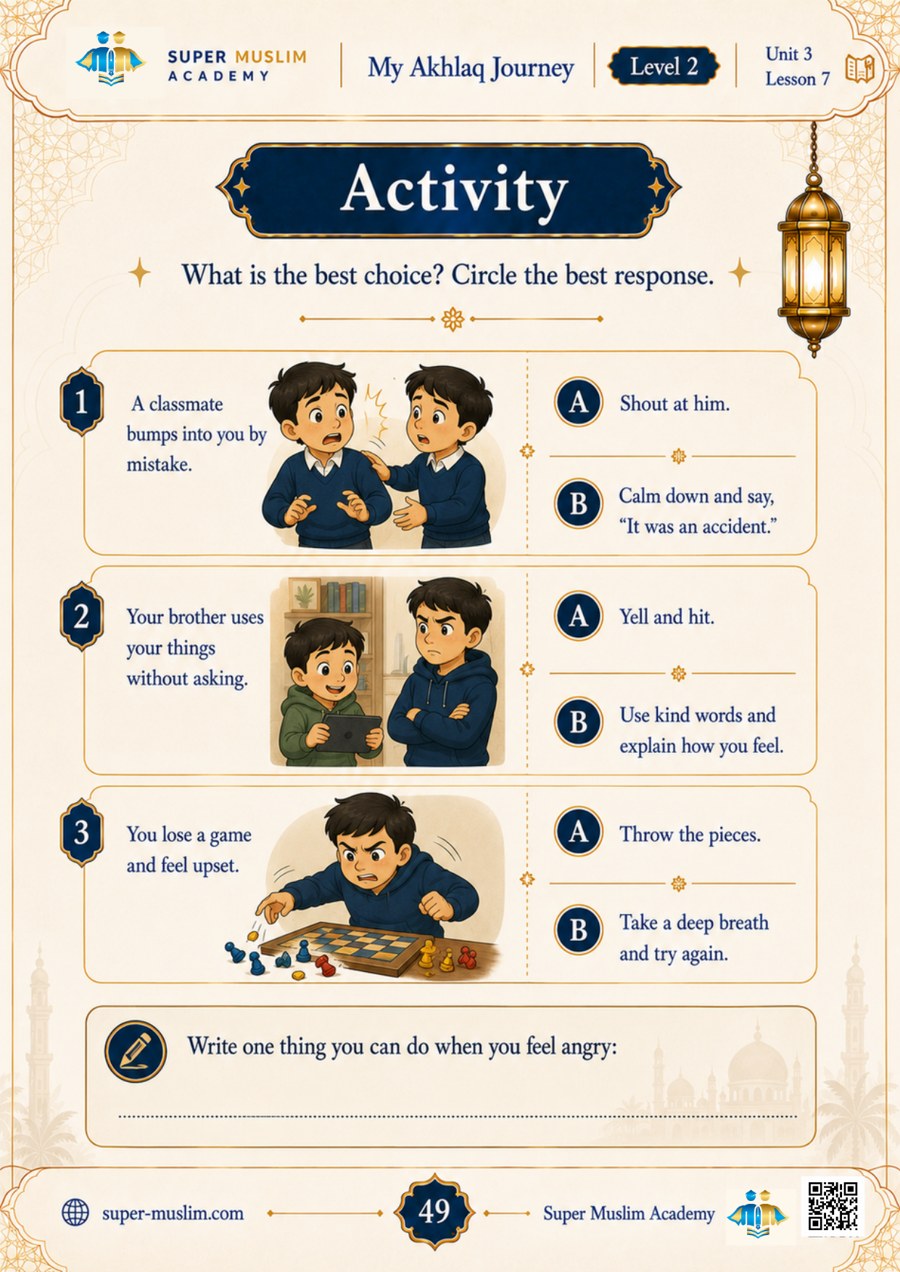
Step 3: Calm choices activity
Step 4: The 7-day self-control challenge (free printable)
Five steps, a box for each day, and a “Self-Control Star” at the end of the week.
For parents: during and after the storm
Teach it when they’re calm. Nobody learns anything mid-tantrum. Practise the five steps on a good day, like a fire drill.
Name the feeling, not the child. “You’re really angry right now” helps. “You’re so bad-tempered” doesn’t.
Model it out loud. “I’m getting frustrated, I’m going to take a breath and say a’udhu billah.” Kids learn self-control mostly by watching us do it.
Repair afterwards. Once everyone’s calm, talk about what happened and what they could try next time. That conversation is where the real learning happens.
This lesson pairs well with speaking kindly and kindness to siblings from Level 1.
Looking for an online Islamic school for kids? Our one-on-one Zoom classes teach akhlaq alongside the Quran, with online Quran classes for kids led by Al-Azhar trained teachers.
Frequently asked questions
What does Islam say about anger for kids?
The Prophet ﷺ taught that the strong person is the one who controls himself when angry (Bukhari and Muslim). He taught seeking refuge in Allah from Shaytan and changing position, standing to sitting or sitting to lying down, to calm anger.
What dua should a child say when angry?
“A’udhu billahi min ash-shaytan ir-rajim”: I seek refuge in Allah from the accursed Shaytan. It’s short enough for young children to learn quickly.
Is the checklist free to print?
Yes. Open it above at full size and print it.

You may also like
Islamic Eating Manners for Kids: 5 Sunnah Table Habits (Free Printable)