
Noorani Qaida Lesson in English | Learn Quran Basics
Noorani Qaida lessons in English are one of the most effective ways for English-speaking learners to build a strong foundation in Quran reading. At Super Muslim Online Quran Academy, we provide structured online lessons that help children, adults, and new Muslims learn Arabic letters, improve pronunciation, and understand the basics of Tajweed through clear English explanations. Our experienced teachers guide students step by step, making Quran learning simple, engaging, and effective. This ties in well with how it works, something a lot of students ask about too. Many families exploring this also ask about online Quran for beginners in u.k, which covers similar ground. For a closer look at best Quran websites, it helps to read through the details first. For a closer look at online Quran lessons for kids, it helps to read through the details first.
With a well-organized curriculum and personalized one-to-one instruction, students gain the confidence to read the Quran accurately while progressing at their own pace. Whether you are starting from the very beginning or looking to strengthen your Quran reading skills, Super Muslim Online Quran Academy offers a supportive learning environment that helps you achieve lasting success.
What Is Noorani Qaida?
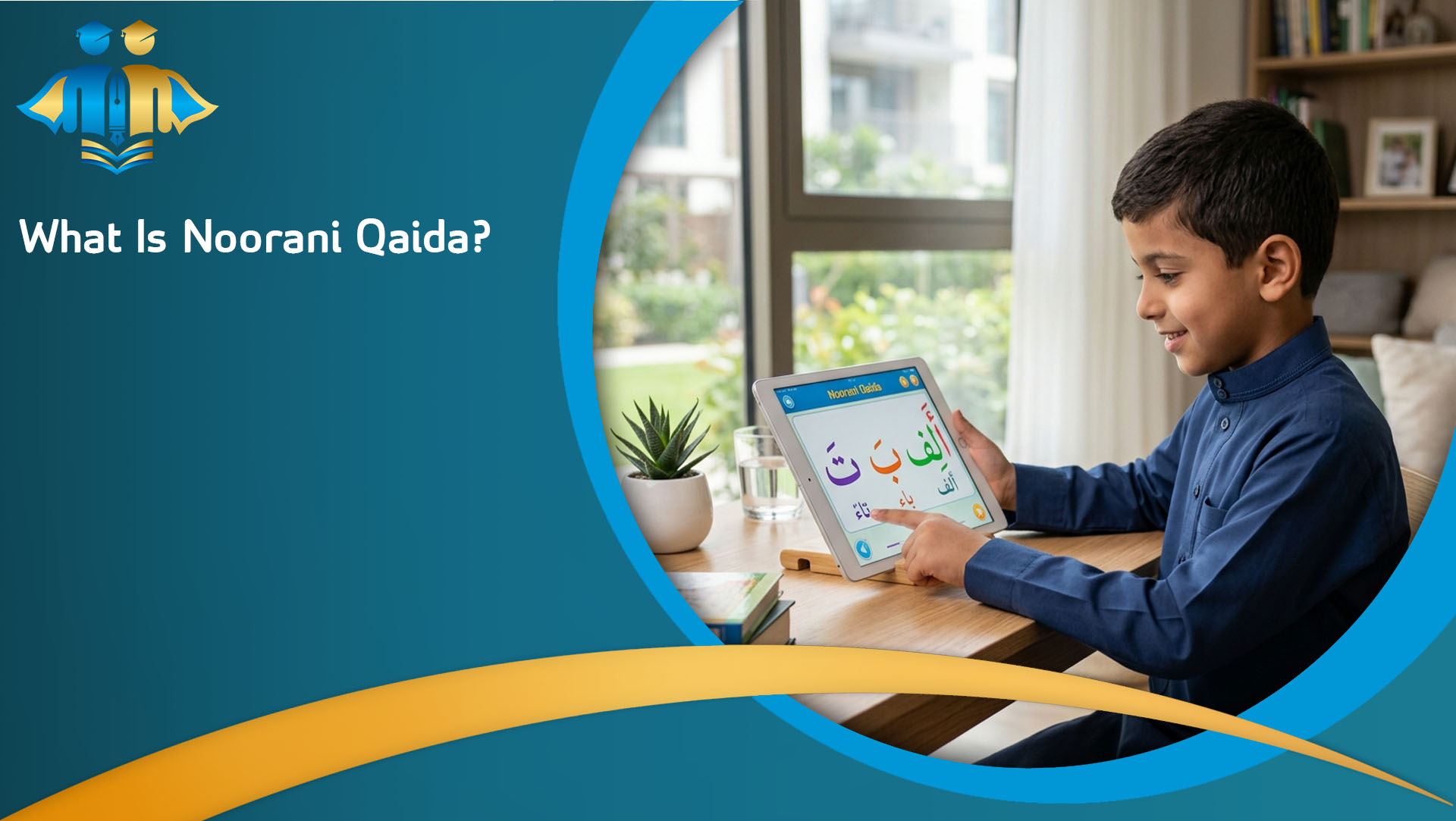
Noorani Qaida is a beginner-friendly educational book created to teach the fundamentals of Quranic Arabic before students start reading the Quran directly. Instead of overwhelming learners with advanced grammar or complex linguistic concepts, it introduces Arabic reading step by step in a logical order.
Students first become familiar with the Arabic alphabet, learning how every letter is written and pronounced. After mastering the individual letters, they move on to combined letters, short vowels, long vowels, Sukoon, Shaddah, Tanween, and other essential reading rules.
The primary goal of Noorani Qaida is not simply teaching Arabic letters but helping learners pronounce every sound correctly according to Tajweed principles. This early focus on pronunciation makes Quran recitation more accurate from the beginning and reduces mistakes that are difficult to correct later.
Today, thousands of students worldwide begin their Quran education through Noorani Qaida lessons in English, making it one of the most trusted learning methods for English-speaking Muslims.
Start Your Quran Learning Journey Today
Begin your journey toward a deeper, more meaningful connection with the Holy Quran through a structured, clear, and supportive learning approach designed to help you build confidence, consistency, and ease while gradually improving your recitation skills, step by step, naturally and steadily.
Whether your goal is to enhance Quran reading, master Tajweed rules, strengthen understanding, or maintain consistent memorization, learning under the guidance of an experienced teacher can make a significant difference by providing direction, motivation, and a well-organized study path tailored to your individual needs.
Start with a simple, level-based assessment to identify your current abilities, then follow a personalized learning plan tailored to your schedule, goals, and pace, ensuring steady progress, continuous improvement, and strong long-term results.

Why Is Noorani Qaida Important for Beginners?
Starting Quran education without understanding Arabic pronunciation often leads to incorrect reading habits. These habits may continue for years if they are not corrected early.
Noorani Qaida solves this problem by creating a strong foundation before learners begin reading complete Quranic chapters. Every lesson builds naturally on the previous one, ensuring students fully understand each concept before moving forward.Some of the main reasons beginners benefit from Noorani Qaida include:
- Learning Arabic letters in their correct pronunciation.
- Understanding how letters change their shape depending on their position in a word.
- Developing confidence before reading Quranic verses.
- Becoming familiar with the basic rules of Tajweed.
- Improving listening and speaking skills alongside reading.
- Building accuracy through continuous repetition and guided practice.
Instead of memorizing rules without understanding them, learners apply each concept immediately through practical exercises, making the learning experience both effective and enjoyable.
How does Noorani Qaida make Quran Reading Easier?
Many beginners worry that learning Quranic Arabic will be difficult or time-consuming. In reality, Noorani Qaida simplifies the entire process by dividing learning into manageable lessons.
Each lesson introduces only a small number of new concepts, allowing students to practice thoroughly before moving to the next stage.
For example, learners begin by recognizing letters individually. Once they master these letters, they learn how letters connect inside words. Gradually, they study vowel marks, pronunciation rules, and reading fluency without feeling overwhelmed.
Because every lesson reinforces previous knowledge, students continue improving naturally with every session.
This gradual progression is one of the reasons why Noorani Qaida lessons in English have become so popular among beginners around the world.
Key Skills Students Develop
Learning Noorani Qaida is about much more than identifying Arabic letters. Throughout the course, students acquire several valuable skills that support their Quranic education for years to come.
These include:
- Strong Arabic Letter Recognition: Students learn every Arabic letter individually before studying different letter combinations. This systematic approach helps eliminate confusion between similar-looking characters.
- Accurate Pronunciation: Each Arabic letter has its own articulation point. Learners practice producing these sounds correctly from the very beginning, helping them avoid common pronunciation mistakes.
- Reading Fluency: As lessons progress, students become comfortable reading increasingly longer words and phrases. Their reading speed improves naturally without sacrificing accuracy.
- Listening Skills: Listening carefully to correct pronunciation helps students distinguish between similar Arabic sounds and imitate them more effectively.
- Confidence: One of the biggest advantages of Noorani Qaida is the confidence it gives learners. Instead of fearing mistakes, students gradually become comfortable reading Arabic text independently.
Who Can Benefit from Noorani Qaida?
One of the greatest strengths of Noorani Qaida is its flexibility. It is suitable for learners from many different backgrounds and age groups.
- Children: Young learners benefit from structured lessons that match their developing language skills. The gradual progression keeps children engaged while building a solid Quranic foundation. Children also improve concentration, memory, and listening skills through regular reading practice.
- Adults: Many adults think it is too late to learn Quranic Arabic, but Noorani Qaida makes learning simple. Its clear lessons are ideal for beginners, and English explanations help learners understand each rule before reading the Quran.
- New Muslims: For converts to Islam, Noorani Qaida offers an accessible introduction to Quran recitation without requiring advanced Arabic knowledge. The clear explanations and logical lesson sequence make the learning process less intimidating and far more enjoyable.
Learning Noorani Qaida Online
Online education has transformed the way students study Quranic sciences. Today, learners no longer need to live near an Islamic learning center to receive quality instruction.
Instead, they can study from home while connecting with experienced Quran teachers through live online lessons. At Super Muslim Online Quran Academy, students receive personalized instruction designed to match their individual learning pace. Teachers guide every learner step by step, ensuring that pronunciation is corrected from the earliest lessons.
Interactive sessions, regular practice, and individual feedback allow students to progress steadily while maintaining confidence throughout their learning journey.
Another important advantage of online learning is flexibility. Families, university students, and working professionals can choose lesson times that fit comfortably into their daily schedules without sacrificing educational quality.
Why Learning in English Makes a Difference?
For many beginners, understanding explanations in their native language significantly improves learning outcomes. Instead of memorizing Arabic sounds without context, students studying Noorani Qaida lessons in English understand why each pronunciation rule exists and how it should be applied.
English explanations remove uncertainty, allowing learners to focus their attention on reading correctly rather than trying to interpret unfamiliar terminology.
This combination of clear instruction and practical application creates a smoother learning experience while helping students develop lasting Quran reading skills.
Step-by-Step Structure of a Noorani Qaida lesson in English
One of the biggest reasons learners achieve success with Noorani Qaida is its carefully organized structure. Every lesson prepares students for the next one, ensuring that no important skill is skipped. Instead of rushing into Quran recitation, learners first master the building blocks that make reading accurate and fluent.
A typical learning journey follows several stages, allowing students to gain confidence before progressing to more advanced topics.
Learning the Arabic Alphabet
The first stage focuses entirely on recognizing the Arabic letters. Students learn how each letter looks, how it is pronounced, and how it differs from similar letters.
Because several Arabic letters have similar shapes, learners are trained to distinguish between them from the beginning. Equal attention is given to the correct articulation of every sound, helping students avoid pronunciation mistakes that could affect Quran recitation later.
Regular repetition during this stage strengthens memory and allows students to recognize letters instantly without hesitation.
Understanding Harakat (Short Vowels)
After mastering the alphabet, learners move on to Harakat, the short vowel marks that determine how letters are pronounced. Students practice reading with:
- Fathah
- Kasrah
- Dammah
These vowel signs may seem simple, but they completely change the pronunciation of Arabic words. Continuous reading exercises help learners become comfortable using them naturally.
Reading Connected Letters
Arabic letters rarely appear alone when reading the Quran. Instead, they connect to form words. At this stage, students learn how letters change their appearance depending on whether they appear at the beginning, middle, or end of a word.
Repeated reading exercises improve recognition speed while making learners comfortable with complete Arabic words rather than isolated letters.
Long Vowels and Madd
Once students understand the short vowels, they begin studying long vowel sounds. This lesson teaches how certain letters extend pronunciation for a longer duration. Understanding these sounds improves both fluency and rhythm during Quran recitation.
Teachers normally introduce practical examples before discussing theoretical rules, allowing students to absorb concepts naturally.
Sukoon and Shaddah
Another essential stage introduces Sukoon and Shaddah. Learners discover how letters without vowels are pronounced and how these lessons significantly improve reading accuracy because they frequently appear throughout the Quran. Doubled letters should be read correctly.
Applying Basic Tajweed
Toward the end of the Noorani Qaida curriculum, students begin applying introductory Tajweed rules while reading practice words and short Quranic passages.
Rather than memorizing technical definitions, learners practice correct pronunciation repeatedly until proper recitation becomes natural.
By the time students complete the course, they possess a strong foundation that prepares them for reading the Quran confidently.
The Role of Tajweed in Noorani Qaida
Many beginners assume Tajweed is only for advanced students, but this is not the case. Good Quran recitation begins with learning proper pronunciation from the very first lesson. Noorani Qaida introduces Tajweed gradually so learners never feel overwhelmed. Students become familiar with:
- Correct articulation points of Arabic letters.
- Proper vowel pronunciation.
- Lengthening sounds where required.
- Reading with clarity and balance.
- Avoiding common pronunciation mistakes.
Because Tajweed is introduced progressively, students build good reading habits from the beginning instead of trying to correct mistakes later.
Common Challenges Beginners Face in Noorani Qaida

Every student follows a unique learning journey, so facing challenges during the early stages of Noorani Qaida is completely normal. The key to success is recognizing these obstacles and addressing them through consistent practice and guidance. With patience and regular revision, beginners can overcome these difficulties and continue improving their Quran reading skills.
Confusingly Similar Arabic Letters
One of the first challenges beginners encounter is distinguishing between Arabic letters that have similar shapes but different sounds. Letters such as ب، ت، ث or ج، ح، خ may look alike, confusing reading. Practicing these letters repeatedly, listening to correct pronunciation, and reading with a qualified teacher help students recognize the differences more quickly.
Pronouncing Difficult Arabic Sounds
Arabic contains several sounds that do not exist in English, making pronunciation difficult for many learners. Letters like ع، ح، خ، ق، and ص often require additional practice before students can pronounce them accurately. Careful teacher guidance, regular listening exercises, and daily repetition gradually improve pronunciation and build confidence.
Reading Too Quickly
Many beginners believe that finishing lessons quickly is a sign of success. In reality, accurate reading is far more important than speed. Reading slowly allows students to focus on correct pronunciation, recognize mistakes, and apply Tajweed rules properly. As accuracy improves through consistent practice, reading speed naturally increases.
Neglecting Revision
Each Noorani Qaida lesson builds on previously learned concepts. Students who skip revision often forget important pronunciation rules and struggle with more advanced lessons. Reviewing earlier exercises for just a few minutes each day strengthens memory, reinforces reading skills, and makes future lessons much easier to understand.
Effective Practice Tips for Faster Progress
Regular practice is one of the most important factors in mastering Noorani Qaida. While attending lessons with a qualified teacher provides valuable guidance, consistent study outside the classroom helps students develop fluency and confidence much more quickly.
Practice Every Day
Daily practice is more effective than studying for long periods once or twice a week. Spending twenty to thirty minutes reviewing lessons each day helps reinforce previous knowledge, improve pronunciation, and prepare students for new material.
Read Aloud
Reading aloud allows learners to hear their own pronunciation and recognize mistakes that may go unnoticed during silent reading. It also improves fluency, strengthens confidence, and prepares students for reading comfortably in front of their teacher.
Listen to Skilled Quran Reciters
Listening to experienced Quran reciters helps students become familiar with correct pronunciation, proper rhythm, and natural recitation. Repeating after the reciter is an excellent way to improve articulation and develop stronger reading habits.
Review Previous Lessons Regularly
Steady progress depends on maintaining a strong foundation. Revisiting earlier lessons before learning new ones reinforces important concepts, improves retention, and reduces the likelihood of repeating previous mistakes.
Ask Questions Whenever Needed
Successful learners are never afraid to ask questions. If a pronunciation rule or reading concept is unclear, seeking clarification from a qualified teacher prevents confusion and helps students continue progressing with confidence. Open communication creates a more enjoyable learning experience and leads to better long-term results.
Why Choose Super Muslim Online Quran Academy?
Choosing the right learning environment plays an important role in every student’s success. At Super Muslim Online Quran Academy, students receive individual attention from experienced Quran teachers who understand the needs of English-speaking learners.
Lessons are carefully planned to match each student’s level, ensuring steady progress without unnecessary pressure. The academy focuses on creating a comfortable learning atmosphere where students feel encouraged to ask questions, practice confidently, and improve continuously.
Whether the learner is a child beginning Arabic for the first time or an adult returning to Quran studies after many years, every lesson is designed to make progress both practical and enjoyable.
Teachers monitor pronunciation carefully, provide regular feedback, and adjust lesson pacing according to each student’s development, helping learners build confidence from the first class onward.
Long-Term Benefits of Learning Through Noorani Qaida Lessons in English
The value of Noorani Qaida extends far beyond learning how to recognize Arabic letters. A strong foundation continues to benefit students throughout their entire Quran learning journey. When learners understand pronunciation correctly from the beginning, they find it much easier to read new verses, memorize Surahs, and apply Tajweed with confidence.
Many students notice that their reading becomes smoother after completing the course because they no longer need to pause and think about individual letters. Instead, they can focus on understanding the flow of the words while maintaining correct pronunciation.
Another long-term advantage is the confidence learners gain. Reading the Quran can feel intimidating at first, especially for non-Arabic speakers. However, after completing a structured course, students often become much more comfortable reading independently and participating in Quran classes or family recitation sessions.
The skills acquired through Noorani Qaida also make future Islamic studies easier. Since learners already understand Arabic sounds and reading patterns, they can devote more attention to memorization, Tafsir, and other branches of Islamic knowledge.
Benefits for Children

Children absorb languages naturally, making early Quran education highly beneficial. Noorani Qaida introduces Arabic gradually and engagingly, which suits young learners without overwhelming them. Some of the most important benefits for children include:
- Developing correct pronunciation from an early age.
- Building confidence while reading Arabic.
- Improving listening and concentration skills.
- Strengthening memory through regular repetition.
- Preparing for Quran memorization with accurate recitation.
- Establishing a positive connection with the Quran from childhood.
Children who learn step by step are often able to transition smoothly into reading complete Quranic chapters because they already possess the essential reading skills.
Parents also appreciate the organized lesson structure, which allows them to monitor their child’s progress more easily.
Benefits for Adults
Adults sometimes hesitate to begin learning because they believe the process will be too difficult. In reality, Noorani Qaida has helped countless adult learners start reading the Quran successfully. Adults often enjoy studying in English because explanations are easier to understand and practical examples remove unnecessary confusion. Some of the advantages adult learners experience include:
- Learning at a comfortable pace.
- Correcting pronunciation mistakes developed over many years.
- Building confidence before reading the Quran independently.
- Improving fluency through regular guided practice.
- Understanding basic Tajweed without complicated theory.
Many adults also appreciate the flexibility of online learning, which allows them to balance Quran studies with work, family responsibilities, and other commitments.
Why Noorani Qaida Lesson in English Requires Consistency More Than Speed?
Many beginners believe that completing a Noorani Qaida lesson in English as quickly as possible is the best way to learn Quran reading. In reality, consistent practice produces better and longer-lasting results than rushing through lessons. Students who spend a little time every day usually develop stronger reading skills and greater confidence.
A Noorani Qaida lesson in English is designed to build one skill at a time. Each lesson prepares learners for the next, allowing them to improve naturally without feeling overwhelmed. This gradual approach helps students remember pronunciation rules and apply them correctly while reading the Quran.
Instead of trying to finish several lessons in one session, focus on completing one Noorani Qaida lesson in English carefully. Daily practice, even for only twenty minutes, strengthens memory, improves fluency, and develops accurate pronunciation over time.
Common Mistakes During a Noorani Qaida Lesson in English
Although a Noorani Qaida lesson in English is simple and beginner-friendly, certain habits can slow progress. Recognizing these mistakes early allows students to learn more effectively and avoid unnecessary challenges.
- Ignoring Pronunciation Corrections: Correct pronunciation is one of the main goals of every Noorani Qaida lesson in English. Some learners repeat the same mistakes without applying their teacher’s corrections. Listening carefully and practicing the correct pronunciation after each lesson leads to faster improvement and better Quran reading.
- Memorizing Without Understanding: Many students focus only on memorization. However, a Noorani Qaida lesson in English explains why letters and words are pronounced in specific ways. Understanding these rules helps learners read confidently instead of relying only on memory.
- Skipping Revision: Every Noorani Qaida lesson in English builds upon previous lessons. Students who skip revision often struggle with advanced exercises because they have forgotten earlier rules. Regular review strengthens retention and makes future lessons much easier.
- Comparing Yourself with Other Students: Every learner progresses differently. Some students master a Noorani Qaida lesson in English quickly, while others need additional practice. Comparing yourself with others may reduce motivation. Consistent personal improvement is a much better measure of success.
Building a Productive Routine for Every Noorani Qaida Lesson in English
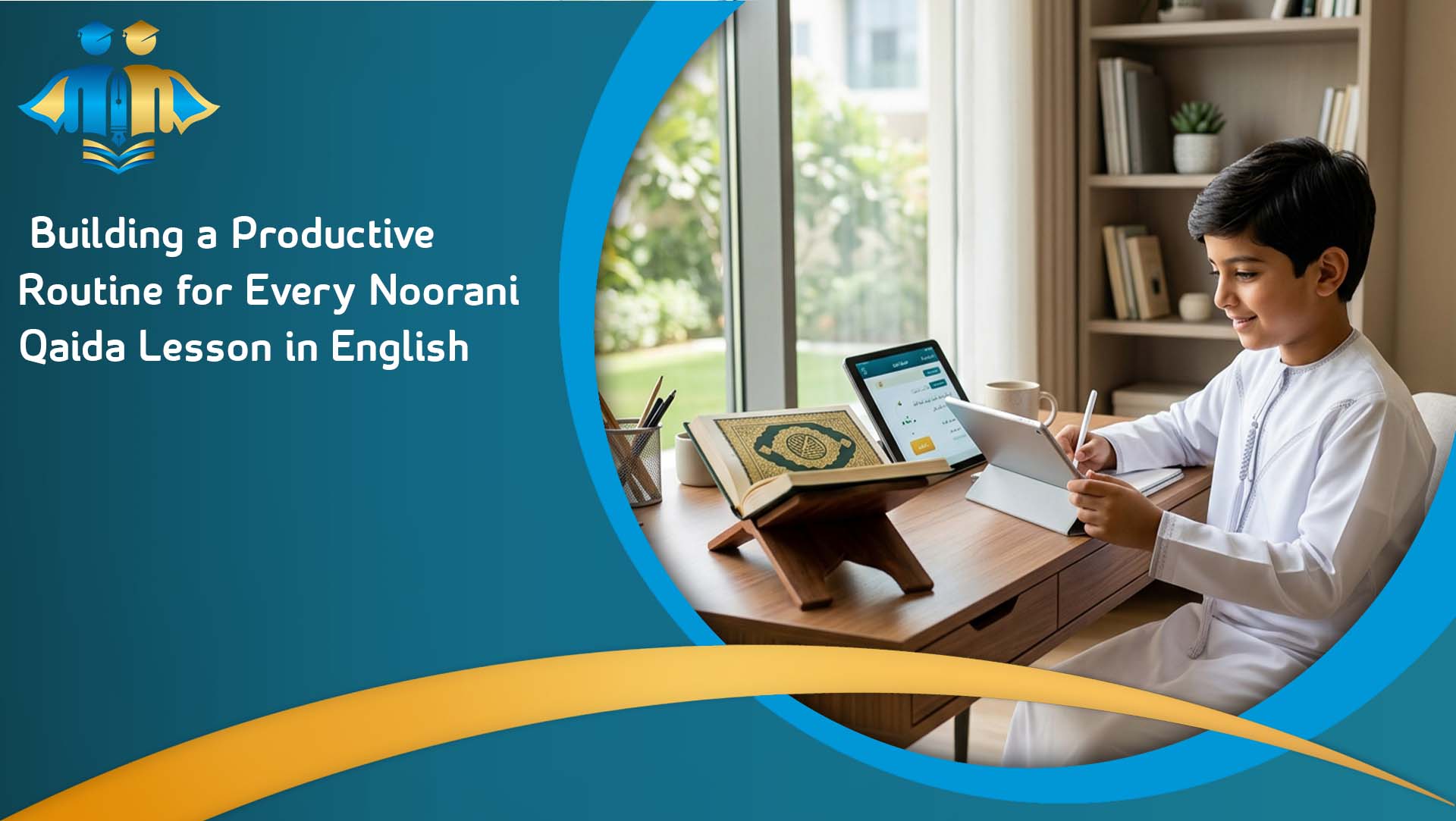
Creating a daily study routine helps students benefit from every Noorani Qaida lesson in English. Even short study sessions can produce excellent results when practiced consistently. Helpful habits include:
- Study in a quiet place without distractions.
- Review previous lessons before starting a new Noorani Qaida lesson in English.
- Read aloud to improve pronunciation and confidence.
- Keep a printed Noorani Qaida for daily revision.
- Listen regularly to accurate Quran recitation.
- Write down your teacher’s corrections and review them often.
- Practice every day instead of studying only once or twice a week.
These simple habits help students gain the maximum benefit from each Noorani Qaida lesson in English and make Quran reading more accurate and enjoyable.
Why do parents prefer a Noorani Qaida lesson in English?
Many parents choose a Noorani Qaida lesson in English because it provides a clear, organized, and beginner-friendly path to Quran learning. Children growing up in English-speaking environments often find it easier to understand new concepts when they are explained in English, while practicing Arabic pronunciation step by step. This approach reduces confusion and helps young learners enjoy the learning process from the very beginning.
Parents also value the opportunity to monitor their child’s progress and support daily practice at home. As children become familiar with Arabic letters for kids, they gain the confidence needed to recognize, pronounce, and connect Arabic letters correctly before moving on to Quranic verses. Building this strong foundation early makes future Quran reading much smoother and more accurate.
Learning Noorani Qaida Lessons in English with Qualified Teachers

Although self-study can provide a good introduction, learning a Noorani Qaida lesson in English with an experienced teacher offers significant advantages. Qualified instructors identify pronunciation mistakes immediately, explain difficult concepts clearly, and guide students through every stage of learning.
Professional teachers also ensure that Tajweed rules are applied correctly from the beginning, preventing incorrect reading habits that can become difficult to correct later.
At Super Muslim Online Quran Academy, every Noorani Qaida lesson in English is personalized to match the learner’s age, experience, and learning pace. Students receive continuous feedback, individual support, and structured guidance that keeps them motivated throughout the course.
With regular instruction and consistent practice, learners develop strong Quran reading skills, improve pronunciation, and build the confidence needed to continue their Quranic studies successfully.
How to choose the best Noorani Qaida lesson in English?
Selecting the right Noorani Qaida lesson in English is an important step for anyone beginning Quran reading. A high-quality program should be taught by qualified teachers who understand the needs of beginners and provide clear explanations, continuous encouragement, and regular pronunciation correction.
Some Islamic schools also teach through Madani Qaida, which is another well-known beginner’s resource for learning Quranic Arabic. Regardless of the curriculum, students should choose a course that offers structured lessons, live interaction with teachers, regular assessments, and plenty of reading practice. A supportive learning environment allows students to progress confidently while developing accurate Quran reading skills.
Signs You Are Progressing in a Noorani Qaida lesson in English
Many beginners wonder whether they are making enough progress during their studies. Fortunately, several clear signs show improvement in a Noorani Qaida lesson in English. Students gradually recognize Arabic letters without hesitation, pronounce difficult sounds more accurately, and read connected words with increasing confidence.
As their reading improves, many learners become ready to explore additional beginner resources such as Iqra Qaida, which can further strengthen reading fluency and reinforce the skills already developed through Noorani Qaida. Requiring fewer corrections from teachers and reading short Quranic passages more smoothly are also strong indicators of steady progress.
How Long Does a Noorani Qaida lesson in English take?
The time required to complete a Noorani Qaida lesson in English varies from one learner to another. Factors such as age, previous Arabic knowledge, lesson frequency, and daily practice all influence the learning pace. Students who dedicate twenty to thirty minutes each day to revision often complete the course more quickly while retaining what they learn.
Some learners compare Noorani Qaida with Ahsanul Qawaid when selecting a beginner’s curriculum. Both resources are designed to help students establish a strong foundation for Quran reading, although teaching methods may differ slightly. The most important factor is not the speed of completion but mastering each lesson before moving to the next stage, ensuring accurate pronunciation and long-term reading confidence.
What Comes After a Noorani Qaida lesson in English?
Completing a Noorani Qaida lesson in English is an important milestone that prepares students for the next stage of their Quran learning journey. After finishing the course, learners usually begin reading directly from the Quran while continuing to improve their Tajweed, pronunciation, and recitation skills through regular practice.
Many families also encourage younger students to learn Qaida Noorania for Kids as part of a structured Islamic education program before progressing to Quran memorization and advanced Tajweed. With a strong reading foundation already established, students can confidently continue their studies, memorize Surahs more accurately, and build a lifelong connection with the Quran through consistent learning and practice.
Frequently Asked Questions About Noorani Qaida Lessons in English
Before you begin learning, explore these Frequently Asked Questions About the Noorani Qaida Lesson in English to find clear answers about the course, the learning process, and who can benefit from it.
Is a Noorani Qaida lesson in English suitable for complete beginners?
Yes. A Noorani Qaida lesson in English is designed for beginners with little or no knowledge of Arabic. It starts with the Arabic alphabet and gradually teaches pronunciation, reading rules, and basic Tajweed.
How long does it take to complete Noorani Qaida?
The duration depends on the learner’s age, study routine, and practice time. Students who attend regular lessons and practice daily often complete the course within a few months.
Can adults learn through a Noorani Qaida lesson in English?
Absolutely. Adults of all ages can benefit from a Noorani Qaida lesson in English because the lessons are structured, easy to follow, and explained in English, making Quran reading more accessible.
Do I need to know Arabic before starting Noorani Qaida?
No. Noorani Qaida is specifically designed for learners with no prior knowledge of Arabic. It teaches every skill step by step, beginning with letter recognition and ending with confident Quran reading.
What should I study after completing Noorani Qaida?
After completing Noorani Qaida, students usually continue with Quran reading, Tajweed, and Quran memorization (Hifz). The strong foundation developed during the course makes advanced Quran studies much easier.
In conclusion, a Noorani Qaida lesson in English offers a simple, structured, and effective way to begin learning to read the Quran with confidence. It equips learners with the essential skills needed to recognize Arabic letters, improve pronunciation, and apply basic Tajweed before reading the Quran independently. This strong foundation makes future Quran studies easier and more enjoyable.
Whether you are a child, an adult, or a new Muslim, learning through English explanations allows you to understand each lesson clearly while progressing at a comfortable pace. With consistent practice and guidance from qualified teachers, you can develop accurate recitation skills and build a lifelong connection with the Quran.
At Super Muslim Online Quran Academy, we are committed to helping students of all ages succeed through personalized online instruction, experienced Quran teachers, and flexible class schedules. Start your learning journey today and discover how the right foundation can lead to confident, accurate, and meaningful Quran recitation.

You may also like

Quran Memorization Schedule for Working Adults: A Guide

How to Choose the Right Online Quran Teacher for Your Child