

Madani Qaida: Learn Quran Reading Step by Step
Madani Qaida: The Complete Beginner’s Guide to Learning Quran Reading with Confidence. Learning to read the Holy Quran correctly is a meaningful goal for Muslims of every age. The first step toward accurate Quran recitation is building a strong foundation in Arabic letters, pronunciation, and the basic rules of Tajweed. It’s a good idea to also look into how it works once you’ve got the basics down. This ties in well with how to read Quran for beginners, something a lot of students ask about too. If this interests you, Islamic online Quran academy is another area worth checking out. If this interests you, online Quran lesson for adults is another area worth checking out.
Quran Learning Qaida has become one of the most trusted learning resources for beginners because it introduces these essential concepts in a gradual and easy-to-understand way.
Whether you are starting your own Quran learning journey or helping your child take the first steps, understanding the lessons in this guide can make the learning process smoother and more enjoyable. With consistent practice, proper guidance, and a structured learning method, beginners can develop confidence before moving on to reading the Quran itself.
For students who prefer structured online learning with experienced teachers, Super Muslim Online Quran Academy offers personalized Quran classes that help learners practice each lesson correctly while receiving continuous feedback.
Who Should Learn Madani Qaida?
Quran Learning Qaida is designed for anyone beginning the journey of Quran reading, regardless of age or educational background. While it is often associated with young children, it is equally valuable for teenagers and adults who have never learned to read Arabic or who wish to improve their Quran recitation from the basics.
Many new Muslims also choose Quran Learning Qaida because its gradual lessons make Arabic pronunciation easier to understand without feeling overwhelming. Since every lesson introduces only a small number of new concepts, learners can progress at a comfortable pace while building confidence with each chapter.
Whether learning at home, in a mosque, or through online Quran classes, Quran Learning Qaida provides a structured roadmap that prepares students for accurate Quran reading.
Start Your Quran Learning Journey Today
Begin your journey toward a deeper, more meaningful connection with the Holy Quran through a structured, clear, and supportive learning approach designed to help you build confidence, consistency, and ease while gradually improving your recitation skills, step by step, naturally and steadily.
Whether your goal is to enhance Quran reading, master Tajweed rules, strengthen understanding, or maintain consistent memorization, learning under the guidance of an experienced teacher can make a significant difference by providing direction, motivation, and a well-organized study path tailored to your individual needs.
Start with a simple, level-based assessment to identify your current abilities, then follow a personalized learning plan tailored to your schedule, goals, and pace, ensuring steady progress, continuous improvement, and strong long-term results.

What Is Madani Qaida and Why Is It Important?
For every beginner, learning Arabic pronunciation before reading the Quran is essential. A strong foundation prevents common pronunciation mistakes and helps learners recognize every Arabic letter with confidence.
The primary purpose of Qaida Noorania is to introduce learners to the building blocks of Quranic Arabic step by step. Instead of presenting difficult rules all at once, it starts with the Arabic alphabet and gradually introduces vowels, connected letters, pronunciation, and the basic principles of Tajweed.
This progressive approach allows children and adults to learn Noorani Qaida at a comfortable pace without feeling overwhelmed. Each lesson builds naturally upon the previous one, helping students improve their fluency through regular practice. Because the lessons follow a logical order, learners gain confidence with every chapter they complete. Among the main objectives of this learning method are:
- Recognizing all Arabic letters accurately.
- Learning the correct pronunciation of each letter.
- Understanding how letters change when connected.
- Reading complete Arabic words confidently.
- Develop a solid introduction to Tajweed before reading the Quran.
Benefits of Learning Madani Qaida
Studying the Quran and learning Qaida offer numerous long-term benefits beyond simply recognizing Arabic letters. Because the lessons are organized in a logical sequence, learners gradually develop the skills needed for fluent and accurate Quran recitation. Some of the key benefits include:
- Building a strong foundation before reading the Quran.
- Improving Arabic pronunciation from the beginning.
- Reducing common recitation mistakes.
- Understanding basic Tajweed rules naturally.
- Increasing reading confidence through gradual practice.
- Preparing students for advanced Quran studies.
- Supporting both children and adult beginners.
With regular practice, these essential skills become lasting habits that strengthen Quran reading, improve pronunciation, and build confidence. A solid foundation makes learning Tajweed, memorization, and fluent Quran recitation much easier in the future.
How to Learn Madani Qaida Effectively?
Learning Quranic Arabic requires more consistency than speed. Rather than rushing through multiple lessons, beginners benefit from mastering each topic before moving to the next.
A successful learning routine usually includes several simple habits.
Learn One Lesson at a Time
Every lesson introduces a new concept. Spending enough time on each lesson helps learners retain what they have studied instead of memorizing mechanically.
Practice Reading Aloud
Pronunciation improves through listening and repetition. Reading aloud allows learners to identify mistakes and become more familiar with the sounds of Arabic letters.
Focus on Accuracy Before Speed
Many beginners try to read quickly, but correct pronunciation is always more important than reading fast. Accuracy develops naturally into fluency with regular practice.
Revise Previous Lessons
Frequent revision strengthens memory and prevents learners from forgetting earlier concepts. Even a few minutes of daily review can make a noticeable difference.
Learn with a Qualified Teacher
A teacher can immediately correct pronunciation errors that learners may not notice themselves. Receiving proper guidance from the beginning makes future Quran reading much easier.
Students who want live instruction and personalized support can benefit from experienced Quran tutors at Super Muslim Online Quran Academy, where lessons are designed according to each student’s learning pace.
Common Mistakes Beginners Should Avoid
Many students encounter similar challenges during their early Quran learning journey. Recognizing these mistakes can help learners improve more quickly and avoid developing incorrect reading habits.
Some of the most common mistakes include:
- Moving to new lessons before mastering previous ones.
- Ignoring proper pronunciation in favor of reading quickly.
- Skipping daily revision sessions.
- Learning without listening to qualified Quran teachers.
- Confusing similar Arabic letters such as س and ص or ت and ط.
- Neglecting Tajweed rules during practice.
Correcting these mistakes early allows learners to build a stronger foundation and develop accurate Quran recitation skills.
How Long Does It Take to Complete Quran Learning Qaida?
The time required to complete the Quran Learning Qaida varies from one student to another. Factors such as age, learning pace, previous Arabic knowledge, and study consistency all influence progress.
Children who attend regular classes several times each week often complete the lessons within three to six months. Adults may progress faster or slower depending on their available study time and previous experience with Arabic.
Rather than focusing on finishing quickly, learners should aim to master each lesson thoroughly before moving forward. A solid foundation leads to greater confidence when reading the Quran.
Essential Tajweed Terms Every Madani Qaida Beginner Should Know
Before reading the Quran fluently, beginners need to understand the basic Tajweed terms introduced in the Quran Learning Qaida. These concepts help students recognize pronunciation rules, improve accuracy, and prepare for advanced Quran recitation.
Harf (Arabic Letter)
A Harf refers to an individual letter of the Arabic alphabet. Every Arabic letter has a specific pronunciation point (Makhraj) and unique characteristics that affect how it is read in Quran recitation.
Learning each letter correctly is the first foundation of accurate Quran reading.
Harakaat (Arabic Vowel Marks)
Harakaat are the short vowel signs placed above or below Arabic letters to show their correct pronunciation. Mastering these vowel sounds helps beginners read Arabic words correctly and avoid pronunciation mistakes.
The three basic Harakaat are:
- Fathah
- Kasrah
- Dammah
Madd (Sound Stretching Rule)
Madd means extending a sound for a specific duration according to Tajweed rules. Correct understanding of Madd helps learners develop smooth and balanced Quran recitation.
The three Madd letters are:
- Alif (ا)
- Waw (و)
- Ya (ي)
Sukoon (No Vowel Sound)
Sukoon is a mark that indicates a letter is pronounced without a vowel sound. It is an important concept in Quran Learning Qaida because it helps learners understand how Arabic letters connect and form words.
Shaddah (Letter Emphasis)
Shaddah indicates that a letter is doubled in pronunciation. The sound becomes stronger because the letter is treated as two letters according to Tajweed rules.
Understanding Shaddah improves accuracy when reading Quranic words.
Tanween (Double Vowel Marks)
Tanween refers to double vowel marks placed at the end of certain Arabic words. These marks create a light “N” sound during pronunciation. Learning Tanween helps beginners read many Quranic words correctly.
The three types of Tanween are:
- Fathatain
- Kasratain
- Dammatain
H3: Qalqalah (Echo Sound Rule)
Qalqalah is a slight bouncing or echoing sound produced when certain Arabic letters are pronounced under specific conditions.
The five Qalqalah letters are:
ق – ط – ب – ج – د
Ikhfa (Hidden Noon Sound)
Ikhfa is a Tajweed rule where the Noon Saakin or Tanween sound is partially hidden while maintaining a light nasal sound.
Idgham (Merging Letters)
Idgham means merging one sound into another according to specific Tajweed rules. This creates smoother and more natural Quran pronunciation.
Izhar (Clear Pronunciation)
Izhar means pronouncing a letter clearly without hiding, merging, or adding nasalization. Understanding these basic Tajweed terms gives beginners a strong foundation for continuing their Quran learning journey.
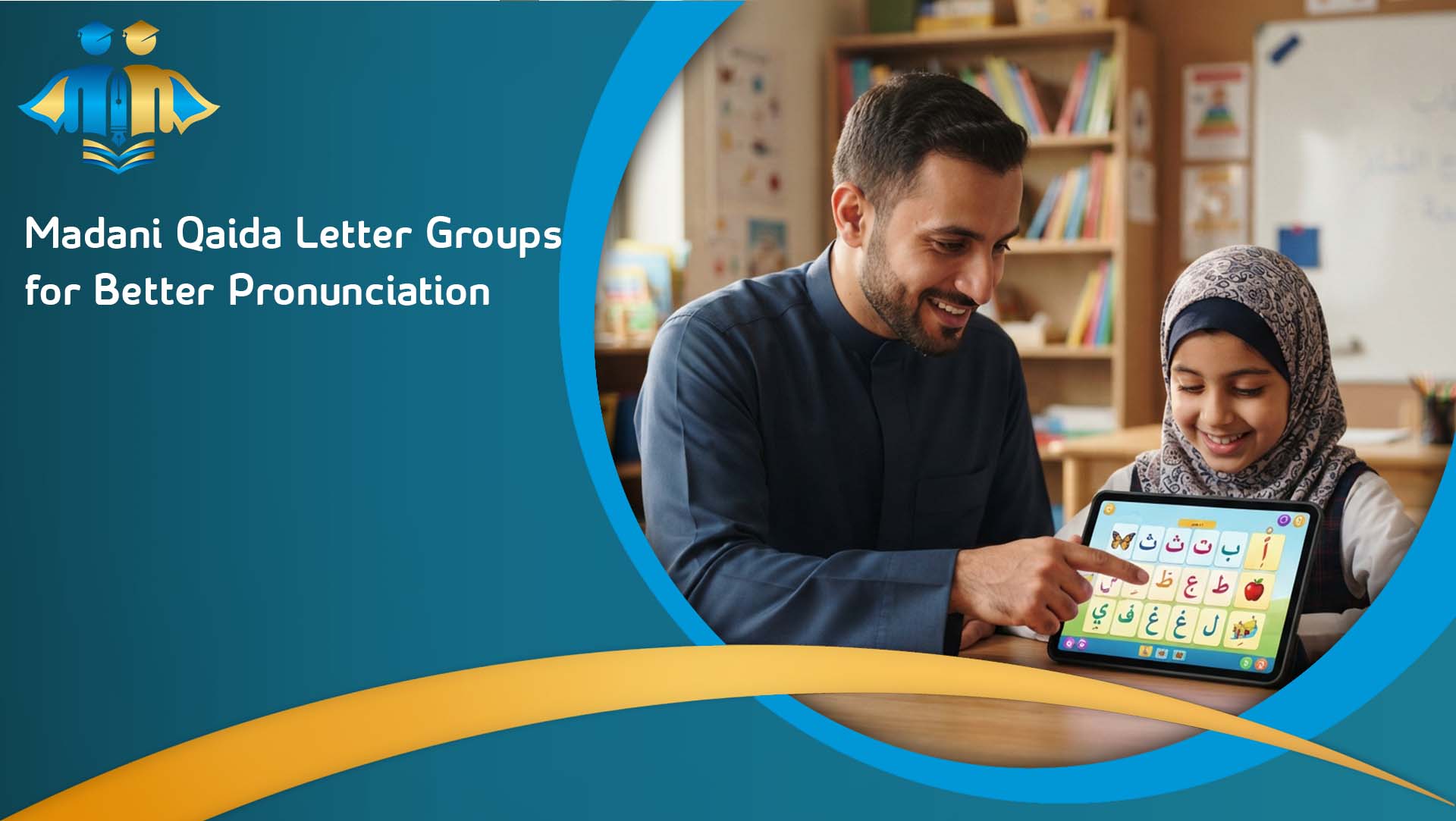
Arabic Letter Categories for Better Quran Reading
After learning the essential Tajweed terms, beginners move to understanding how Arabic letters are grouped according to their characteristics and articulation points. These categories make pronunciation easier and help students apply Tajweed rules correctly.
Learning the 29 Arabic Letters Through Quran Learning Qaida
The Arabic alphabet consists of 29 letters, and every beginner should learn their shapes, names, and correct pronunciation. These letters form the foundation of Quran reading, making accurate recognition an essential early learning step.
Each Arabic letter has a specific articulation point (Makhraj), and some letters may sound similar for beginners. Regular practice with a qualified teacher helps learners develop correct pronunciation habits from the beginning.

You may also like

Quran Memorization Schedule for Working Adults: A Guide

How to Choose the Right Online Quran Teacher for Your Child