
How to Teach Kids Kindness to Siblings in Islam (A 7-Day Lesson)
The short answer: you won’t stop siblings from ever arguing, and Islam doesn’t ask you to. What you can do is give your kids one verse to remember, one story to picture, and five small habits to practise for a week. Kindness between brothers and sisters grows from repetition, not from breaking up the same fight for the tenth time.
Below is Lesson 3 of our My Akhlaq Journey curriculum, exactly as our teachers use it: the verse, the story, the activity and the printable checklist. It follows Lesson 1 on respecting parents, and it works best if you run it at home for seven days.
What Islam teaches about kindness at home
The verse we build the lesson on is short enough for a five year old to memorise:
وَقُولُوا لِلنَّاسِ حُسْنًا
“Speak kindly to people.” (Qur’an 2:83)
Kids usually hear “people” and think of strangers or teachers. That’s the moment to ask: “Is your sister a person? Is your little brother?” The penny drops quickly. The first people we owe kind words to are the ones we live with.
The Prophet ﷺ also said, “He is not one of us who does not show mercy to our young and respect to our elders” (Sunan al-Tirmidhi). For siblings this one is gold, because it gives each child a job. The older one shows mercy. The younger one shows respect. Nobody gets to say “but he started it”.
Kindness to siblings, broken into five habits
“Be nice to your brother” is too vague to act on. In the lesson we turn it into five things a child can actually tick off:
- Speak kindly. No name-calling, even as a joke.
- Share your toys, or at least take turns.
- Help your sibling with something small: tidying up, finding a shoe, reaching a cup.
- Say sorry quickly. Not after an hour of sulking.
- Play nicely, which mostly means no grabbing and no shouting.
Step 1: Warm up with three questions
Ask these at dinner or in the car, when nobody is upset:
- How can you show love to your brother or sister?
- What can you share with them today?
- What kind words can you say when they feel sad?
Let both children answer, and let each one hear what the other says about them. It’s often the first time a younger child hears an older sibling say something nice about them out loud.
Step 2: Read the story of Amina and her brother
Amina is building a block tower when her little brother wants to join in. At first she feels upset. Then she smiles, shares the blocks, and they build a tall tower together. Later she helps him put the toys away, and their mother says, “Masha’Allah! Kind siblings make a happy home.”
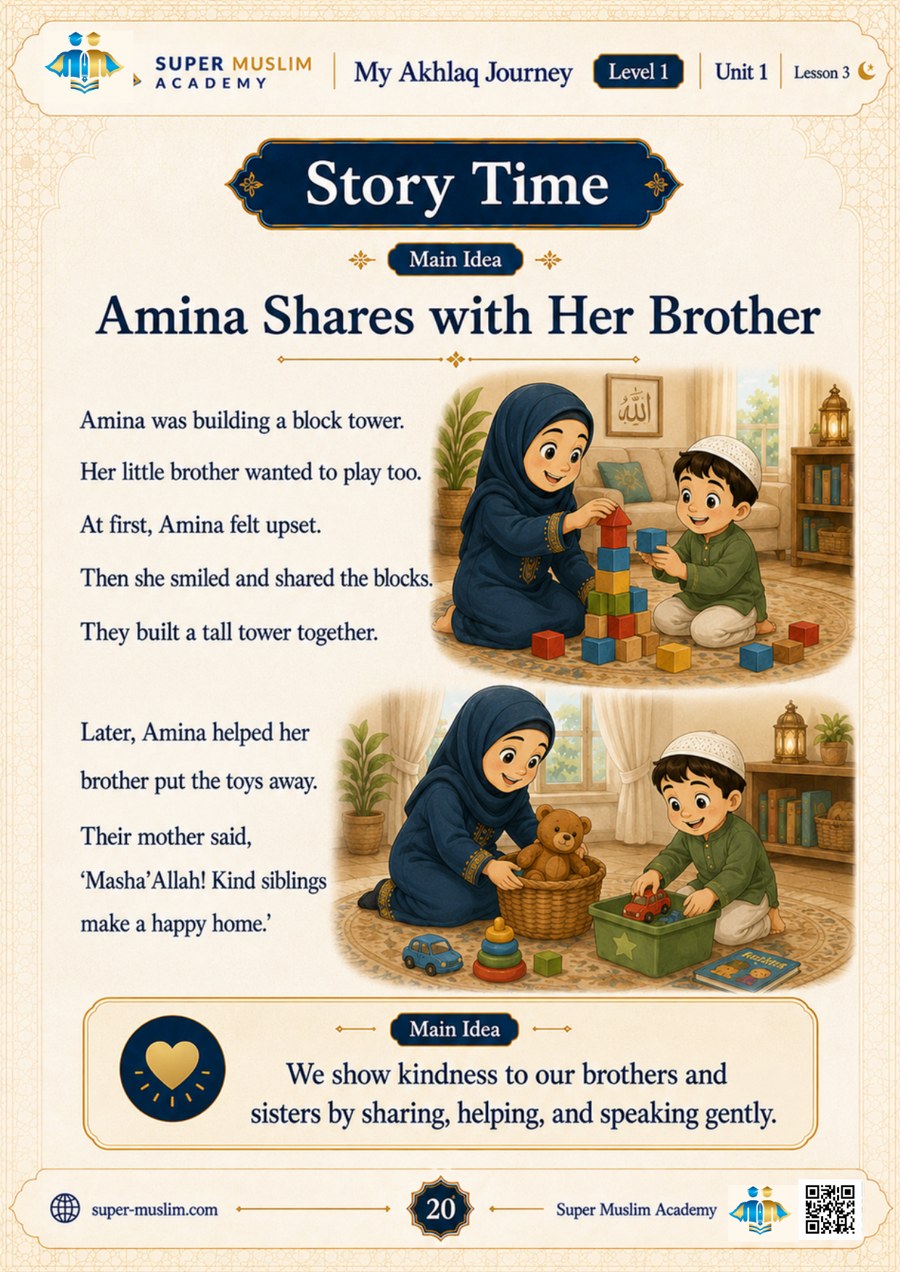
The detail kids relate to most is “at first, Amina felt upset”. The story doesn’t pretend that sharing is easy. It admits the feeling and then shows a better choice. After reading, ask: “Has that ever happened to you? What did you do?” Then ask what Amina did instead.
Step 3: Find the kind actions
The activity page shows four scenes. Two are kind: sharing toys and helping a sister clean up. Two need fixing: grabbing and shouting, and the one that comes after it, saying sorry. The child circles the good actions and talks about the others. There’s a bonus box to draw one kind thing they do for their brother or sister.
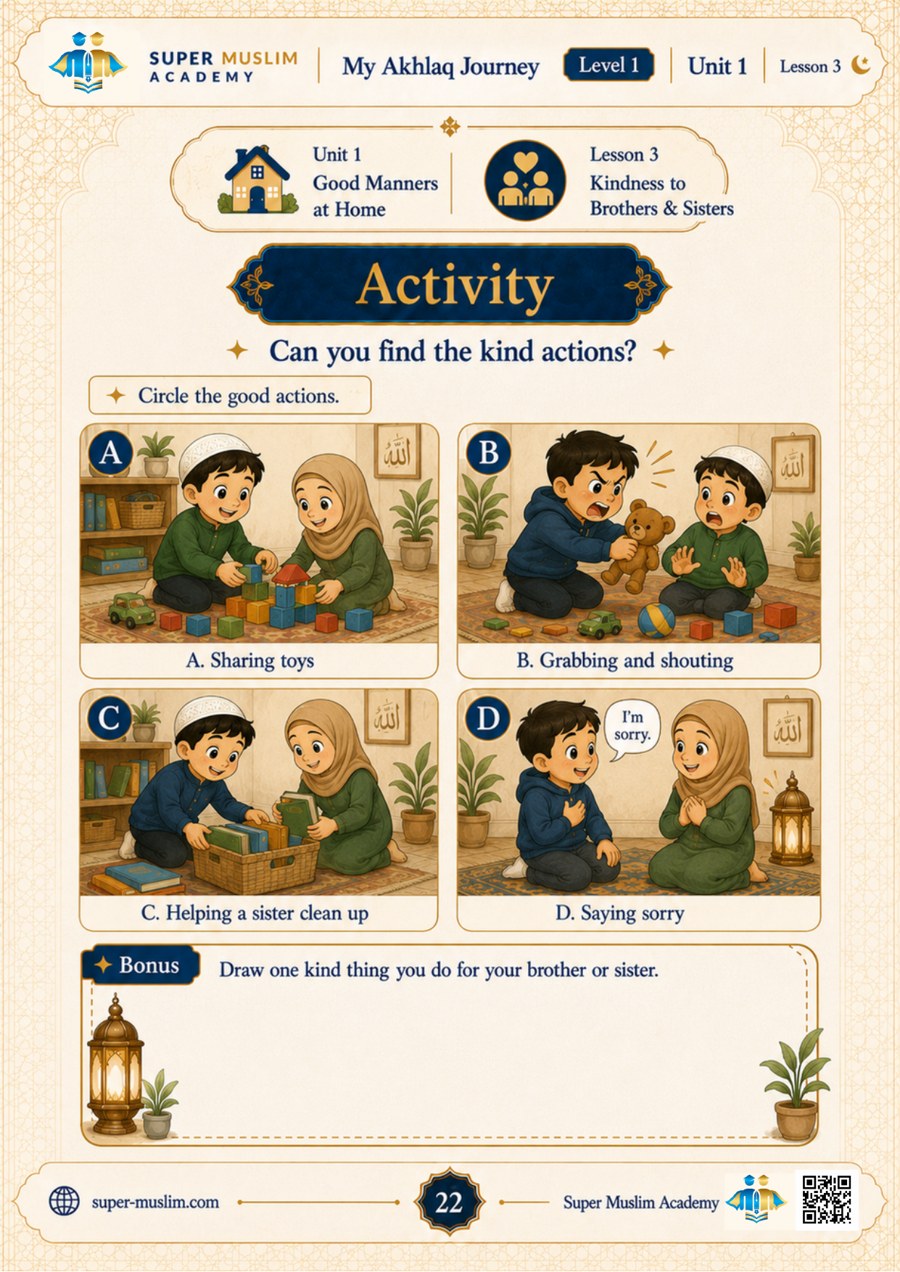
If you have two kids doing it together, let them do it side by side and compare. They’ll argue about which picture is kindest, which is honestly a pretty good argument to be having.
Step 4: The 7-day sibling kindness challenge (free printable)
Each child gets their own checklist with the five habits. Every time they do one, they tick it. At the end of the week they earn the “Sibling Kindness Star”, and there’s a promise line at the bottom: “Today I will be kind by…”
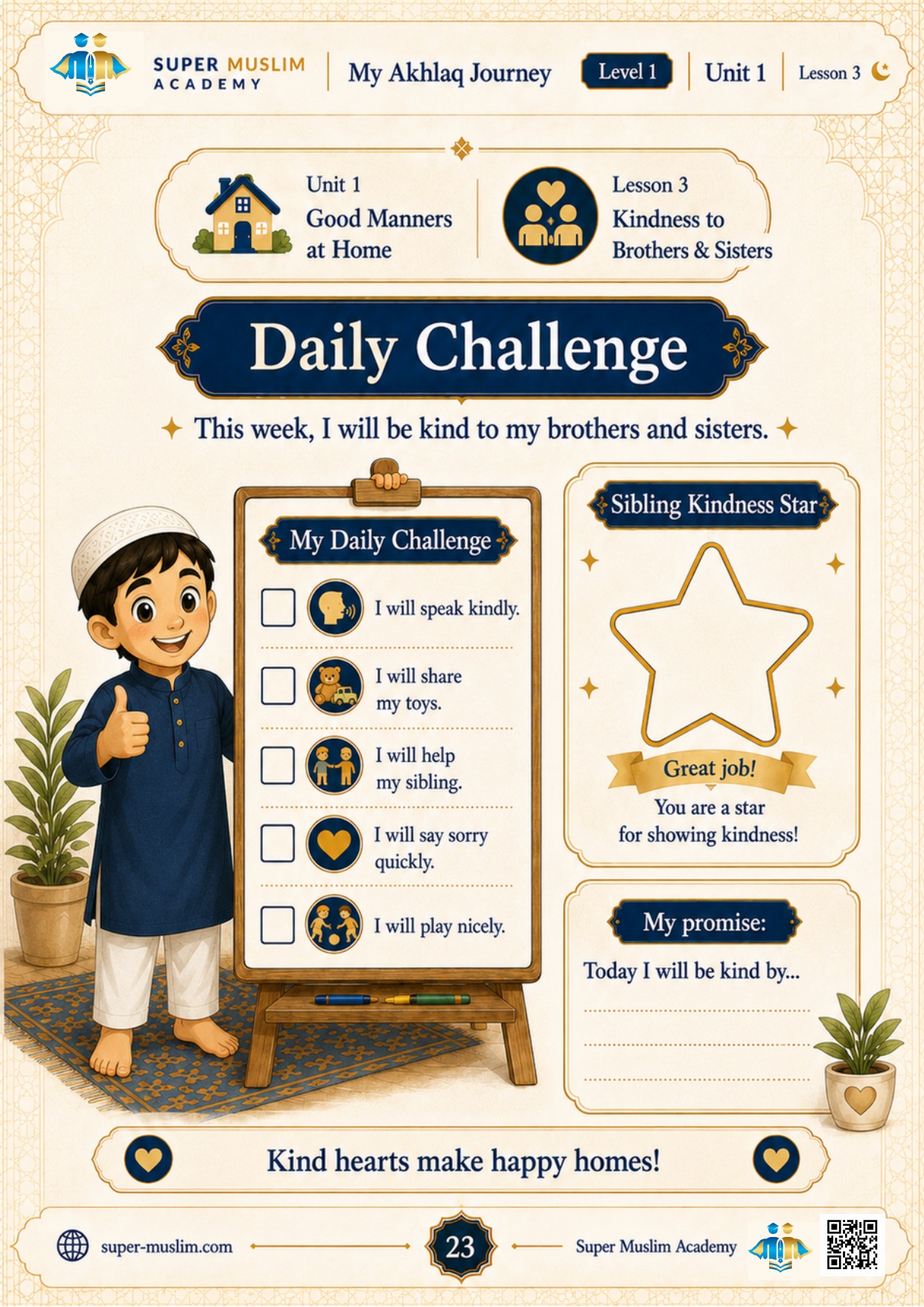
A tip that makes a big difference: let siblings tick each other’s boxes. “Did your sister share with you today? Then you can tick it for her.” Suddenly they’re watching for each other’s kindness instead of each other’s mistakes.
What to do when they still fight
They will. A week-long challenge doesn’t switch off sibling rivalry, and it isn’t meant to. A few things that help in the moment:
Name the feeling before the rule. “You’re angry because he knocked over your tower” lands better than “We don’t shout in this house”. Once they feel heard, they can listen.
Don’t force an instant “sorry”. A forced sorry teaches kids that the word is a ticket out of trouble. Give them a minute, then ask what they could do to make it right. The checklist says “say sorry quickly”, and quickly is still a choice they make.
Avoid comparing. “Why can’t you be calm like your sister?” plants exactly the jealousy you’re trying to remove. The story of Prophet Yusuf and his brothers is a powerful one for older children on where jealousy can lead, and it’s a good one to read together when they’re ready.
Notice the good moments out loud. If you only comment when they fight, fighting is what gets your attention.
Want a teacher to take your children through the series?
Kindness to Brothers and Sisters is Lesson 3 of eleven in My Akhlaq Journey, Level 1. Our teachers go through the story and the verse with your child one on one over Zoom, at their level, and check in on the weekly challenge. Siblings can study the same level together too.
More from the series and the blog: how to teach kids to respect parents in Islam, Islamic parenting tips for raising Quran-loving kids and simple ways to teach Islam to kids at home.
Looking for an online Islamic school for kids? Our one-on-one Zoom classes teach akhlaq alongside the Quran, with online Quran classes for kids led by Al-Azhar trained teachers.
Frequently asked questions
What does Islam say about siblings fighting?
Islam asks believers to speak kindly to people (Qur’an 2:83) and teaches that the older should show mercy to the younger and the younger should respect the older (Sunan al-Tirmidhi). Arguments happen in every family; the goal is to handle them with kind words and quick forgiveness.
How do I teach my child to share in an Islamic way?
Start with a story your child can picture, like Amina sharing her blocks, then make sharing one of a few small daily habits they tick off for a week. Praise the times they share without being asked.
What age is this lesson for?
Level 1 is written for roughly 5 to 10 year olds. Younger children can join in with help, and older siblings can take the lead in reading the story.
Is the sibling kindness checklist free?
Yes. Open the checklist above at full size and print one for each child.

You may also like
How to Teach Kids to Respect Parents in Islam (A 7-Day Lesson)

Prayer lesson for beginners: Learn Salah Easily