
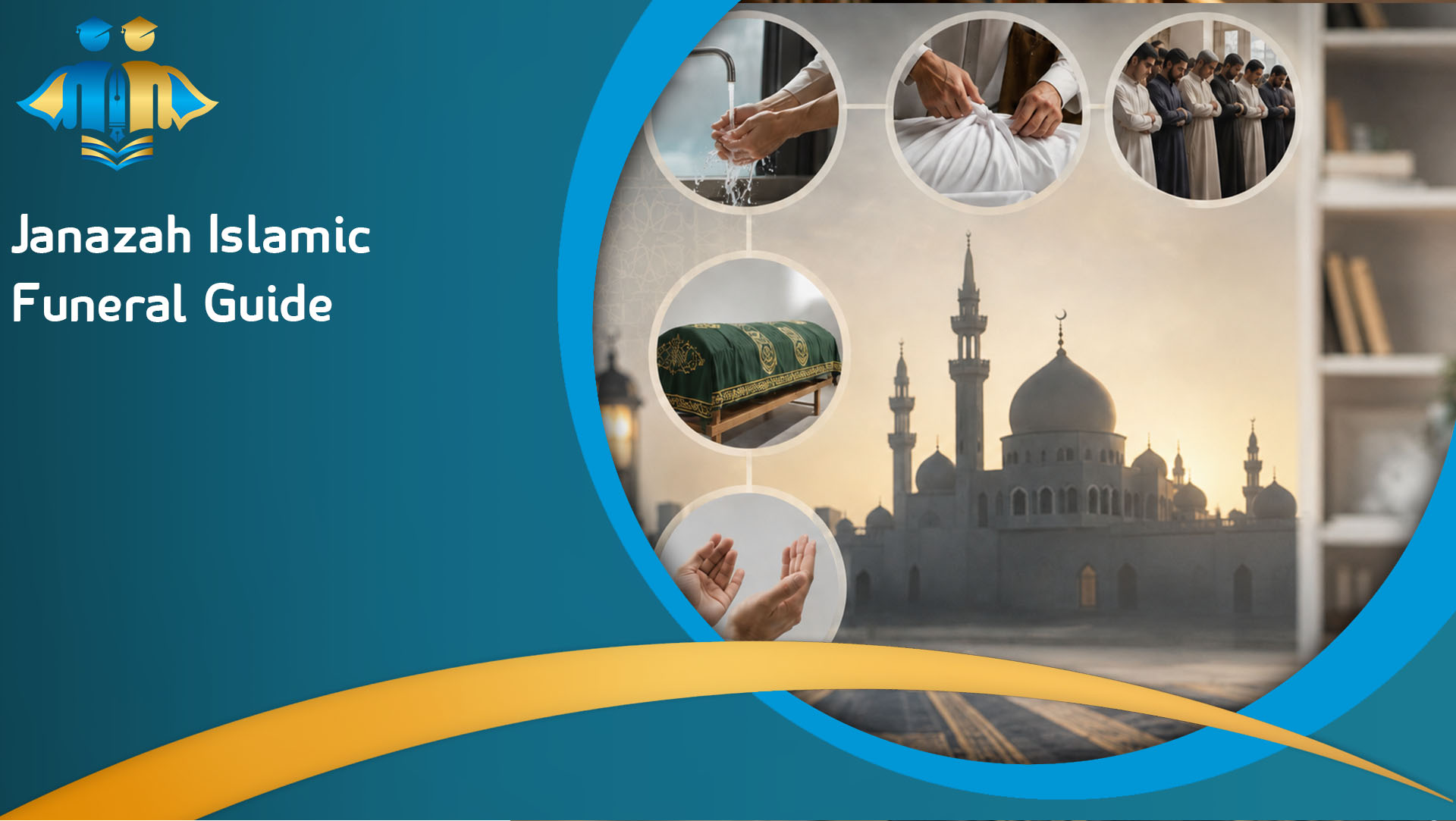
Janazah Islamic Funeral Guide: A Complete Guide
Janazah Islamic Funeral Guide is a practical resource for Muslims who want to understand the Islamic funeral prayer, its purpose, preparation, and essential steps. The Janazah prayer is a special act of worship performed for a deceased Muslim, and it allows the community to ask Allah for mercy, forgiveness, and compassion for the person who has passed away.
Death can be an emotionally overwhelming experience. Family members may be grieving, while others attending the funeral may be unsure about what they should do or say. Understanding the funeral prayer in advance can therefore make the experience less stressful and help worshippers participate with greater confidence and respect.
This Janazah Islamic Funeral Guide explains the prayer step by step, from preparing for the congregation to completing the final salam. It also explains what makes Salat al-Janazah different from the five daily prayers, what worshippers should focus on during the prayer, and how Muslims can support the bereaved family.
For learners who want to strengthen their understanding of Islamic practices, Super Muslim Online Quran Academy can also provide structured Quran and Islamic learning that helps students become more familiar with important acts of worship.
What Is the Janazah Prayer?
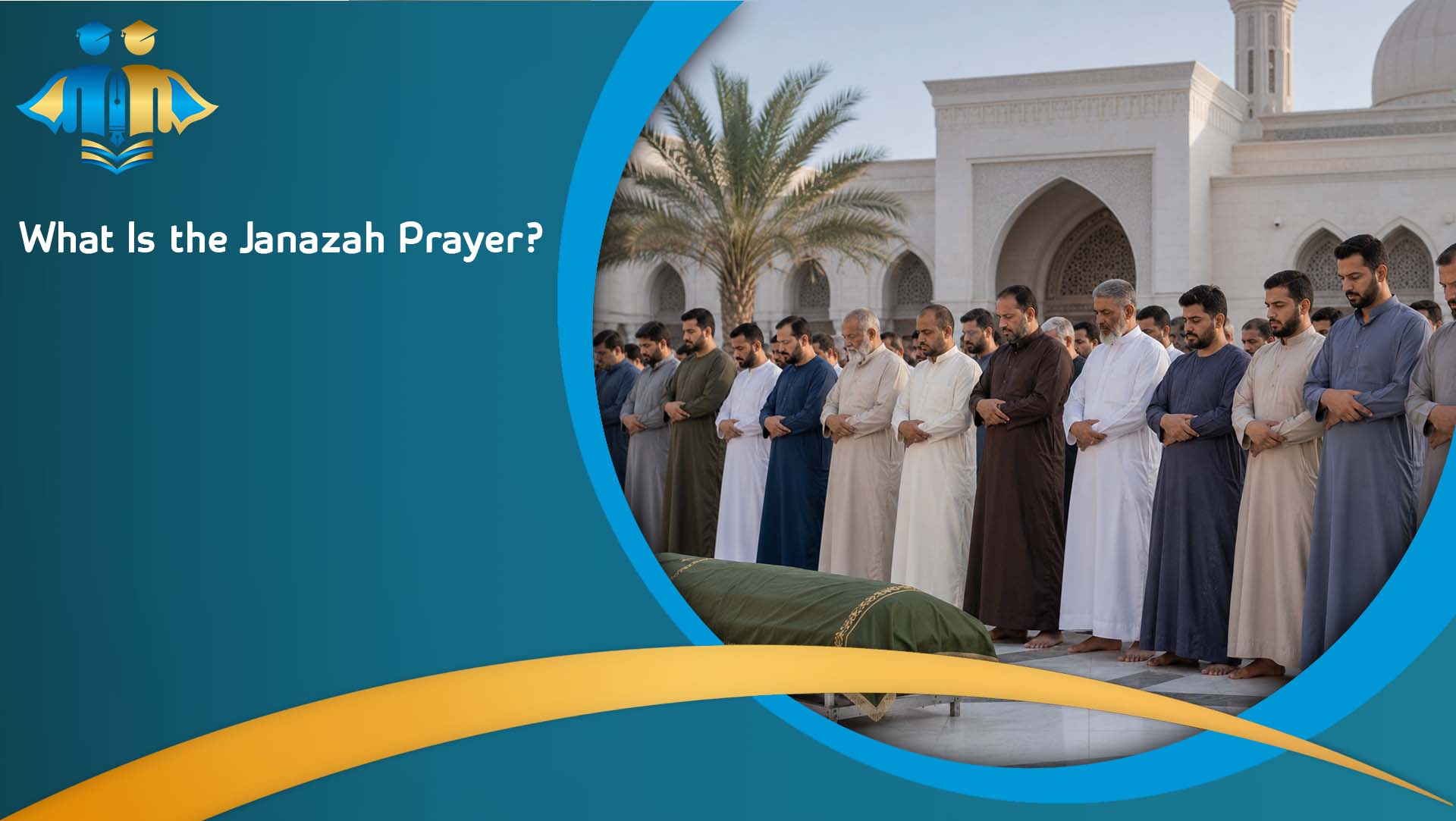
The Janazah prayer, commonly called Salat al-Janazah, is the Islamic funeral prayer offered for a deceased Muslim. Unlike the regular daily prayers, it is performed while standing and does not include bowing or prostration.
Its central purpose is supplication. Muslims gather together to ask Allah to forgive the deceased, have mercy upon them, and grant them a good final destination. At the same time, attending the Janazah reminds the living that life is temporary and that every person will ultimately return to Allah.
A Janazah Islamic Funeral Guide should therefore explain more than the physical movements of the prayer. The spiritual meaning is equally important. The congregation is not simply completing a series of takbirs; it is standing together to seek Allah’s mercy for someone who has died.
The prayer also reflects the importance of community in Islam. Even when someone has lost a close family member, they do not have to face the moment alone. Other Muslims gather, pray, offer condolences, and help with the practical responsibilities surrounding the funeral.
Start Learning the Quran with Trusted Egyptian Teachers Today
Ready to improve your Quran recitation, master Tajweed, or begin memorizing the Holy Quran with confidence? At Super Muslim Online Quran Academy, our experienced Egyptian Quran teachers provide personalized one-on-one lessons tailored to your age, level, and goals.
Enjoy flexible scheduling, live guidance, and a supportive learning environment that helps you make steady progress from the comfort of your home. Book your free trial class today and take the first step toward a stronger connection with the Book of Allah.

Janazah Islamic Funeral Guide: Preparing for the Prayer
Before joining the funeral prayer, a worshipper should prepare in a manner appropriate for salah. This includes having the necessary purification and observing the conditions required for prayer.
Wudu and Personal Preparation
Wudu should be performed before attending the prayer when possible. A person should also make sure that their clothing and body are clean and that they are appropriately dressed.
If you know that you may attend a Janazah, preparing beforehand can be helpful. Funeral arrangements can move quickly, and there may not always be enough time to return home for preparation.
Facing the Qiblah
The congregation stands facing the Qiblah. The imam stands in front of the worshippers, with the deceased positioned according to the established funeral arrangement.
The exact positioning of the imam and the deceased can differ according to local practice and scholarly opinions. Therefore, if you are attending a funeral in a mosque or Islamic center, following the imam is generally the easiest way to avoid confusion.
Standing in Rows
Worshippers form rows behind the imam. Men and women arrange themselves according to the congregation’s established practice, with women generally standing behind the men when both are present.
Straight and organized rows reflect the unity of the Muslim community. There is no need to rush to stand directly next to the deceased or to move around unnecessarily.
Janazah Islamic Funeral Guide: Making the Intention
The first essential step is making the intention, known as niyyah. The intention is made in the heart. A worshipper intends to perform the funeral prayer for the deceased for the sake of Allah. It does not have to be announced publicly, and there is no requirement to use a particular language for the intention.
This is important because some people become unnecessarily concerned about memorizing a specific sentence. The purpose of niyyah is simply to know what act of worship you are performing.
Before the prayer begins, take a moment to focus. Funeral gatherings can be emotional and sometimes crowded. Instead of worrying about whether you will remember every detail perfectly, concentrate on following the imam and sincerely praying for the deceased.
For students studying Islamic worship, Super Muslim Online Quran Academy can help provide broader guidance on prayer, Quran learning, and foundational Islamic knowledge. Learning wudu step by step can also help beginners strengthen their understanding of the basic practices connected with salah.
Janazah Islamic Funeral Guide: The First Takbir
The Janazah prayer consists of four takbirs in the commonly practiced form. The imam begins by saying Allahu Akbar, and the congregation follows him. The first takbir marks the formal beginning of the prayer.
Unlike the daily obligatory prayers, the Janazah prayer does not begin with the regular adhan and iqamah. Worshippers stand in their rows and follow the imam when the prayer starts.
The position of the hands and whether they are raised at particular points can vary according to the school of Islamic jurisprudence being followed. Because of these differences, worshippers should avoid becoming distracted if another person performs a minor detail differently.
The most important thing is to follow the imam and maintain the proper spirit of the prayer. Beginners who are still learning the fundamentals of salah may also benefit from studying how to pray in Islam to understand the general structure and etiquette of prayer.
What Is Recited After the First Takbir?
After the first takbir, the worshipper recites Surah Al-Fatihah according to the commonly practiced method. Al-Fatihah is one of the most important chapters of the Quran. It praises Allah, recognizes His mercy and sovereignty, and asks Him for guidance to the straight path.
Some traditions and schools of jurisprudence differ regarding exactly what is recited and how it is recited during the Janazah prayer. For this reason, a comprehensive Janazah Islamic Funeral Guide should not present every minor variation as though there were only one universally accepted practice.
If you are praying behind an imam, follow the method being led by the congregation. If you are learning the prayer independently, you can study the position of a trusted, qualified scholar or the established practice of your local mosque. A prayer lesson for beginners can be especially useful for those who need to build confidence in the basic requirements of salah.
Janazah Islamic Funeral Guide: The Second Takbir
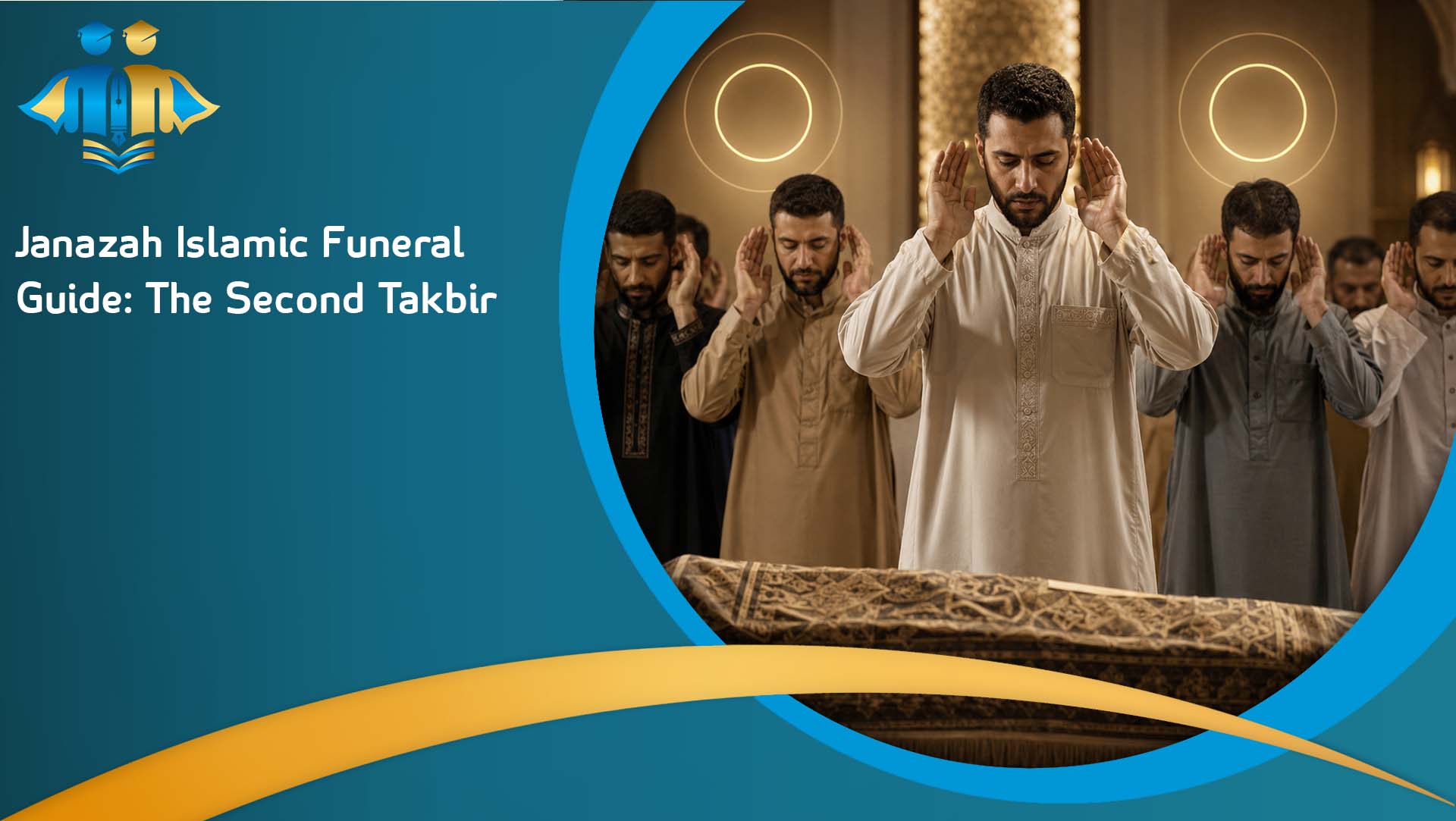
After the first recitation, the imam says the second Allahu Akbar. The congregation follows him and then recites the prayer for Prophet Muhammad ﷺ, commonly known as Salat Ibrahimiyyah or Durood Ibrahim.
This is similar to the prayer recited during the daily salah. It includes asking Allah to send blessings and peace upon Prophet Muhammad ﷺ and his family, as well as upon Prophet Ibrahim and his family.
The second takbir is therefore not simply another transition. It leads the worshipper into another important form of supplication.
At this point, the worshipper should remain attentive and avoid unnecessary conversation or movement. The Janazah prayer is short, but its purpose is profound.
Janazah Islamic Funeral Guide: The Third Takbir and Dua
The third takbir is followed by one of the most important parts of the funeral prayer: making dua for the deceased.
This is the moment when the congregation asks Allah to forgive the deceased and grant them mercy.
Among the well-known supplications used for the deceased are prayers asking Allah to forgive those who have died, those who are present and absent, men and women, young and old, and to grant the deceased faith and mercy.
The exact wording of the dua may vary. Therefore, if you have not memorized a long supplication, do not panic. You can learn a reliable dua gradually and focus on sincerity.
The purpose is not to demonstrate how much Arabic you have memorized. The purpose is to ask Allah sincerely on behalf of the person who has passed away.
What Should You Focus on During the Dua?
During this part of the prayer, consider the meaning behind the supplication. You are asking Allah:
- To forgive the deceased.
- To show mercy to them.
- To overlook their shortcomings.
- To grant them peace and forgiveness.
- To honor them with a good final destination.
- To give patience and strength to their family.
- To guide and protect those who remain.
This makes the third takbir a deeply meaningful part of the Janazah Islamic Funeral Guide.
Janazah Islamic Funeral Guide: The Fourth Takbir
After the dua, the imam says the fourth takbir. The congregation follows him by saying, Allahu Akbar.
The fourth takbir brings the main sequence of the funeral prayer toward its conclusion. Depending on the school or local practice, there can be differences concerning what is said between the fourth takbir and the final salam.
As with other matters of Islamic jurisprudence, worshippers should avoid arguing during a funeral about minor differences in practice. The funeral is a time for prayer, dignity, and support for the family.
If you are uncertain about a detail, following the imam is usually the most practical approach during the congregation. Understanding the Online Quran Classes vs Traditional Madrasa can also help learners consider different approaches to gaining structured Quranic and Islamic knowledge.
For those planning their worship and learning around Islamic dates, an Islamic Hijri Calendar Guide can provide useful background on the Hijri calendar and its significance.
Janazah Islamic Funeral Guide: Completing the Prayer With Salam
The Janazah prayer ends with taslim, the greeting that concludes the prayer.
The imam says the salam, and the congregation follows. In many commonly practiced forms of Salat al-Janazah, the salam is performed to the right.
The details can vary between legal schools and local traditions. Therefore, a Janazah Islamic Funeral Guide should recognize these differences rather than suggesting that every Muslim community performs every detail identically.
Once the prayer is complete, the congregation proceeds with the remaining funeral arrangements according to Islamic guidance and local requirements.
The worshipper should continue to behave respectfully. The atmosphere after the prayer may remain emotional, particularly for close relatives of the deceased.
Why Is the Janazah Prayer Important?
The Janazah prayer has both spiritual and social significance. From a spiritual perspective, it is an act of worship and supplication. Muslims acknowledge that the deceased has returned to Allah and ask Allah to treat them with mercy.
From a community perspective, the prayer demonstrates that Muslims support one another during difficult moments. A grieving family may feel overwhelmed by the loss, yet the presence of a supportive community can provide comfort.
The prayer also reminds those who attend that death is a reality that every human being will face. This reminder can encourage people to reflect on their own lives, relationships, responsibilities, and preparation for the Hereafter.
A useful Janazah Islamic Funeral Guide should therefore help readers understand the prayer as an act of compassion, not merely a checklist of movements.
How Should You Behave at an Islamic Funeral?
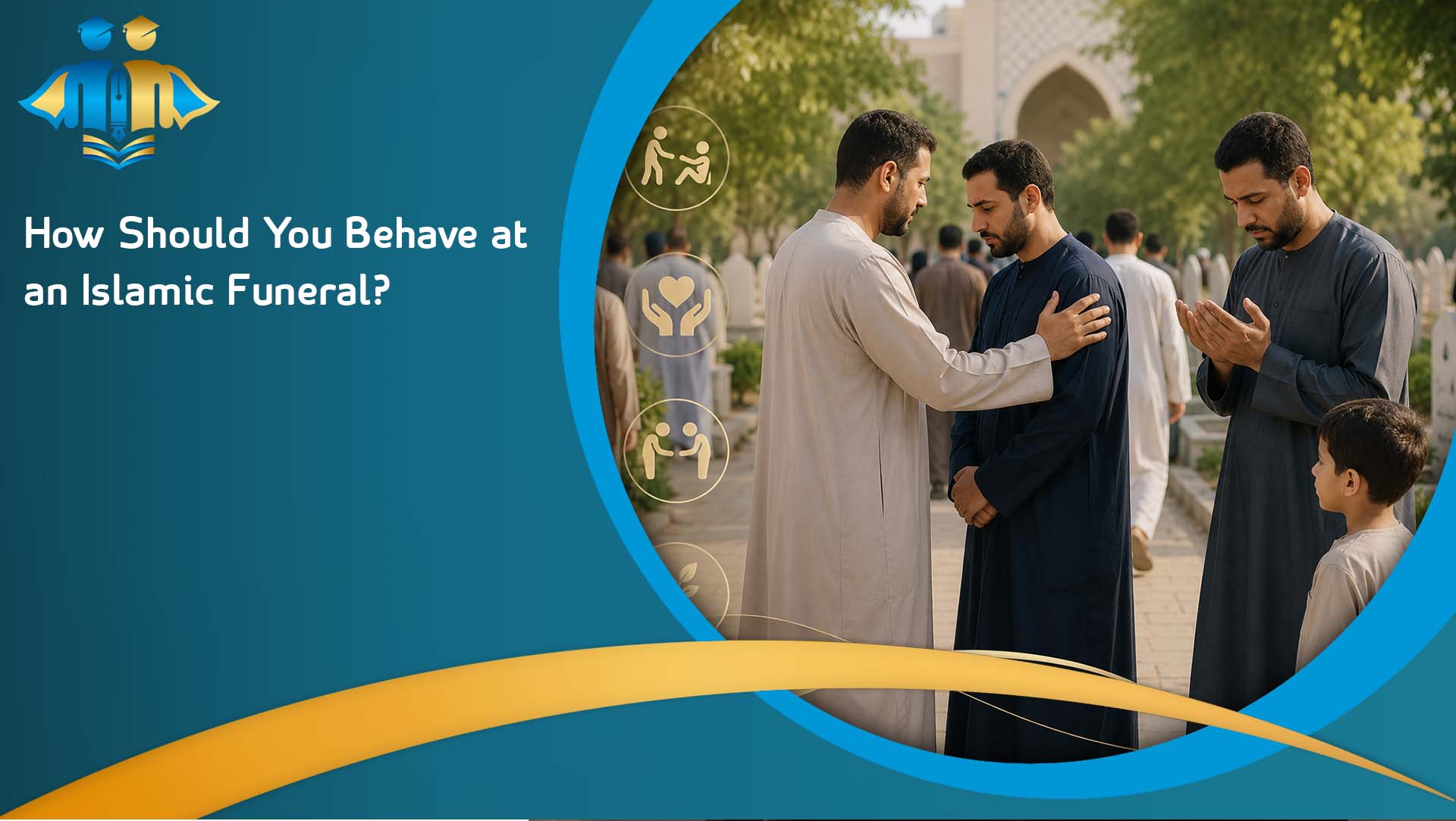
Proper funeral etiquette is important because the family may be experiencing intense grief. When attending a funeral, consider the following:
- Speak calmly and respectfully.
- Offer sincere condolences.
- Avoid unnecessary conversations.
- Give the family appropriate personal space.
- Follow the instructions of the mosque or funeral organizers.
- Keep your phone silent.
- Avoid taking photographs unless there is a clear and appropriate reason.
- Do not turn the funeral into a social gathering.
- Participate in the prayer with sincerity.
- Help with practical needs when appropriate.
A funeral is not the right time for lengthy discussions about personal matters. Even well-intentioned conversation can become overwhelming for grieving relatives.
Instead, a short and sincere expression of sympathy can often mean more than a long speech.
Supporting the Family After the Janazah
A complete Janazah Islamic Funeral Guide should not stop at the moment the funeral prayer ends. The responsibility of the Muslim community continues as family members begin dealing with grief, practical responsibilities, and the emotional changes that follow the death of someone they love.
Immediately after the funeral, relatives may be surrounded by visitors and responsibilities. However, once people leave and daily life begins to return, the family may feel the loss even more strongly. For this reason, meaningful support should continue beyond the day of the Janazah. Community members can offer practical help in several ways:
- Preparing or arranging meals for the family.
- Assisting elderly relatives or those who need additional support.
- Helping visitors understand where they should go.
- Offering transportation when appropriate.
- Helping with simple household responsibilities.
- Checking on close family members in the following days.
- Continuing to offer sincere emotional support.
In many cases, continued support several days or weeks after the funeral can be more valuable than a large gesture immediately after the death. Grief does not disappear when the burial or prayer is completed. Compassion, patience, and genuine presence can help families navigate the difficult period that follows.
Janazah Islamic Funeral Guide: Common Mistakes to Avoid
Anyone attending a funeral for the first time may worry about doing something incorrectly. A helpful Janazah Islamic Funeral Guide should therefore explain not only what to do but also which concerns should not distract worshippers from the purpose of the prayer.
One common mistake is becoming excessively worried about minor differences in the way Muslims perform Salat al-Janazah. Islamic jurisprudence includes recognized differences of opinion, so seeing another worshipper perform a particular detail differently does not automatically mean that person is making a mistake.
Another issue is attempting to memorize every part of the prayer immediately. Beginners should first understand the overall sequence and learn how to follow the imam. More detailed recitations and supplications can be studied gradually.
It is also important to maintain appropriate funeral etiquette. A funeral is a serious occasion, so unnecessary conversations, loud behavior, and distractions should be avoided. Consider these simple reminders:
- Follow the imam rather than guessing what comes next.
- Avoid arguing about minor jurisprudential differences.
- Keep your phone silent.
- Maintain a respectful tone.
- Give the grieving family appropriate space.
- Focus on dua rather than social conversation.
- Ask questions at an appropriate time if you are unsure about a religious practice.
A Janazah Islamic Funeral Guide should also reassure beginners that nervousness is normal. If you make a minor mistake because you are learning, do not allow embarrassment to prevent you from participating. With repeated exposure and proper guidance, the prayer becomes much easier to understand.
Janazah Islamic Funeral Guide: Understanding the Four Takbirs
Understanding the four takbirs is one of the simplest ways to remember the basic structure of the funeral prayer. A Janazah Islamic Funeral Guide can make this easier by connecting each takbir with the main part of worship that follows it.
First Takbir
The imam begins the prayer with Allahu Akbar. The worshippers follow him and then perform the recitation prescribed according to the Islamic legal tradition they are following.
The first takbir marks the beginning of Salat al-Janazah, so worshippers should be attentive and ready to follow the imam.
Second Takbir
The imam then says Allahu Akbar for the second time. The congregation follows and recites blessings upon Prophet Muhammad ﷺ through the established prayer of blessings.
This part connects the funeral prayer with the familiar supplications Muslims know from their regular salah.
Third Takbir
After the third Allahu Akbar, the focus turns directly toward making dua for the deceased.
The worshipper asks Allah for forgiveness, mercy, and goodness for the person who has passed away. This is one of the central purposes of the Janazah prayer.
Fourth Takbir
The fourth takbir brings the main sequence of the prayer toward its conclusion. After the appropriate concluding portion, the imam completes the prayer with the salam.
Remembering the sequence as recitation, blessings, dua, and conclusion can make the prayer easier for beginners to recall.
This structure is an important part of a Janazah Islamic Funeral Guide, especially for someone who has never participated in the funeral prayer before.
For learners who want to build stronger foundations in Quranic and Islamic studies, Super Muslim Online Quran Academy can complement this learning by providing structured religious education. Studying Islamic practices before they are needed can make moments such as a funeral easier to approach with knowledge, patience, and confidence
Learning the Janazah Prayer Before You Need It
Many people search for a Janazah Islamic Funeral Guide only after someone close to them has passed away. At that difficult moment, grief can make it harder to concentrate, memorize instructions, or understand unfamiliar steps. Learning the basics beforehand allows you to approach the funeral prayer with greater confidence and peace of mind.
A good Janazah Islamic Funeral Guide is not only useful during a funeral. It can also help Muslims become familiar with an important act of worship before they are placed in an emotionally challenging situation. A practical way to prepare is to:
- Learn what Salat al-Janazah means and why Muslims perform it.
- Understand the basic structure of the four takbirs.
- Memorize a reliable dua for the deceased.
- Learn how to follow the imam during the prayer.
- Ask questions about unfamiliar details at your local mosque.
- Review the prayer occasionally so the sequence remains familiar.
- Practice the pronunciation and meaning of important Arabic supplications.
For Muslims seeking broader Islamic education, Super Muslim Online Quran Academy can support a structured learning routine that includes Quran reading, Islamic studies, and foundational knowledge. Developing this knowledge before difficult circumstances arise can make religious practices easier to understand and follow.
Janazah Islamic Funeral Guide for New Muslims
New Muslims may feel particularly nervous when attending their first funeral prayer. A Janazah Islamic Funeral Guide can make the experience easier by explaining what to expect without assuming that the reader already knows Islamic funeral practices.
If you are new to Islam, remember that you are not expected to know everything immediately. Islamic knowledge develops gradually through study, practice, and guidance.
Begin by understanding the purpose of Salat al-Janazah. Then learn how to stand with the congregation and follow the imam. Once the basic structure becomes familiar, you can focus on learning the recitations and supplications in greater detail.
A Janazah Islamic Funeral Guide can also help new Muslims understand that asking questions is completely acceptable. If you are uncertain about what to do, speak with a knowledgeable Muslim or ask the imam before the prayer begins.
You do not need to pretend that you understand something when you do not. A respectful willingness to learn is far more valuable than unnecessary anxiety.
For those who want continued religious education, Super Muslim Online Quran Academy can provide a structured environment for developing Quranic and Islamic knowledge step by step.
Janazah Islamic Funeral Guide: The Spiritual Lesson of Death
A Janazah Islamic Funeral Guide should explain the spiritual meaning behind the funeral prayer rather than presenting it as a simple sequence of actions.
A funeral naturally causes people to reflect on life, mortality, relationships, and their own responsibilities. The Janazah prayer directs this reflection toward Allah and reminds Muslims that worldly life is temporary.
Every person will eventually return to their Creator. This awareness can encourage the living to reconsider how they use their time and how they treat the people around them.
The Janazah Islamic Funeral Guide therefore has a purpose beyond explaining how to complete the prayer. It can help worshippers understand why the congregation gathers and why supplication for the deceased is such an important part of the occasion.
For those who remain alive, the experience can encourage positive changes. A person may become more motivated to:
- Repair damaged relationships.
- Seek forgiveness from Allah.
- Fulfill responsibilities toward others.
- Increase sincere good deeds.
- Strengthen their connection with Allah.
- Remember the temporary nature of worldly life.
- Prepare spiritually for the Hereafter.
This collective act of worship can provide comfort to the family while reminding everyone present of the importance of faith, mercy, and good deeds.
How Parents Can Teach Children About Janazah?
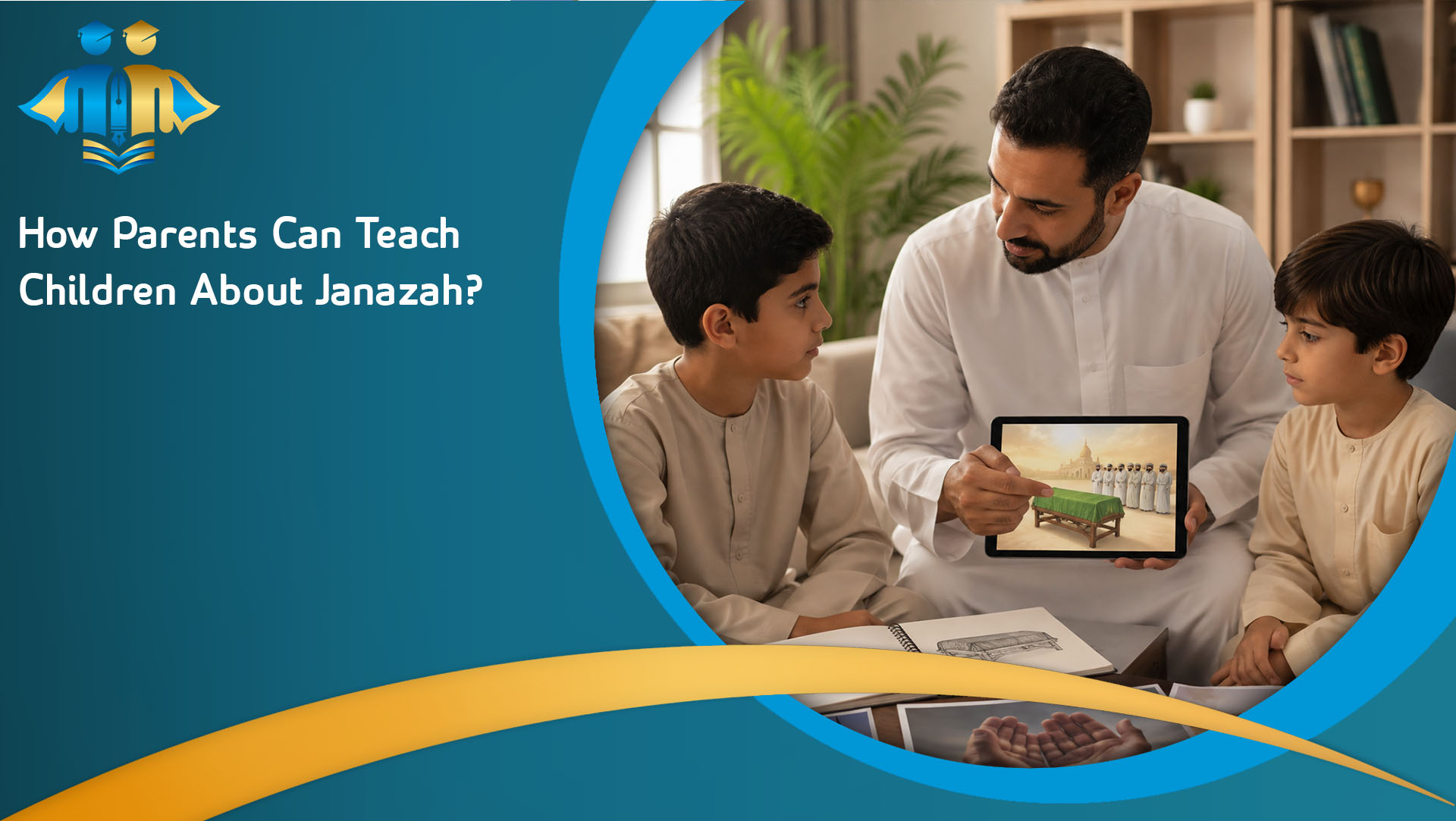
Parents may wonder how to explain death and the Janazah prayer to children. A Janazah Islamic Funeral Guide can be useful for parents who want to introduce the subject carefully and in an age-appropriate manner.
Children naturally ask questions when someone they know dies. Rather than avoiding the subject completely, parents can explain that Muslims pray for people who have passed away and ask Allah to forgive them and show them mercy.
Young children do not necessarily need detailed explanations of every funeral procedure. A simple and reassuring explanation may be more appropriate at first. As children become older, parents can gradually teach them:
- What the Janazah prayer is.
- Why Muslims gather for it.
- How the four takbirs are structured.
- Why Muslims make dua for the deceased.
- How to behave respectfully at a funeral.
- Why supporting grieving family members matters.
Using a Janazah Islamic Funeral Guide can help parents organize these lessons according to the child’s age and level of understanding.
Older children can also learn the meanings of selected supplications instead of simply memorizing Arabic words without understanding them. This approach allows them to appreciate the spiritual purpose of the prayer.
A calm explanation can help children develop respect for the deceased without making the subject unnecessarily frightening. Parents can remind them that death is part of human life while emphasizing Allah’s mercy and the importance of faith and good actions.
Frequently Asked Questions
Discover essential Islamic guidance for Janazah, covering funeral preparations, prayers, burial practices, and important steps according to authentic Islamic teachings.
1. Can someone who does not know Arabic participate in the Janazah prayer?
Yes. A person who does not speak Arabic can attend the funeral prayer and follow the imam. Not knowing Arabic should not prevent someone from joining the Muslim congregation. However, learning the essential supplications gradually can improve understanding and participation.
A Janazah Islamic Funeral Guide can help beginners become familiar with the Arabic phrases used during the prayer, while the meanings can be studied separately.
2. Is it necessary to know the deceased personally before praying Janazah?
No. A Muslim does not have to have a personal relationship with the deceased to attend the funeral prayer. The congregation gathers to worship Allah and make dua for the person who has passed away.
Attending the Janazah can also demonstrate solidarity with the deceased’s family and the wider Muslim community.
3. What should someone do if they arrive after the Janazah prayer has already started?
If you arrive after the prayer has begun, join the congregation and follow the imam rather than standing aside unnecessarily. The exact procedure for completing missed takbirs can vary according to the school of jurisprudence being followed.
Because of these differences, a person who frequently attends funeral prayers should learn the local practice from a qualified imam.
A Janazah Islamic Funeral Guide can explain the general structure, but specific circumstances may require individual scholarly guidance.
4. Can the Janazah prayer be performed for someone who died far away?
There are differences among Islamic scholars regarding funeral prayer in absentia, commonly known as Salat al-Gha’ib. Its application can depend on the circumstances surrounding the death and the scholarly opinion being followed.
For that reason, someone facing this situation should consult a qualified local scholar or imam rather than assuming that one ruling applies to every circumstance.
A reliable Janazah Islamic Funeral Guide should acknowledge these scholarly differences and encourage Muslims to seek appropriate guidance when a specific situation falls outside the ordinary funeral procedure.
In conclusion, this Janazah Islamic Funeral Guide provides Muslims with a clear understanding of the funeral prayer and its essential steps. Learning how to perform Salat al-Janazah can help worshippers feel more confident and prepared when attending the funeral of a Muslim. The prayer is not simply a sequence of takbirs; it is a meaningful act of worship through which Muslims ask Allah to forgive the deceased, show mercy to them, and grant them peace.
Understanding the role of the imam, the four takbirs, the required supplications, and proper funeral etiquette can make participation easier, especially for beginners and new Muslims. It is also important to respect legitimate differences in Islamic practice and seek guidance from a qualified scholar when necessary.
Ultimately, a Janazah Islamic Funeral Guide reminds us of the importance of faith, compassion, community support, and preparation for the Hereafter. By learning these practices before they are needed, Muslims can respond to difficult moments with knowledge, dignity, patience, and sincere dua.

You may also like

Islamic Hijri Calendar Guide: Dates, Months & History

Islamic Parenting Tips for Raising Quran-Loving Kids at Home