• +2 010-2234-6446
  • info@super-muslim.com
  • Available 24/7
  • +2 010-2234-6446
  • Student Login
  • Teacher Login
Super Muslim Academy logo
  • Courses
    • Quran Memorization Course
    • Arabic Languages Course
    • New Muslim Converts Course
    • Islamic Studies Course
    • Quran Recitation & Tajweed
    • Noorani Qaida Foundation Course
  • Pricing
  • Teachers
  • Recorded Classes
  • More
    • FAQs
    • Blog
    • Testimonials
  • Login
    • Student
    • Teacher
    • Admin
  • Courses
    • Quran Memorization Course
    • Arabic Languages Course
    • New Muslim Converts Course
    • Islamic Studies Course
    • Quran Recitation & Tajweed
    • Noorani Qaida Foundation Course
  • Pricing
  • Teachers
  • Recorded Classes
  • More
    • FAQs
    • Blog
    • Testimonials
  • Login
    • Student
    • Teacher
    • Admin
  • Courses
    • Quran Memorization Course
    • Arabic Languages Course
    • New Muslim Converts Course
    • Islamic Studies Course
    • Quran Recitation & Tajweed
    • Noorani Qaida Foundation Course
  • Pricing
  • Teachers
  • Recorded Classes
  • More
    • FAQs
    • Blog
    • Testimonials
  • Login
    • Student
    • Teacher
    • Admin
Book Now

Online tajweed courses

  • Home
  • Blog
  • Online tajweed courses
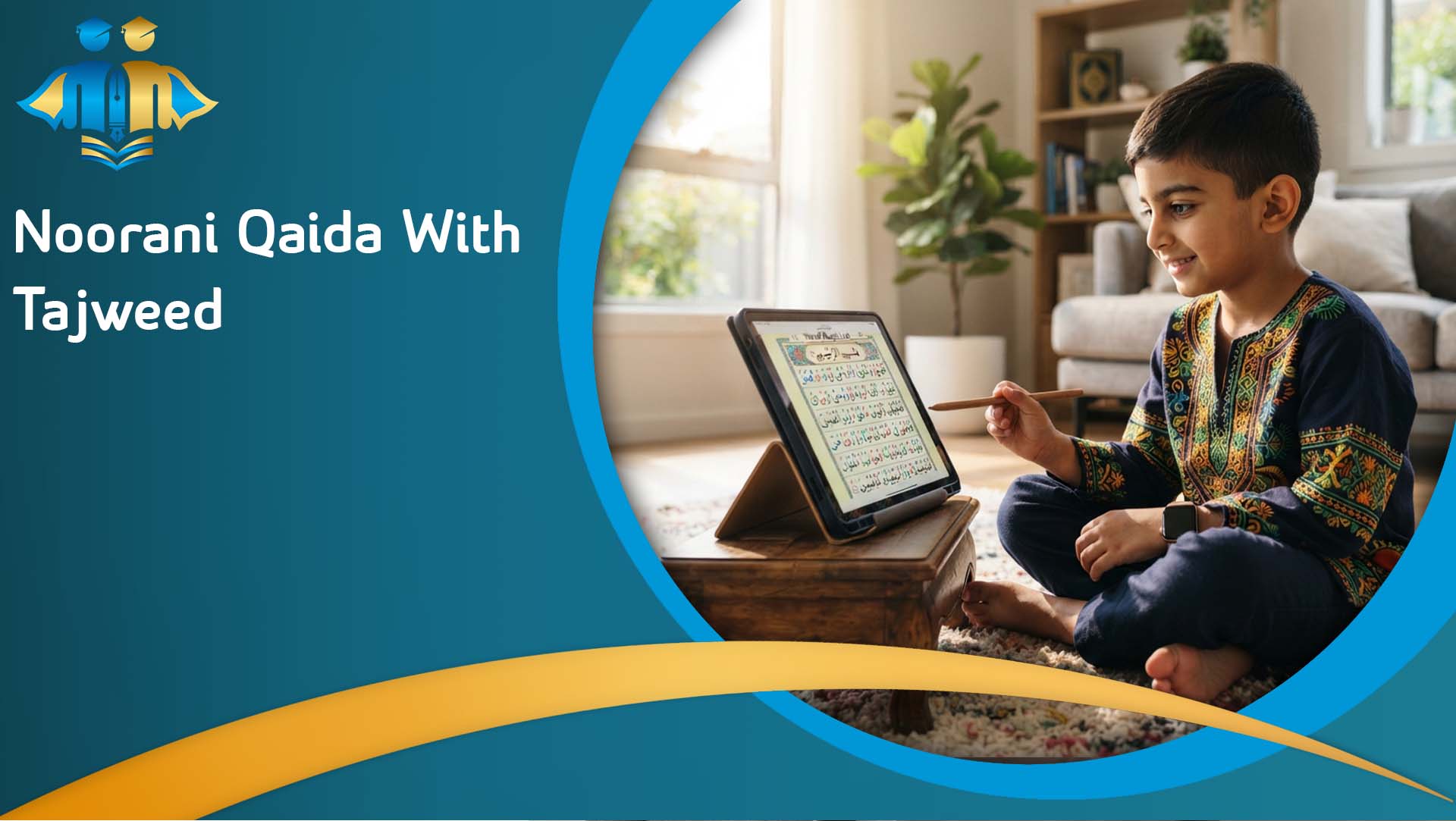
Noorani Qaida With Tajweed

Noorani Qaida With Tajweed for Better Quran Reading

  • Posted by Super Muslim
  • Date August 12, 2026
  • Categories Online tajweed courses

Noorani Qaida with Tajweed is one of the most effective methods for beginners who want to build a strong foundation in Quran reading and learn how to pronounce Arabic letters correctly from the beginning. This structured learning approach helps children and adults understand the basics of Arabic pronunciation, recognize Quranic letters, and apply essential Tajweed principles before moving to Quran recitation.

Learning the Quran requires more than simply recognizing Arabic letters. Correct recitation depends on understanding where each letter comes from, how its sound is produced, and how different letters interact when they appear together. That is why many beginners start their Quran journey with a carefully designed Qaida that introduces reading skills step by step.

For students who do not speak Arabic as their first language, learning through a gradual system makes the process easier and more organized. Instead of memorizing random rules, learners develop their skills through practical exercises that improve pronunciation, fluency, and confidence.

Super Muslim Online Quran Academy provides structured Quran learning programs designed to help beginners learn to read the Quran with qualified teachers through interactive online classes. The academy focuses on creating a supportive environment where students can learn according to their level and improve their recitation skills gradually.

In this complete guide, we will explain the importance of Noorani Qaida, its lessons, the Tajweed rules included in the method, benefits for beginners, common mistakes, and how students can successfully start their Quran learning journey.

What Is Noorani Qaida with Tajweed?
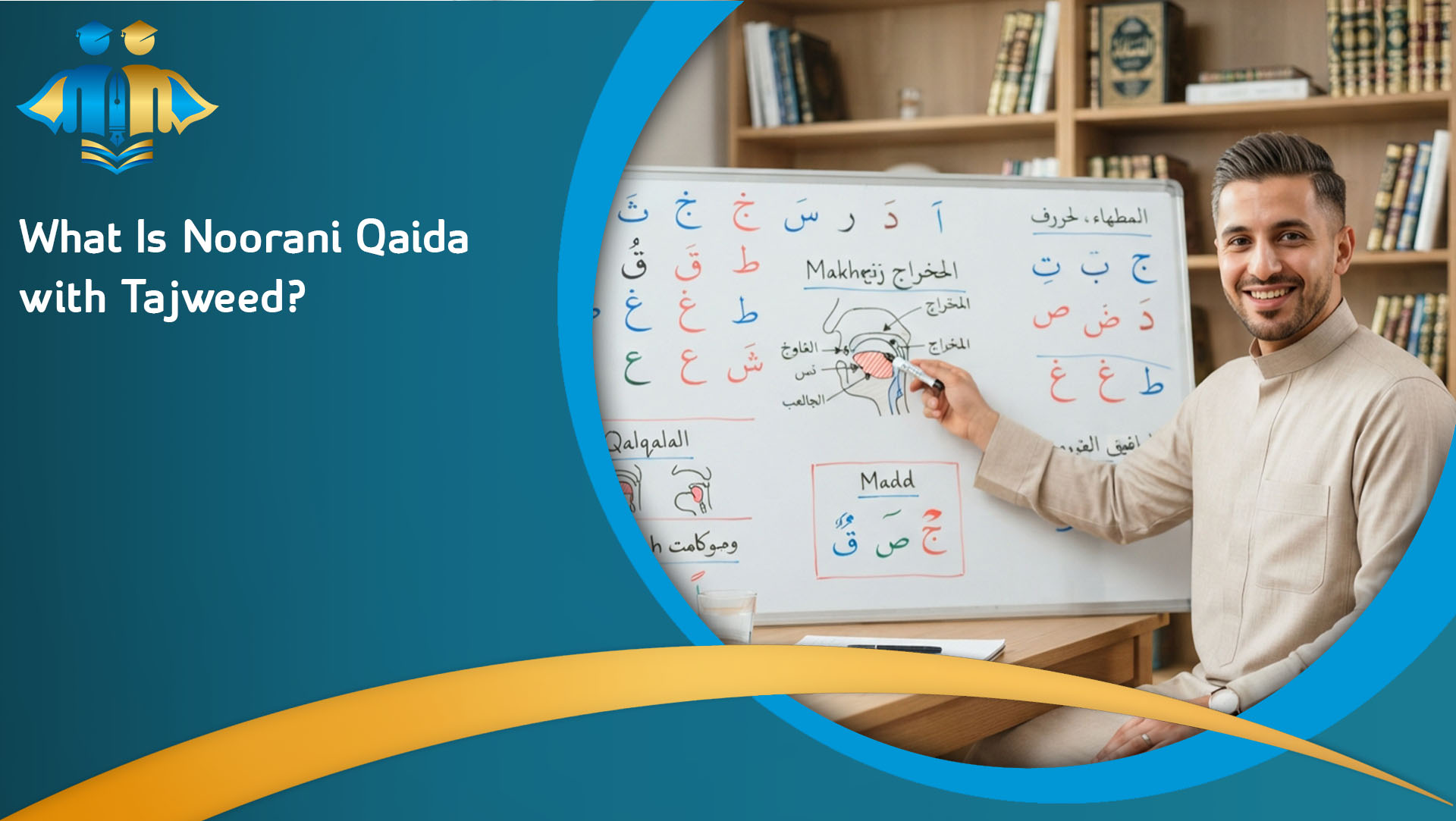
What Is Noorani Qaida with Tajweed?

Noorani Qaida with Tajweed is an educational booklet and teaching method created to help beginners learn the Arabic alphabet and Quranic pronunciation in a systematic way. It is commonly used for children, new learners, and non-Arabic speakers because it starts from the basics and gradually develops reading abilities.

The main purpose of this method is to teach students how to identify Arabic letters, pronounce them correctly, combine letters to form words, and apply Tajweed rules while reading Quranic text. Through Noorani Qaida with Tajweed, learners can practice these skills progressively instead of trying to understand complete Quranic passages immediately.

Unlike traditional reading methods that may focus only on memorizing letters, this approach introduces pronunciation skills from the beginning. Students learn the relationship between letters, vowels, sounds, and Quranic reading patterns. Noorani Qaida with Tajweed therefore allows beginners to practice pronunciation while they are still developing their basic reading abilities.

The method usually begins with recognizing individual Arabic letters before progressing to:

  • Joined letters and letter combinations.
  • Short vowel sounds (Fatha, Kasra, and Damma).
  • Tanween rules.
  • Sukoon and Shaddah.
  • Long vowels and Madd.
  • Basic Tajweed rules needed for Quran recitation.

This step-by-step approach prevents beginners from developing incorrect pronunciation habits. When students understand the foundation correctly, they can later read Quran verses with more accuracy and confidence. Regular practice with Noorani Qaida with Tajweed can also help learners become more comfortable with Arabic sounds and Quranic reading patterns.

Start Learning the Quran with Trusted Egyptian Teachers Today

Ready to improve your Quran recitation, master Tajweed, or begin memorizing the Holy Quran with confidence? At Super Muslim Online Quran Academy, our experienced Egyptian Quran teachers provide personalized one-on-one lessons tailored to your age, level, and goals.

Enjoy flexible scheduling, live guidance, and a supportive learning environment that helps you make steady progress from the comfort of your home. Book your free trial class today and take the first step toward a stronger connection with the Book of Allah.

Noorani Qaida With Tajweed

Why Is Noorani Qaida with Tajweed Important for Quran Beginners?

Many beginners struggle with Quran reading because Arabic contains sounds that do not exist in many other languages. Letters such as ุน, ุญ, ุฎ, ุต, ุถ, and ุท require specific movements of the tongue and throat. Learning Noorani Qaida with Tajweed can help students recognize these pronunciation differences before they begin reading longer Quranic passages.

Without proper guidance, learners may pronounce these letters incorrectly, which can affect the accuracy of Quran recitation. A structured learning method helps students recognize these differences early and practice them repeatedly. Noorani Qaida with Tajweed is designed to support this process through simple examples and gradual exercises.

There are several reasons why this learning approach is valuable:

1. Building Correct Pronunciation From the Beginning

The first stage of Quran learning should focus on developing correct pronunciation. Once a learner becomes accustomed to incorrect sounds, changing those habits can become more difficult.

Through regular practice, students learn the correct articulation points of Arabic letters and understand how each sound should be produced. Using Noorani Qaida with Tajweed at this stage allows beginners to focus on pronunciation before moving to more complex Quran reading tasks.

2. Preparing Students for Quran Recitation

Reading Quran directly without understanding basic Arabic sounds can create confusion for beginners. A structured Qaida prepares students before they start reading complete Quran chapters.

Students first practice smaller examples before applying their knowledge to real Quran verses. In this way, Noorani Qaida with Tajweed creates a gradual transition from basic Arabic reading to Quran recitation.

3. Making Tajweed Easier to Understand

Tajweed includes many rules related to pronunciation, elongation, stopping, and letter characteristics. Introducing these concepts gradually helps learners understand them naturally.

Instead of studying complicated rules separately, students practice them while developing their reading skills. Noorani Qaida with Tajweed combines basic reading practice with essential best online tajweed course principles, making the learning process more practical for beginners.

4. Helping Children Develop Strong Quran Skills

Children often learn languages quickly when they receive proper instruction at an early age. Introducing Quran reading through an organized method helps children build confidence and avoid pronunciation problems.

Super Muslim Online Quran Academy offers beginner-friendly Quran programs where children can learn gradually with teachers who understand different learning levels and needs. With consistent practice, Noorani Qaida with Tajweed can help young students establish essential Quran reading skills before progressing to longer Surahs.

How Does Noorani Qaida with Tajweed Work?

The learning process follows a progressive structure. Each lesson introduces a new skill while reviewing previous concepts to strengthen understanding. This organized sequence allows students to develop their reading abilities without becoming overwhelmed.

A typical learning journey includes several stages:

Stage One: Learning Arabic Letters

The first step is recognizing Arabic letters individually. Students learn:

  • The shape of each letter.
  • The correct name of each letter.
  • The correct pronunciation.
  • The articulation point of every sound.

At this stage, learners focus on accuracy rather than speed. A strong foundation makes later lessons easier. Noorani Qaida with tajweed quran rulesย helps students repeat these basic sounds until they become familiar with Arabic pronunciation.

Stage Two: Connecting Arabic Letters

Arabic letters change their shape depending on their position in a word. Students learn how letters connect and how their pronunciation remains consistent.

This helps beginners move from recognizing isolated letters to reading simple combinations. With Noorani Qaida with Tajweed, learners gradually become familiar with the visual and phonetic changes that occur when Arabic letters are joined.

Stage Three: Learning Harakat (Short Vowels)

Arabic vowels play an important role in Quran reading. Students learn:

  • Fatha (ูŽ)
  • Kasra (ู)
  • Damma (ู)

These signs help learners understand how letters should be pronounced.

For example, the same letter can produce different sounds depending on the vowel attached to it. Practicing these differences through Noorani Qaida with Tajweed helps beginners understand the relationship between Arabic letters and their vowel sounds.

Stage Four: Understanding Sukoon and Shaddah

Students learn how letters behave when they have no vowel or when they are doubled.

Sukoon teaches learners how to stop the movement of a letter, while Shaddah teaches how to pronounce a strengthened letter correctly. These concepts are important for accurate Quran reading and become easier when students practice them through Noorani Qaida with Tajweed.

Stage Five: Practicing Madd and Long Sounds

Arabic pronunciation depends greatly on correct timing. Learners practice extending certain sounds according to Quranic reading rules.

This prepares them for smoother and more accurate recite quran with tajweed. Noorani Qaida with Tajweed introduces these exercises gradually so that beginners can develop better control over the length of Quranic sounds.

Main Tajweed Rules Included in Noorani Qaida with Tajweed

Tajweed is the science of reading the Quran correctly. It protects the pronunciation of Quranic words and helps preserve the beauty of recitation.

Some important Tajweed rules introduced during beginner lessons include:

Noon Sakinah and Tanween Rules

Noon Sakinah refers to the letter ู† with no vowel, while Tanween appears as double vowel marks at the end of words.

There are four main rules:

1. Izhar (Clear Pronunciation)

Izhar means pronouncing Noon Sakinah or Tanween clearly without hiding or merging the sound.

It occurs when these letters come after Noon Sakinah or Tanween:

ุกุŒ ู‡ู€ุŒ ุนุŒ ุญุŒ ุบุŒ ุฎ

Students learn to pronounce the sound clearly from its proper place. Practicing Izhar through Noorani Qaida with Tajweed helps beginners recognize when the Noon sound should remain clear.

2. Idgham (Merging)

Idgham means combining one sound with another.

It occurs when Noon Sakinah or Tanween is followed by certain letters. The pronunciation changes because the sounds merge together.

Idgham is divided into:

  • Idgham with Ghunnah.
  • Idgham without Ghunnah.

3. Iqlab (Changing)

Iqlab occurs when Noon Sakinah or Tanween comes before the letter ุจ.

In this case, the Noon sound changes into a hidden Meem sound with nasalization. Noorani Qaida with Tajweed gives beginners an opportunity to recognize this rule and practice its correct pronunciation before encountering it frequently in Quranic verses.

4. Ikhfa (Hiding)

Ikhfa means partially hiding the Noon sound while maintaining Ghunnah.

This rule requires practice because learners need to balance between clear pronunciation and complete merging. Regular exercises in Noorani Qaida with Tajweed can help students become more confident when applying Ikhfa during Quran recitation.

Meem Sakinah Rules

Students also learn the three rules related to Meem Sakinah:

Ikhfa Shafawi

This occurs when Meem Sakinah is followed by the letter ุจ.

The Meem sound is hidden with light nasalization. Students can practice this pronunciation gradually through Noorani Qaida with Tajweed before applying it to complete Quranic passages.

Idgham Shafawi

This happens when Meem Sakinah is followed by another Meem.

The two Meem sounds merge.

Izhar Shafawi

This means pronouncing Meem Sakinah clearly when followed by other letters.

Madd Rules in Noorani Qaida

Madd refers to extending vowel sounds. Correct timing is important because shortening or lengthening sounds incorrectly can affect Quran recitation.

Beginners learn:

  • Natural Madd.
  • Connected Madd.
  • Separated Madd.
  • Necessary Madd.

Understanding these rules helps students develop proper Quran reading rhythm. By practicing Madd through Noorani Qaida with Tajweed, beginners can gradually improve their ability to recognize and pronounce extended sounds correctly.


Noorani Qaida with Tajweed Lessons: A Step-by-Step Learning Structure

One of the main reasons beginners benefit from Noorani Qaida with Tajweed is its organized lesson sequence. Instead of introducing Quran reading difficulty, the method moves gradually from simple concepts to more advanced pronunciation skills.

Every lesson prepares the learner for the next stage. This gradual structure is especially useful for children and adults who have never studied Arabic before.

The lessons may vary slightly depending on the teacher or curriculum, but the general learning path includes the following stages:

Lesson 1: Recognizing Arabic Letters

The first lesson focuses on learning the individual Arabic letters. Students become familiar with the appearance and pronunciation of each letter.

At this stage, learners practice:

  • Identifying letters by shape.
  • Knowing the correct names of letters.
  • Producing each sound accurately.
  • Differentiating between similar letters.

For example, many beginners confuse letters that have similar shapes, such as:

  • ุจุŒ ุชุŒ ุซ
  • ุฌุŒ ุญุŒ ุฎ
  • ุฏุŒ ุฐ
  • ุฑุŒ ุฒ

Proper practice helps students recognize these differences easily.

Lesson 2: Learning Joined Letters

Arabic letters change their form when they appear at the beginning, middle, or end of words.

Students learn how letters connect and how these changes affect reading.

This lesson helps learners move from memorizing separate letters to reading actual Arabic combinations.

Lesson 3: Understanding Short Vowels

Short vowels are essential in Arabic reading because they determine pronunciation.

Students learn:

Fatha (ูŽ)

It produces an “a” sound.

Kasra (ู)

It produces an “i” sound.

Damma (ู)

It produces an “u” sound.

Mastering these signs allows beginners to read simple Arabic words correctly.

Lesson 4: Tanween and Double Vowels

Tanween appears at the end of certain Arabic words and creates additional sounds.

Students learn:

  • Fathatayn (ู‹)
  • Kasratayn (ู)
  • Dammatayn (ูŒ)

They also begin understanding how these sounds connect with Tajweed rules.

Lesson 5: Sukoon and Stopping Rules

Sukoon indicates that a letter has no vowel sound. Learning this concept helps students pronounce words correctly without adding unnecessary movements.

Students practice controlling their voice and stopping properly between sounds.

Lesson 6: Shaddah and Doubled Letters

Shaddah indicates that a letter should be pronounced with emphasis.

Beginners learn how to:

  • Hold the sound correctly.
  • Avoid shortening doubled letters.
  • Apply Ghunnah when needed.

This lesson is important because many Quranic words contain letters with Shaddah.

Lesson 7: Madd and Long Vowels

Students learn how certain letters create extended sounds.

The main Madd letters are:

  • ุง
  • ูˆ
  • ูŠ

They practice maintaining the correct length according to Tajweed principles.

Lesson 8: Advanced Reading Practice

After understanding letters, vowels, and basic rules, learners begin practicing complete words and short Quranic phrases.

This stage increases confidence and prepares students for reading directly from the Quran.

Benefits of Learning Noorani Qaida with Tajweed

Benefits of Learning Noorani Qaida with Tajweed

Learning Quran reading through a structured method provides many educational and spiritual benefits. It is not only about reading words; it is about developing a correct relationship with the Quran.

1. Improving Quran Pronunciation

The greatest benefit of Noorani Qaida with Tajweed is improving pronunciation accuracy.

Arabic letters have specific articulation points called Makharij. Each letter comes from a particular place in the mouth, throat, or tongue.

For example:

  • ุน comes from the middle part of the throat.
  • ู‚ requires raising the back of the tongue.
  • ุถ has a unique pronunciation that is difficult for many non-Arabic speakers.

Learning these sounds correctly prevents common mistakes.

2. Creating Confidence for Beginners

Many beginners feel nervous when they start learning Quran because Arabic writing and pronunciation seem unfamiliar.

A gradual learning method removes this difficulty by allowing students to progress step by step.

When learners complete each stage, they gain confidence and motivation to continue.

3. Helping Children Build Strong Foundations

Children who learn quran and tajweed correctly from an early age usually develop better pronunciation habits.

Instead of correcting mistakes later, they build the correct foundation from the beginning.

Parents often choose structured online Quran programs because they provide flexibility and allow children to learn from home.

Super Muslim Online Quran Academy supports young learners through personalized online lessons that match their age and ability level.

4. Making Quran Learning Easier for Non-Arabic Speakers

People who do not speak Arabic may find Quran pronunciation challenging.

A beginner-friendly approach helps them understand:

  • How letters sound.
  • How words are formed.
  • How Tajweed affects pronunciation.
  • How to read Quranic text confidently.

Students do not need previous Arabic knowledge to begin.

5. Preparing Students for Advanced Quran Studies

A strong foundation makes future learning easier. After mastering beginner reading skills, students can move to:

  • Quran recitation courses.
  • Advanced Tajweed.
  • Quran memorization programs.
  • Ijazah studies.

Without a proper foundation, advanced learning can become more difficult.

Common Mistakes Beginners Make While Learning Noorani Qaida with Tajweed

Although learning Quran reading is rewarding, beginners often face certain challenges. Recognizing these mistakes helps students improve faster.

1. Ignoring Articulation Points

One of the most common mistakes is focusing only on recognizing letters without learning where sounds come from.

A learner may identify a letter correctly but pronounce it incorrectly. Regular correction from a qualified teacher helps solve this issue.

2. Rushing Through Lessons

Some students try to finish lessons quickly without mastering previous skills. Quran reading requires accuracy more than speed.

Moving to advanced lessons before understanding basic pronunciation can create long-term problems.

3. Confusing Similar Arabic Letters

Some Arabic letters have similar shapes or sounds. Examples include:

  • ุณ and ุต
  • ุช and ุท
  • ู‡ and ุญ
  • ูƒ and ู‚

Continuous practice helps learners distinguish between these letters.

4. Incorrect Madd Timing

Many beginners either shorten or extend vowel sounds incorrectly. Tajweed rules explained requireย balance and consistency.

Students should practice listening and repeating after experienced teachers.

5. Learning Without Correction

Self-learning can be helpful for reviewing, but pronunciation requires someone who can listen and identify mistakes. A teacher can immediately correct errors before they become permanent habits.

How Does Online Learning Make Noorani Qaida with Tajweed Easier?

Modern technology has made Quran education more accessible than ever. Students can now learn from qualified teachers without traveling or attending physical classes.

Online learning offers several advantages:

Flexible Scheduling

Students can choose lesson times that fit their daily routines.

This is especially useful for:

  • Working adults.
  • School students.
  • Busy parents.

Individual Attention

One-to-one lessons allow teachers to focus on each student’s weaknesses and progress. Every learner has different challenges, so personalized instruction creates better results.

Real-Time Correction

Live classes allow teachers to listen to pronunciation and provide immediate feedback. This is one of the most important advantages because Quran reading depends heavily on correct sounds.

Learning From Home

Students can study in a comfortable environment without transportation difficulties. Families can create a regular Quran learning routine while staying at home.

Super Muslim Online Quran Academy offers online Quran education designed around students’ needs, helping beginners develop their reading skills through structured lessons and experienced instructors.

How to Choose the Right Noorani Qaida with Tajweed Teacher?

Choosing the right teacher can make a significant difference in how quickly and accurately a beginner learns Quran reading. A good teacher does not simply explain rules. Instead, the teacher listens carefully, identifies pronunciation problems, demonstrates the correct sound, and gives the learner enough practice to improve.

This is particularly important for students who have never studied Arabic. Reading from a book may help with recognition, but pronunciation requires listening and correction.

When comparing online Quran teachers, consider the following factors.

Look for Strong Quran Recitation Skills

A teacher should have a strong background in Quran recitation and Tajweed. The instructor should be able to demonstrate the correct pronunciation rather than relying only on written explanations.

A qualified teacher should also understand the differences between similar Arabic sounds and know how to explain them to beginners.

Choose a Teacher Who Works With Beginners

Knowing Tajweed does not automatically mean that someone is an effective beginner teacher.

Children and new learners need simple explanations, repetition, patience, and encouragement. Therefore, the teacher should be able to adjust the lesson according to the student’s age, level, and learning speed.

Prioritize Individual Feedback

Pronunciation mistakes are different from one student to another. One learner may struggle with the throat letters, while another may have difficulty with Madd or Shaddah.

For this reason, personalized lessons can be more effective than a one-size-fits-all approach.

Consider the Learning Schedule

Consistency matters more than studying for long hours occasionally.A student who attends short, regular lessons can often make better progress than someone who studies irregularly.

Before choosing a program, make sure the schedule works with your daily responsibilities.

Check Whether the Program Includes Practice

A good lesson should not consist entirely of explanations. Students need opportunities to read aloud, repeat sounds, practice words, and receive corrections. The more practical the lesson is, the easier it becomes to transfer knowledge into actual Quran recitation.

Why Should Beginners Learn Tajweed From the Start?

Benefits of Learning Noorani Qaida with Tajweed

Some learners believe that they should first learn how to read the Quran and study Tajweed later. However, introducing basic Tajweed principles during the early stages can help students develop better reading habits.

When pronunciation is practiced correctly from the beginning, learners are less likely to develop incorrect patterns.

Tajweed does not have to be presented as a complicated collection of rules. For beginners, the teacher can introduce only the principles relevant to their current reading level.

For example, students can gradually learn:

  • Correct letter articulation.
  • Short vowel pronunciation.
  • Shaddah.
  • Sukoon.
  • Basic Madd.
  • Noon Sakinah and Tanween.
  • Meem Sakinah.
  • Ghunnah.
  • Common stopping principles.

As the learner becomes more confident, additional rules can be introduced.

This gradual approach keeps lessons manageable while ensuring that accuracy remains a priority.

Noorani Qaida with Tajweed for Children

Children are among the learners who can benefit greatly from this structured method. At a young age, students are developing their pronunciation abilities, so consistent Quran practice can help them recognize Arabic sounds naturally.

However, teaching children requires a different approach from teaching adults.

Children generally respond better to:

  • Short lessons.
  • Repetition.
  • Visual examples.
  • Encouragement.
  • Interactive activities.
  • Frequent revision.
  • Positive feedback.

A teacher should also avoid overwhelming a child with too many Tajweed terms at once. Instead, the instructor can teach one concept, practice it several times, and then review it in future lessons.

Parents can support the process by creating a quiet study environment and encouraging children to practice for a few minutes between lessons.

How Long Does It Take Children to Learn?

There is no universal timeline because children learn at different speeds. Several factors influence progress, including:

  • Age.
  • Previous Arabic exposure.
  • Lesson frequency.
  • Concentration.
  • Home practice.
  • Teacher guidance.
  • Individual pronunciation difficulties.

A child who practices consistently may progress quickly, while another child may need additional revision.

The goal should not be finishing the book as quickly as possible. Instead, the goal should be developing accurate and lasting reading skills.

Noorani Qaida with Tajweed for Adults and New Muslims

Adults sometimes hesitate to start Quran lessons because they believe they are too old or that learning Arabic pronunciation will be difficult.

In reality, adults can begin from the very first lesson and gradually develop their reading abilities. An adult beginner may start by learning individual letters and then progress toward vowels, connected letters, Sukoon, Shaddah, Madd, and basic Tajweed.

The learning process may require patience, particularly when a learner has never encountered Arabic sounds before.

However, adults have an important advantage: they can understand explanations and consciously recognize their pronunciation mistakes.

How to Practice Noorani Qaida with Tajweed at Home?

Lessons with a teacher provide guidance, but regular practice at home is equally important. A simple daily routine can make learning more consistent.

Practice for 10โ€“15 Minutes

Beginners do not necessarily need long study sessions. A short daily practice session can include:

  1. Reviewing the previous lesson.
  2. Reading difficult letters.
  3. Practicing today’s rule.
  4. Repeating difficult examples.
  5. Reading aloud.
  6. Reviewing corrections from the teacher.

Consistency is more valuable than studying for several hours once a week.

Listen Carefully

Listening is an important part of Quran pronunciation. Students can listen to reliable Quran recitations and pay attention to:

  • Letter sounds.
  • Madd.
  • Ghunnah.
  • Stops.
  • Shaddah.
  • Changes caused by Tajweed rules.

However, listening should support teacher-guided learning rather than replace it.

Record Your Practice

Adults and older children can sometimes benefit from recording themselves while reading. Afterward, they can compare their pronunciation with their teacher’s corrections.

This can help learners notice repeated mistakes and track improvement over time.

How Super Muslim Online Quran Academy Supports Beginner Learners?

Super Muslim Online Quran Academy provides online Quran education for learners who want to study from home in a structured environment.

For beginners, the learning process can start with basic Arabic letters and gradually move toward Quran reading and Tajweed.

The academy’s online format can be particularly useful for families who need flexible lesson times or students who prefer studying from home.

A beginner-focused program can help students work on:

  • Arabic letter recognition.
  • Correct pronunciation.
  • Harakat.
  • Connected letters.
  • Sukoon.
  • Shaddah.
  • Madd.
  • Basic Tajweed.
  • Quran reading fluency.

Another important advantage of online learning is direct communication between the teacher and student. The learner can read aloud while the teacher listens and corrects pronunciation.

This immediate feedback is particularly valuable when students are learning difficult Arabic sounds. For children, parents can also follow their progress and encourage regular practice between classes.

Adults can benefit from the same flexibility because they can arrange lessons around work, family, and other responsibilities. Most importantly, learners should choose a program that prioritizes accuracy rather than rushing through lessons.

A Simple Learning Plan for Noorani Qaida Beginners

Having a clear plan can make the learning journey easier. Here is an example of a practical progression:

  • Week 1: Arabic Letters โ€” Focus on recognizing and pronouncing individual Arabic letters.
  • Week 2: Connected Letters โ€” Practice different letter combinations and learn how Arabic letters connect.
  • Week 3: Harakat โ€” Study Fatha, Kasra, and Damma and practice reading simple combinations.
  • Week 4: Tanween and Sukoon โ€” Learn double vowels and Sukoon while practicing short reading exercises.
  • Week 5: Shaddah โ€” Practice doubled letters and learn how to pronounce them correctly.
  • Week 6: Madd โ€” Study natural elongation and practice maintaining appropriate timing.
  • Week 7: Basic Tajweed โ€” Begin applying rules such as Izhar, Idgham, Iqlab, and Ikhfa.
  • Week 8 and Beyond: Quran Reading โ€” Apply the acquired skills to short Quranic passages while continuing to review earlier rules.

This is only a sample plan. Some students may need more time for individual lessons, while others may progress faster.

What Makes a Good Noorani Qaida Learning Experience?

A successful learning experience is not determined by the number of lessons completed. Instead, progress should be measured by the student’s ability to:

  • Recognize Arabic letters without hesitation.
  • Pronounce letters from their correct articulation points.
  • Read words with basic vowel marks.
  • Apply learned Tajweed rules.
  • Recognize common pronunciation mistakes.
  • Read Quranic passages with increasing confidence.
  • Correct mistakes after receiving feedback.

A student who finishes the Qaida quickly but continues to make pronunciation mistakes may need more revision.

On the other hand, a learner who takes longer but develops accurate pronunciation has built a stronger foundation. Therefore, quality should always come before speed.

When Should a Student Move From Qaida to Quran Reading?

There is no single rule that applies to every student. A learner is generally ready to begin reading directly from the Quran when they can recognize Arabic letters, understand common vowel signs, read connected words, and apply the basic pronunciation rules they have learned.

The teacher should evaluate the student’s ability rather than relying only on how many lessons have been completed. Some learners may begin reading short Surahs while continuing to revise the Qaida.

This combination can be useful because it allows students to apply their new skills to authentic Quranic text.

Can Noorani Qaida Be Learned Without a Teacher?

It is possible to study the written material independently, especially for review. However, beginners may find it difficult to identify their own pronunciation mistakes.

For example, a learner may believe that two sounds are identical because they sound similar to them. A qualified teacher can immediately identify the difference and demonstrate the correct pronunciation.

This is why teacher-guided study is particularly valuable when learning Quranic pronunciation.

Self-study can be used as an additional practice tool, but it should not replace expert feedback when accurate recitation is the goal.

How Parents Can Help Children Learn Quran Reading?

Parents play an important role in creating a positive Quran learning environment. They can help by establishing a consistent schedule and avoiding unnecessary pressure. A few practical strategies include:

Create a Fixed Routine

Choose a regular time for Quran study. Children often learn better when lessons become part of their normal daily routine.

Encourage Rather Than Criticize

Pronunciation mistakes are a normal part of learning. Parents should encourage children to keep practicing instead of making them afraid of mistakes.

Review Previous Lessons

Five or ten minutes of revision can reinforce what the child learned with the teacher.

Celebrate Progress

Small achievements deserve recognition. Finishing a lesson, pronouncing a difficult letter correctly, or reading a new word can motivate children to continue.

Communicate With the Teacher

Parents should understand which areas the child needs to practice. This creates consistency between the online lesson and home practice.

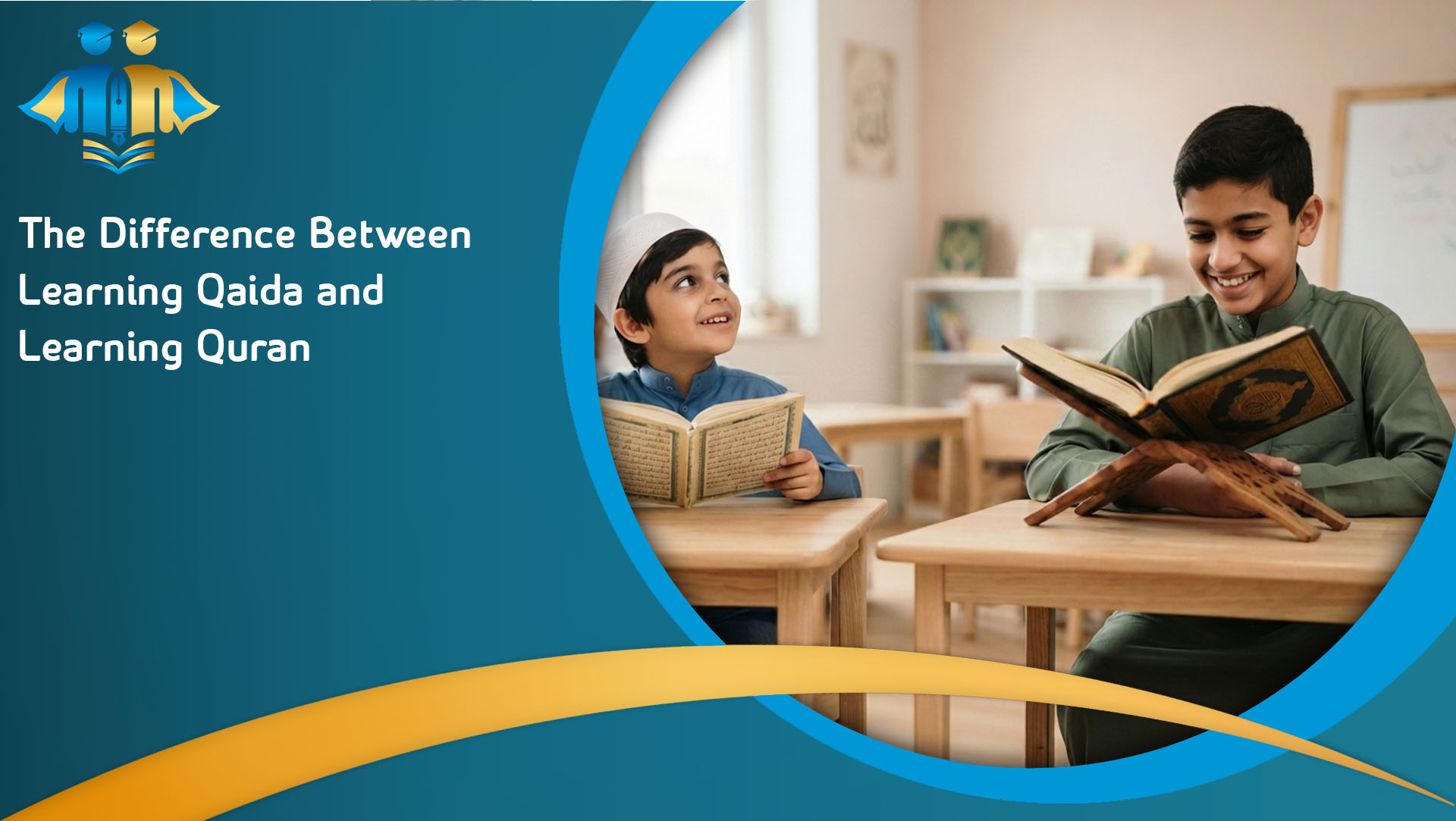
The Difference Between Learning Qaida and Learning Quran

The Difference Between Learning Qaida and Learning

A common misunderstanding is that completing a Qaida means a student has mastered Quran recitation. The two stages are connected, but they are not identical.

The Qaida provides the foundation. Quran reading applies that foundation to actual verses and Surahs. For example, a student may learn the rules of Madd in the Qaida. Later, the student must recognize and apply those rules while reading different Quranic passages.

Therefore, completing the beginner book is an important milestone, but continued practice is necessary.

Students should continue developing:

  • Fluency.
  • Accuracy.
  • Tajweed.
  • Stopping and starting skills.
  • Memorization.
  • Recitation confidence.

Frequently Asked Questions About Noorani Qaida with Tajweed

Noorani Qaida with Tajweed provides helpful answers about the learning process, benefits, lessons, and how beginners can use this method to improve their Quran reading and pronunciation skills.

Is Noorani Qaida the same as the Quran?

No. Noorani Qaida with Tajweed is a beginner’s instructional resource designed to teach Arabic reading and pronunciation skills before or alongside Quran reading. It is not a replacement for the Quran. Instead, Noorani Qaida with Tajweed helps learners develop foundational skills that can support more accurate Quran recitation.

What should I do if I keep making the same pronunciation mistake?

Tell your teacher about the difficulty and practice the specific sound separately. Repetition, listening, and targeted correction are usually more useful than repeatedly reading entire pages without addressing the underlying problem. During Noorani Qaida with Tajweed lessons, the teacher can identify recurring pronunciation errors and provide focused exercises to correct them.

Can a student study Noorani Qaida and memorize Quran at the same time?

Yes, depending on the student’s level. However, beginners should first develop enough reading accuracy to avoid repeatedly memorizing words with incorrect pronunciation. Studying Noorani Qaida with Tajweed alongside Quran memorization can be helpful when the student’s schedule and learning ability allow both activities to progress comfortably.

What equipment is needed for online lessons?

A stable internet connection, a computer or tablet, a microphone, and a quiet place to study are generally enough. A good microphone can make it easier for the teacher to hear subtle pronunciation differences during Noorani Qaida with Tajweed online lessons.

What should parents look for before enrolling a child?

Parents should consider the teacher’s Quran and Tajweed background, teaching experience, lesson structure, scheduling flexibility, individual attention, and the way the program monitors the child’s progress. When choosing Noorani Qaida with Tajweed classes for children, parents should also look for a supportive learning environment that encourages regular practice and gradual improvement.

In conclusion, learning to read the Quran correctly begins with a strong foundation. Noorani Qaida with Tajweed provides beginners with a structured path that starts with Arabic letters and gradually introduces the pronunciation skills needed for Quran recitation.

The method is useful because it breaks a potentially difficult learning process into manageable stages. Students first recognize letters, then learn vowels and connected forms, followed by Sukoon, Shaddah, Madd, and essential Tajweed rules. Through Noorani Qaida with Tajweed, learners can develop these skills step by step before moving to advanced Quran reading.

However, completing lessons should never become the only goal. Accuracy, understanding, repetition, and consistent practice are more important than rushing through the material. Regular practice of Noorani Qaida with Tajweed helps students improve their pronunciation and build confidence over time.

Children can benefit from starting early, while adults should not hesitate to begin even if they have never studied Arabic. A patient teacher can adapt lessons to different ages and learning levels, making Noorani Qaida with Tajweed suitable for beginners from various backgrounds.

Online Quran education has also made it easier for families around the world to access structured instruction from home. With regular lessons and daily practice, students can gradually develop the confidence needed to read Quranic text accurately. Learning Noorani Qaida with Tajweed online can provide flexible support through qualified teachers and personalized guidance.

Super Muslim Online Quran Academy can be considered by learners seeking a flexible online environment for Quran reading and Tajweed education. A structured program, personalized instruction, and regular feedback can help beginners address pronunciation difficulties and build stronger reading habits.

Ultimately, the most successful Quran learning journey is one based on consistency rather than speed. A few minutes of focused practice every day, combined with qualified guidance, can produce meaningful progress over time.

Whether the learner is a child taking the first steps in Quran education, an adult returning to Quran study, or a complete beginner who cannot yet read Arabic, starting with the right foundation can make the journey clearer and more rewarding.

The goal is not simply to finish a Qaida. The real goal is to develop the ability to approach the Quran with accurate pronunciation, confidence, respect, and a willingness to continue learning.

Tag:Learn Quran Online, Noorani Qaida With Tajweed, Online Tajweed Course

  • Share:
author avatar
Super Muslim

Previous post

Quran Memorization Tutor at Home for All Ages
August 12, 2026

You may also like

Quran Recitation With Tajweed
Quran Recitation With Tajweed | Improve Your Recitation

April 22, 2026
Tajweed For Beginners
Tajweed For Beginners | Learn Correct Quran Recitation

April 19, 2026
Online Tajweed Quran
Online Tajweed Quran | Learn Correct Quran Recitation
February 21, 2026
Courses
  • Islamic Studies
  • Quran Memorization
  • Arabic Language
  • New Muslim Course
  • Noorani Qaida Foundation
  • Quran & Tajweed
  • Quran for Kids
Academy
  • Contact
  • About
  • Pricing
  • โญ For Schools
  • Student Login
  • Teacher Login
Resources & Regions
  • How It Works
  • FAQ
  • Help Center
  • United States
  • Australia
  • Canada
  • United Kingdom
  • ๐Ÿ‘ฅ Group Classes
  • ๐ŸŽ Refer a Friend
Contact
  • info@super-muslim.com
  • +20 10 2234 6446
  • Contact Us
  • Help Center
Super Muslim Academy logo

Super Muslim is a leading online education platform that provides accessible and engaging courses in Arabic, Quran, and Islamic studies.

Facebook-f X-twitter Youtube
  • Best Online Quran Classes for Kids
  • Online Quran Classes
  • Online Quran Academy
  • Learn Arabic Online
  • Learn Quran Online
  • Online Quran Classes For Kids
  • Online Islamic Classes
  • Learn to Read Quran
  • Online Quran Academy Countries
  • Best Online Quran Classes for Kids
  • Online Quran Classes
  • Online Quran Academy
  • Learn Arabic Online
  • Learn Quran Online
  • Online Quran Classes For Kids
  • Online Islamic Classes
  • Learn to Read Quran
  • Online Quran Academy Countries

๐ŸŽ– Ijazah-Certified Al-Azhar Teachers|๐Ÿ”’ Secure Payment โ€” Stripe & PayPal|๐Ÿ’ฐ 30-Day Money-Back Guarantee

ยฉ 2026 Super Muslim Academy. All rights reserved.|PrivacyยทRefundsยทTerms