
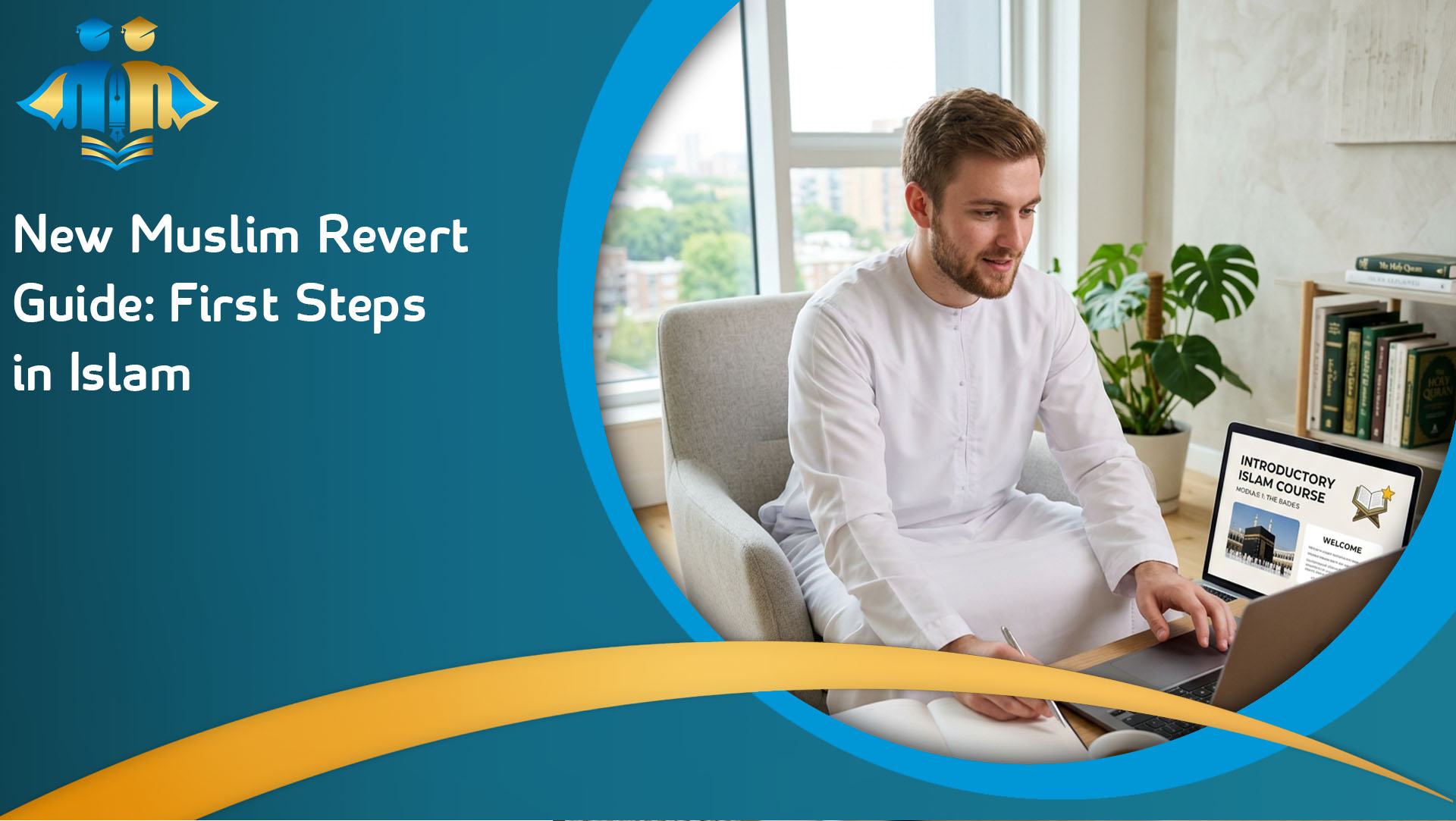
New Muslim Revert Guide First Steps in Islam: What to Know
New Muslim Revert Guide: First Steps in Islam can help someone who has recently accepted Islam understand what to do after taking the Shahada without feeling overwhelmed by everything they need to learn. Becoming Muslim is a profound beginning, but it is not a requirement to understand every aspect of the religion immediately.
The first days and weeks after accepting Islam can bring excitement, questions, uncertainty, and even moments of doubt or confusion. Therefore, a practical New Muslim Revert Guide First Steps in Islam should focus on manageable actions rather than presenting Islam as a long list of rules to memorize.
This journey is about developing a relationship with Allah, learning the essentials of faith, establishing prayer, improving character, and gradually becoming comfortable with Islamic practices. Instead of trying to change everything in one day, a new Muslim can build a strong foundation through consistent steps.
For those looking for structured support, Super Muslim Online Quran Academy can provide a learning environment where new Muslims can develop their Quranic knowledge gradually and receive guidance appropriate to their level.
What Comes After the Shahada?

The Shahada marks the beginning of a new chapter. However, accepting Islam does not mean that a person suddenly needs to know Arabic, memorize the entire Quran, understand every Islamic ruling, or immediately change every part of their lifestyle.
One of the most important ideas in a New Muslim Revert Guide: First Steps in Islam is understanding that learning takes time. Islam can be approached step by step, allowing faith and knowledge to develop together. After the Shahada, begin by concentrating on the essentials:
- Understand the basic meaning of the Shahada.
- Learn who Allah is and what Muslims believe about Him.
- Begin learning the daily prayers.
- Learn basic purification and cleanliness.
- Read a reliable translation of the Quran.
- Build a connection with a supportive Muslim community.
- Ask qualified teachers when you do not understand something.
- Give yourself time to develop new habits.
This approach prevents the common mistake of treating the first few weeks as a race. A New Muslim Revert Guide First Steps in Islam should encourage steady progress because sustainable religious practice is easier to maintain than a routine built around pressure.
Start Learning the Quran with Trusted Egyptian Teachers Today
Ready to improve your Quran recitation, master Tajweed, or begin memorizing the Holy Quran with confidence? At Super Muslim Online Quran Academy, our experienced Egyptian Quran teachers provide personalized one-on-one lessons tailored to your age, level, and goals.
Enjoy flexible scheduling, live guidance, and a supportive learning environment that helps you make steady progress from the comfort of your home. Book your free trial class today and take the first step toward a stronger connection with the Book of Allah.

First Steps in Islam and Understanding Faith
Before becoming deeply involved in detailed Islamic subjects, it is helpful to understand the central beliefs of Islam. A new Muslim should gradually become familiar with the concept of Tawhid, which refers to affirming the oneness of Allah.
The basic beliefs of Islam include belief in Allah, His angels, His revealed books, His messengers, the Last Day, and divine decree. These beliefs form the foundation upon which other Islamic practices are built.
A New Muslim Revert Guide First Steps in Islam should therefore give attention to meaning rather than memorization alone. Learning a definition is useful, but understanding how that belief influences everyday life makes the knowledge more meaningful.
For example, belief in Allah’s mercy can encourage hope during difficult periods. Belief in accountability can encourage honesty and responsibility. Belief in divine wisdom can help a person remain patient when life does not develop as expected.
Rather than attempting to study every theological discussion immediately, focus first on the fundamental beliefs. Once these concepts become familiar, more advanced subjects can be explored with greater confidence.
How Can a New Muslim Learn Islam Without Feeling Overwhelmed?
A practical New Muslim Revert Guide: First Steps in Islam should encourage a simple learning schedule. Instead of spending several hours every day consuming unrelated Islamic content online, choose a few reliable subjects and study them consistently. For example, a beginner could divide learning into manageable areas:
- Basic Islamic beliefs.
- Prayer and purification.
- Quran reading.
- Everyday Islamic manners.
- Prophetic teachings.
- Questions related to personal circumstances.
This structure makes learning easier to organize. Additionally, it reduces the confusion that can happen when a new Muslim encounters different opinions without understanding why scholars may disagree.
Online learning can also make the process more convenient. Super Muslim Online Quran Academy can be part of a structured learning routine for someone who wants guided Quran education instead of relying exclusively on random online material.
New Muslim Revert Guide: First Steps in Islam: Learning Salah
Learning Salah is one of the most important priorities after accepting Islam. Prayer provides a regular connection with Allah and creates natural pauses during the day for worship, reflection, and remembrance.
At first, the movements, Arabic words, prayer times, and sequence may appear difficult. However, these elements become increasingly familiar through repetition.
A New Muslim Revert Guide: First Steps in Islam should emphasize that beginners should learn prayer progressively. Start by understanding the basic structure and then work toward becoming more comfortable with the words and movements. A beginner can focus on:
- Learning the five daily prayer times.
- Understanding the basic requirements of prayer.
- Learning how to perform Wudu.
- Memorizing Al-Fatihah gradually.
- Learning short Surahs.
- Practicing the essential movements.
- Asking a knowledgeable teacher to correct mistakes.
It is natural for a new Muslim to make mistakes during the learning process. The goal is to continue learning rather than becoming discouraged whenever something is forgotten.
New Muslim Revert Guide: First Steps in Islam for Building a Prayer Routine
Consistency is more important than trying to make the prayer experience perfect immediately. A person who is learning should recognize that every repeated attempt helps build familiarity.
A New Muslim Revert Guide: First Steps in Islam can be particularly helpful when prayer is approached as a skill that develops over time. Just as someone learning a new language needs repeated exposure, learning Salah requires practice.
Keep a simple written guide nearby when necessary. Listen to reliable recordings to become familiar with pronunciation. Practice individual portions outside the prayer as well.
Over time, the sequence becomes easier to remember. The Arabic phrases that initially sound unfamiliar can eventually become recognizable through daily repetition.
Super Muslim Online Quran Academy can support this gradual process by helping learners develop Quran reading skills alongside their broader Islamic education.
New Muslim Revert Guide: First Steps in Islam: Learning the Quran
The Quran occupies a central place in Muslim life. However, a new Muslim does not need to begin by attempting to read or memorize large portions.
One useful New Muslim Revert Guide First Steps in Islam approach is to begin with understanding. Reading a trustworthy translation can help a new Muslim become familiar with the major themes of the Quran while gradually developing the ability to read its Arabic text. Quran learning can include several complementary goals:
- Understanding the message of selected Surahs.
- Learning Arabic letters.
- Developing correct pronunciation.
- Studying basic Tajweed.
- Memorizing short Surahs.
- Listening to qualified recitation.
- Connecting Quranic teachings with daily life.
For someone who does not speak Arabic, Quranic Arabic may initially feel unfamiliar. That is normal. Learning the Arabic alphabet and pronunciation step by step can make the process much more approachable.
Super Muslim Online Quran Academy can be included in this learning journey when a new Muslim wants structured Quran lessons and guidance instead of attempting to learn everything independently.
New Muslim Revert Guide: First Steps in Islam for Quran Reading
Quran reading should be treated as a gradual skill. A beginner may start by learning individual letters and their sounds before moving toward connected letters, words, and complete verses.
A New Muslim Revert Guide: First Steps in Islam does not need to turn Quran study into an intensive academic program. The most important objective is to establish a sustainable relationship with the Quran.
Even a short daily session can be valuable. For example, a learner might spend fifteen minutes practicing Arabic reading and another few minutes listening to recitation.
As confidence improves, the learner can increase the amount of Quran studied. This gradual progression can make the experience less intimidating and more enjoyable.
New Muslim Revert Guide: First Steps in Islam: Learning Wudu
Wudu, or ablution, is another important practical skill for Muslims because purification is connected with several acts of worship, including Salah. For a new Muslim, learning Wudu may initially involve remembering a sequence of actions. With repeated practice, however, the process becomes part of the normal daily routine.
A New Muslim Revert Guide: First Steps in Islam should encourage beginners to learn the basic method from a reliable teacher or trusted educational resource rather than depending on random social media videos.
It is also useful to understand the purpose behind purification. Wudu is not merely a physical routine. It prepares the worshipper for prayer and encourages mindfulness before standing before Allah.
If you are uncertain about a particular situation involving Wudu, ask a qualified teacher instead of becoming anxious about whether every small detail has been performed perfectly.
First Steps in Islam: Finding Reliable Knowledge

The internet has made Islamic knowledge more accessible than ever. At the same time, it has created a new challenge: too much information from sources with different levels of reliability.
For this reason, a New Muslim Revert Guide: First Steps in Islam should encourage careful selection of educational resources. When evaluating Islamic content, consider whether:
- The source identifies qualified scholars or teachers.
- Quranic verses are presented in context.
- Hadith references are provided where appropriate.
- Different scholarly opinions are explained fairly.
- The material avoids sensational claims.
- The teacher understands the needs of beginners.
- Questions can be answered rather than simply presented with short videos.
New Muslims should also avoid believing that every disagreement means that one side must be completely outside Islam. Islamic scholarship contains established differences on numerous secondary matters.
Instead, concentrate on foundational knowledge first. More detailed discussions can come later when you have enough background to understand them.
New Muslim Revert Guide: First Steps in Islam: Finding a Supportive Community
Faith can be personal, but Muslims also benefit from community. A welcoming mosque, study group, or trusted circle can provide practical assistance and emotional support.
A New Muslim Revert Guide: First Steps in Islam should therefore include community as an important part of the journey. A supportive community can help a new Muslim:
- Learn how Muslims perform daily practices.
- Ask questions in a comfortable environment.
- Meet people with similar experiences.
- Attend Quran or Islamic classes.
- Participate in Ramadan and Eid activities.
- Develop friendships based on shared faith.
- Feel less isolated during the adjustment period.
However, finding community does not mean accepting every opinion or following every person without question. Healthy support should encourage learning, kindness, and responsible religious practice.
If a new Muslim encounters pressure, judgment, or demands to make major personal decisions immediately, it is reasonable to step back and seek guidance from trusted and qualified people.
First Steps in Islam and Family Relationships
Accepting Islam can sometimes create difficult conversations with family members or friends, particularly when relatives do not understand the decision. A New Muslim Revert Guide: First Steps in Islam should recognize that relationships do not automatically become simple after conversion. Some families may be supportive, while others may need time to understand what has changed.
Patience and good character can make these conversations easier. A new Muslim can explain their beliefs calmly without turning every discussion into an argument. Islamic teachings also emphasize respectful treatment of parents and relatives. Becoming Muslim does not mean abandoning kindness toward family members. Consider these practical approaches:
- Listen to concerns without immediately becoming defensive.
- Explain your beliefs using simple language.
- Avoid unnecessary arguments.
- Maintain appropriate family relationships.
- Give relatives time to adjust.
- Let your character demonstrate what your faith means to you.
Super Muslim Online Quran Academy can support the educational side of the journey. New Muslims who want to understand different learning approaches can also explore Online Quran Classes vs Traditional Madrasa while family relationships may require patience, communication, and personal wisdom.
Developing Good Character
Islamic practice involves more than prayer and Quran reading. Character, manners, honesty, patience, compassion, and responsibility are also important aspects of Muslim life.
A New Muslim Revert Guide: First Steps in Islam should therefore include Akhlaq, or good character, as an essential area of development. A new Muslim can begin with simple changes:
- Speak honestly.
- Keep promises.
- Avoid unnecessary arguments.
- Treat parents respectfully.
- Help people when possible.
- Control anger.
- Be patient with others.
- Avoid insulting or humiliating people.
- Show gratitude.
- Admit mistakes and correct them.
These actions may appear ordinary, but they can have a meaningful effect on everyday life. Religious learning becomes more practical when its values influence the way a person treats other people.
Daily Habits
Building faith requires more than collecting information. Daily habits allow Islamic knowledge to become part of normal life. A New Muslim Revert Guide: First Steps in Islam can be turned into a simple routine instead of a long checklist.
For instance, a beginner might establish a daily pattern that includes prayer, a short Quran session, remembrance of Allah, and a few minutes of Islamic learning. The exact schedule can change according to work, family responsibilities, health, and other circumstances. What matters is creating habits that can realistically continue. When choosing an online learning option, beginners may also find it useful to review resources such as Best Online Quran Academy for Kids 2026 when learning about structured Quran education for younger family members.
Trying to do everything at once often creates unnecessary pressure. By contrast, small actions repeated consistently can gradually become permanent parts of daily life.
What Should You Learn First?

When there are hundreds of Islamic topics available online, knowing where to begin can be difficult. A sensible New Muslim Revert Guide First Steps in Islam places essential matters before advanced subjects. A beginner’s learning order could look like this:
- Understand the Shahada: Learn the meaning of the testimony of faith and what believing in the oneness of Allah means.
- Learn the Basics of Salah: Become familiar with prayer times, purification, movements, and essential recitations.
- Begin Quran Reading: Learn the Arabic letters and pronunciation gradually while also reading a trustworthy translation.
- Study Basic Beliefs: Understand the fundamental beliefs of Islam before moving into advanced theological discussions.
- Learn Everyday Islamic Manners: Study honesty, kindness, family responsibilities, modesty, patience, and other practical values.
- Ask Questions: Keep a list of questions and discuss them with qualified teachers instead of trying to solve every issue through social media. Learning how to recognize reliable educational providers can also be helpful, particularly when reviewing Signs of a Trustworthy Online Quran Academy. This approach gives the new Muslim a clear direction without creating unrealistic expectations.
Long-Term Growth
The first stage of becoming Muslim is only the beginning. Over time, knowledge can become deeper, worship can become more meaningful, and personal character can continue developing.
A New Muslim Revert Guide: First Steps in Islam should therefore encourage long-term growth rather than focusing only on the first few days. As your foundation becomes stronger, you can gradually explore subjects such as:
- Seerah and the life of Prophet Muhammad.
- Tafsir and Quranic explanation.
- Hadith studies.
- Islamic history.
- Fiqh and practical rulings.
- Arabic language.
- Spiritual development.
- Advanced Quran and Tajweed studies.
There is no need to study everything simultaneously. Choose subjects according to your current needs and learning ability. For learners who prefer remote instruction, Online Quran Classes on Zoom can provide another way to approach Quran learning from home.
Super Muslim Online Quran Academy can remain part of a long-term Quran learning plan as your reading, recitation, memorization, and understanding continue to develop.
New Muslim Revert Guide: Dealing With Mistakes
Every new Muslim will make mistakes. Forgetting a prayer detail, mispronouncing Arabic, misunderstanding a ruling, or struggling to maintain a new habit does not mean that the entire journey has failed.
One of the most important lessons in a New Muslim Revert Guide: First Steps in Islam is learning how to respond constructively to mistakes. When something goes wrong:
- Identify what happened.
- Ask a qualified person when clarification is needed.
- Correct the mistake when possible.
- Avoid unnecessary guilt.
- Continue practicing.
- Learn from the experience.
Islamic growth is not measured by never making mistakes. Instead, the process involves learning, returning to Allah, and continuing forward.
A new Muslim should therefore avoid comparing their progress with someone who has practiced Islam for many years. Everyone begins somewhere, and each person’s circumstances are different. Keeping track of important Islamic occasions and dates can also become easier with a reliable Islamic Hijri Calendar Guide as part of developing a consistent understanding of the Muslim calendar.
Creating a Simple Weekly Plan
A weekly plan can turn general intentions into practical action. The plan does not need to be complicated. For example:
| Day | Main Learning Focus |
|---|---|
| Monday | Quran reading practice |
| Tuesday | Salah practice |
| Wednesday | Islamic beliefs |
| Thursday | Quran listening and reflection |
| Friday | Community and Jumu’ah |
| Saturday | Islamic manners and character |
| Sunday | Review and questions |
This type of structure can make a New Muslim Revert Guide First Steps in Islam easier to follow because the learner has a clear objective instead of trying to study everything at once.
The schedule can also be adjusted. Someone with a demanding job may need shorter sessions, while another learner may have more time available. The objective is not to create a perfect timetable. Instead, the goal is to establish a realistic rhythm that supports continued learning.
The Role of Patience
Patience is essential during the transition into a new religious lifestyle. New Muslims may experience periods of enthusiasm followed by tiredness, confusion, or uncertainty. A New Muslim Revert Guide: First Steps in Islam should make room for these normal fluctuations.
You may learn something quickly one week and struggle with it the next. You may memorize a Surah and later forget part of it. You may feel confident in prayer one day and uncertain the next.
These experiences do not necessarily mean that you are moving backward.- Instead, return to the basics and continue practicing. Review what you already know before constantly adding new information.
Super Muslim Online Quran Academy can be useful for learners who benefit from structured lessons and regular educational guidance as they continue developing their Quran skills.
Keeping the Journey Personal
Every convert has a different background. Some people come to Islam after years of studying religion, while others discover Islam through personal experiences or relationships. Therefore, a New Muslim Revert Guide: First Steps in Islam should provide direction without assuming that every new Muslim needs exactly the same schedule.
Your previous education, language, family environment, work commitments, and existing knowledge can all affect how quickly you learn. The important thing is to establish a relationship with Islam that is based on sincere learning and consistent practice.
Avoid comparing your beginning with someone else’s tenth year. Focus on the next useful step rather than worrying about everything that remains to be learned.
Building a Strong Islamic Foundation

A strong beginning can influence the rest of the journey. However, the goal is not to become an expert immediately. The goal is to build a foundation that can support continued growth. A New Muslim Revert Guide: First Steps in Islam should ultimately lead toward a balanced routine involving worship, learning, personal development, and healthy relationships.
Keep your expectations realistic. Learn from reliable teachers. Read the Quran regularly. Practice prayer. Develop good manners. Ask questions when something is unclear. Surround yourself with people who encourage responsible and balanced learning.
Most importantly, remember that accepting Islam begins a lifelong process of discovery. There will always be another lesson to learn, another Surah to understand, and another aspect of character to improve.
Frequently Asked Questions About New Muslim Revert Guide: First Steps in Islam
Find answers to common questions about the first steps in Islam, faith, prayer, and worship for new Muslims.
1. Should a new Muslim change their name after accepting Islam?
Not necessarily. A person generally does not need to change their name simply because they became Muslim. If the existing name has a meaning that conflicts with Islamic beliefs, it can be useful to ask a qualified scholar about the specific situation.
2. Can someone become Muslim if they do not know Arabic?
Yes. Knowing Arabic is not a prerequisite for accepting Islam. A new Muslim can learn Arabic gradually while practicing the religion and studying the Quran. Many Muslims around the world begin their Islamic learning without speaking Arabic.
3. What should a new Muslim do when friends do not understand their conversion?
Give people time and communicate calmly. You do not need to answer every question immediately. Explain your beliefs when appropriate, maintain respectful relationships, and seek advice from trustworthy people if a particular relationship becomes difficult.
4. Is it normal to have questions after becoming Muslim?
Yes. Having questions does not automatically indicate a lack of sincerity or commitment. Islam encourages seeking knowledge, so write down your questions and discuss them with reliable teachers who can provide context and appropriate explanations.
In conclusion, the New Muslim Revert Guide First Steps in Islam should be understood as the beginning of a gradual journey rather than a demanding list that must be completed immediately.
Start with the foundations. Understand the meaning of the Shahada, learn Salah, develop Quran reading skills, study essential beliefs, and build good daily habits. At the same time, seek supportive relationships and give yourself enough space to learn without unnecessary pressure.
Super Muslim Online Quran Academy can be part of that educational journey by providing structured Quran learning that grows with the learner’s abilities and needs. The most important step is to keep moving forward. You do not need to know everything today. Learn what you need now, practice it consistently, ask questions when necessary, and allow your understanding to grow naturally.

You may also like
Seerah and Hadith Course Online | Learn from Experts
How to pray in Islam: Step-by-Step Beginner Guide