

How to Learn Tajweed of Quran: A Beginner’s Guide
Learning how to learn tajweed of quran is an important step for Muslims who want to recite the Quran correctly and preserve the pronunciation of its Arabic words. Tajweed teaches readers how to pronounce each letter from its proper articulation point, apply the correct characteristics, and observe the rules of recitation.
For Muslims living in the United States, the United Kingdom, and Canada, learning Tajweed can sometimes be challenging, especially when Arabic is not their first language. However, with consistent practice, suitable learning materials, and guidance from a qualified teacher, beginners can gradually improve their Quran recitation from home.
This guide explains the essential Tajweed rules, practical learning methods, and common mistakes to avoid when starting your journey.
What Is Tajweed and Why Is It Important?
Tajweed refers to the set of rules that guide the correct pronunciation of Quranic letters and words during recitation. It helps readers give every Arabic letter its proper articulation point and characteristics.
Learning Tajweed is important because small pronunciation differences can sometimes change the meaning of Arabic words. It also helps Muslims develop more accurate, confident, and thoughtful Quran recitation. Some important benefits include:
- Improving the pronunciation of Arabic letters.
- Understanding how different Tajweed rules work.
- Avoiding common recitation mistakes.
- Developing a more consistent Quran reading routine.
- Improving listening skills through careful recitation.
Understanding these benefits gives beginners a clear reason to approach Tajweed as a gradual learning process rather than something they must master immediately.
How to Learn Tajweed of Quran Step by Step?
Beginners often wonder how to learn tajweed of quran without feeling overwhelmed by unfamiliar Arabic terminology. The best approach is to start with basic pronunciation and introduce new rules gradually.
1. Learn the Arabic Alphabet and Pronunciation
Before studying advanced Tajweed rules, make sure you can recognize Arabic letters and pronounce them correctly.
Arabic contains sounds that may not exist in English. For example, letters such as ع, ح, خ, and غ require practice because their pronunciation depends on specific articulation points.
If you are unfamiliar with Arabic reading, starting with Learn Noorani Qaida in English can help you understand the alphabet, vowel sounds, and basic reading patterns.
2. Understand the Articulation Points of Letters
Every Arabic letter has a specific articulation point, known as Makhraj. These points are generally associated with the throat, tongue, lips, and nasal passage.
Learning where each sound originates helps prevent pronunciation mistakes. For example, beginners should practice distinguishing between س and ص, as well as ت and ط.
A teacher can demonstrate these sounds and correct mistakes that may be difficult to notice when studying independently.
3. Study the Basic Tajweed Rules
Once you become comfortable reading Arabic, begin studying the main Tajweed rules. Some essential topics include:
- Noon Sakinah and Tanween.
- Meem Sakinah.
- Madd (elongation).
- Qalqalah.
- Ghunnah.
- Rules of stopping and starting.
Study one topic at a time. Read examples, listen to correct recitation, and practice applying the rule in Quranic verses.
4. Learn Sukoon and Jazm
Understanding vowel marks is essential for accurate Quran reading. In particular, sukoon and jazm help learners recognize when a letter carries no vowel sound.
Beginners should practice identifying these marks in different words and reading them without adding unnecessary vowel sounds.
5. Practice Tafkheem and Tarqeeq.
Another important part of Tajweed is understanding heavy and light pronunciation.
Tafkheem and Tarqeeq explain when certain letters should be pronounced with a heavier or lighter sound.
For example, some Arabic letters are always pronounced heavily, while others are generally light. The letter Ra can have different pronunciation qualities depending on its surrounding vowels and other grammatical conditions.
Listening to a qualified reciter can help learners recognize these differences more clearly.
Practical Ways to Improve Your Quran Recitation
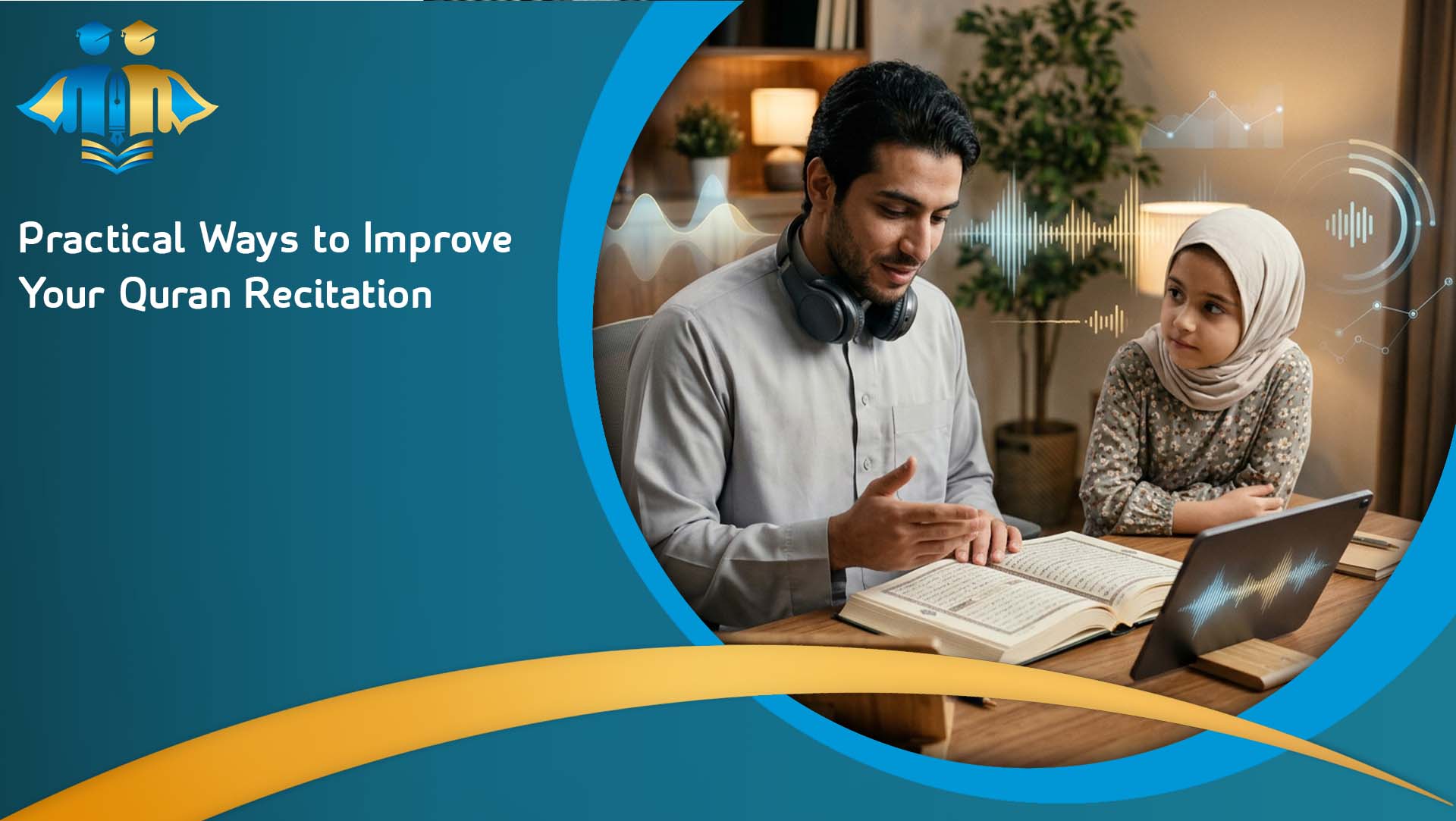
Understanding the rules is only one part of learning Tajweed. Regular practice helps turn theoretical knowledge into better recitation.
Listen to Skilled Quran Reciters
Choose a reliable Quran reciter and listen carefully to short passages. Pay attention to pronunciation, elongation, pauses, and the flow between words.
Try listening to the same verses several times before repeating them. This approach helps beginners recognize sounds and understand how Tajweed rules are applied during actual recitation.
Practice with Short Surahs
Start with short surahs that you already know. Read a few verses slowly and focus on applying one or two rules at a time.
Recording your recitation can also help. When you listen again, you may notice pronunciation mistakes or hesitation that you did not recognize while reading.
Understand the Sun and Moon Letters
The sun and moon letters are useful for understanding how the Arabic definite article “ال” is pronounced. With sun letters, the Lam is assimilated into the following letter. With moon letters, the Lam is pronounced clearly.
Learning this distinction improves Arabic reading and provides a useful foundation for Quran recitation.
Build a Consistent Learning Routine
A short daily routine is often more practical than studying for several hours occasionally. Adjust the schedule according to your level and daily responsibilities. For example, beginners can dedicate:
- 5 minutes to review previous rules.
- 10 minutes to listening and repeating Quranic verses.
- 10 minutes to reading with attention to Tajweed.
- 5 minutes to identifying and correcting mistakes.
Is It Better to Learn Tajweed with a Teacher?
Although books and recorded lessons provide useful explanations, learning with a qualified Quran teacher offers an important advantage: direct pronunciation correction.
A teacher can listen to your recitation, identify errors, demonstrate the correct articulation, and explain how to apply different rules in context.
When choosing an online instructor, consider teaching experience, knowledge of Tajweed, communication skills, and the opportunity to receive individual feedback. This guide on How to Choose a Quran Teacher Online explains what learners should consider before making a decision.
For students who need structured online learning, Super Muslim Online Quran Academy is an option to explore when looking for Quran instruction from home. Learners should review the available Tajweed lessons, teacher qualifications, schedules, and learning arrangements before enrolling.
An online learning environment can be particularly convenient for families in different time zones who need lessons that fit around school, work, and other responsibilities.
Common Mistakes Beginners Should Avoid
When learning how to learn Tajweed of quran, beginners may focus too much on memorizing terminology instead of improving their actual pronunciation.
Here are some mistakes worth avoiding:
- Rushing through verses: Reading too quickly makes it harder to apply Tajweed rules correctly.
- Ignoring articulation points: Similar Arabic letters may sound different, so each letter needs proper attention.
- Studying too many rules together: Learning several unfamiliar concepts at once can cause confusion.
- Depending only on recordings: Listening is helpful, but it does not replace individual correction.
- Practicing inconsistently: Long breaks can make it difficult to remember previously learned rules.
A patient approach, regular revision, and feedback from a knowledgeable teacher can help learners overcome these challenges.
How Long Does It Take to Learn Tajweed?
The time required to understand how to learn Tajweed of quran depends on your Arabic reading ability, previous experience, practice schedule, and the complexity of the rules you are studying.
Someone who already reads Arabic may understand basic Tajweed concepts relatively quickly. However, learning how to learn Tajweed of quran correctly and developing accurate pronunciation requires continued practice and patience.
The goal should not be to finish a course as quickly as possible. Instead, focus on improving your recitation step by step, applying the rules correctly, and maintaining your progress.
Super Muslim Online Quran Academy may be worth considering for learners who want to explore guided Quran learning. Before starting, ask about the course structure and whether the instruction matches your current reading level. Choosing the right learning approach can make understanding how to learn tajweed of quran easier and more organized.
Frequently Asked Questions About How to Learn Tajweed of Quran
The following frequently asked questions explain how to learn tajweed of quran, including effective learning methods, essential rules, and practical tips for improving Quran recitation.
1. Can I Learn Tajweed Without Knowing Arabic?
Yes. Beginners can start by learning Arabic letters, pronunciation, and basic reading rules. However, understanding Arabic vocabulary and grammar can make Quran study more meaningful over time.
2. Can I Learn Tajweed Online?
Yes. Online lessons can provide access to qualified teachers, live instruction, and pronunciation feedback. The most important factors are the teacher’s qualifications and the consistency of practice.
3. Should I Memorize Tajweed Rules Before Reading the Quran?
It is not necessary to memorize every rule before beginning Quran recitation. Start with basic pronunciation and learn new rules gradually while practicing.
Conclusion
Learning how to learn Tajweed of quran is a gradual journey that requires patience, regular practice, and attention to pronunciation. Beginners should start with the Arabic alphabet, understand articulation points, study essential rules, and apply them through consistent Quran reading.
With the right learning approach and guidance, students can improve their recitation and become more confident in reading the Quran. Super Muslim Online Quran Academy is one option to consider for those interested in exploring structured online Quran lessons and developing their Tajweed skills.

You may also like

Recite Quran with Tajweed: Master Correct Quran Reading

Tajweed tutor online: How to Choose the Best One