

Pillars of Hajj: The Five Essential Rites Explained
The pillars of Hajj are the essential acts of pilgrimage that Muslims must fulfill for their Hajj to be valid according to the relevant rules of Islamic jurisprudence. Understanding these requirements helps pilgrims prepare for their journey, perform each ritual correctly, and avoid mistakes that may affect the validity of their worship.
Hajj is one of the five pillars of Islam and a profound act of devotion that brings Muslims together in worship of Allah. However, completing the pilgrimage requires more than traveling to Makkah and visiting its sacred sites. Pilgrims must understand the required rituals, their proper sequence where applicable, and the distinction between essential pillars and other obligations.
This guide explains the four pillars of Hajj according to the majority of Islamic scholars: Ihram, standing at Arafat, Tawaf al-Ifadah, and Sa’i between Safa and Marwa. It also explores their practical requirements, common mistakes, relevant differences among Islamic schools of jurisprudence, and the consequences of missing a required act.
Whether you are preparing for your first pilgrimage or reviewing your religious knowledge, this article offers practical guidance to help you approach Hajj with greater confidence and understanding.
What Are the Four Essential Pillars of Hajj?
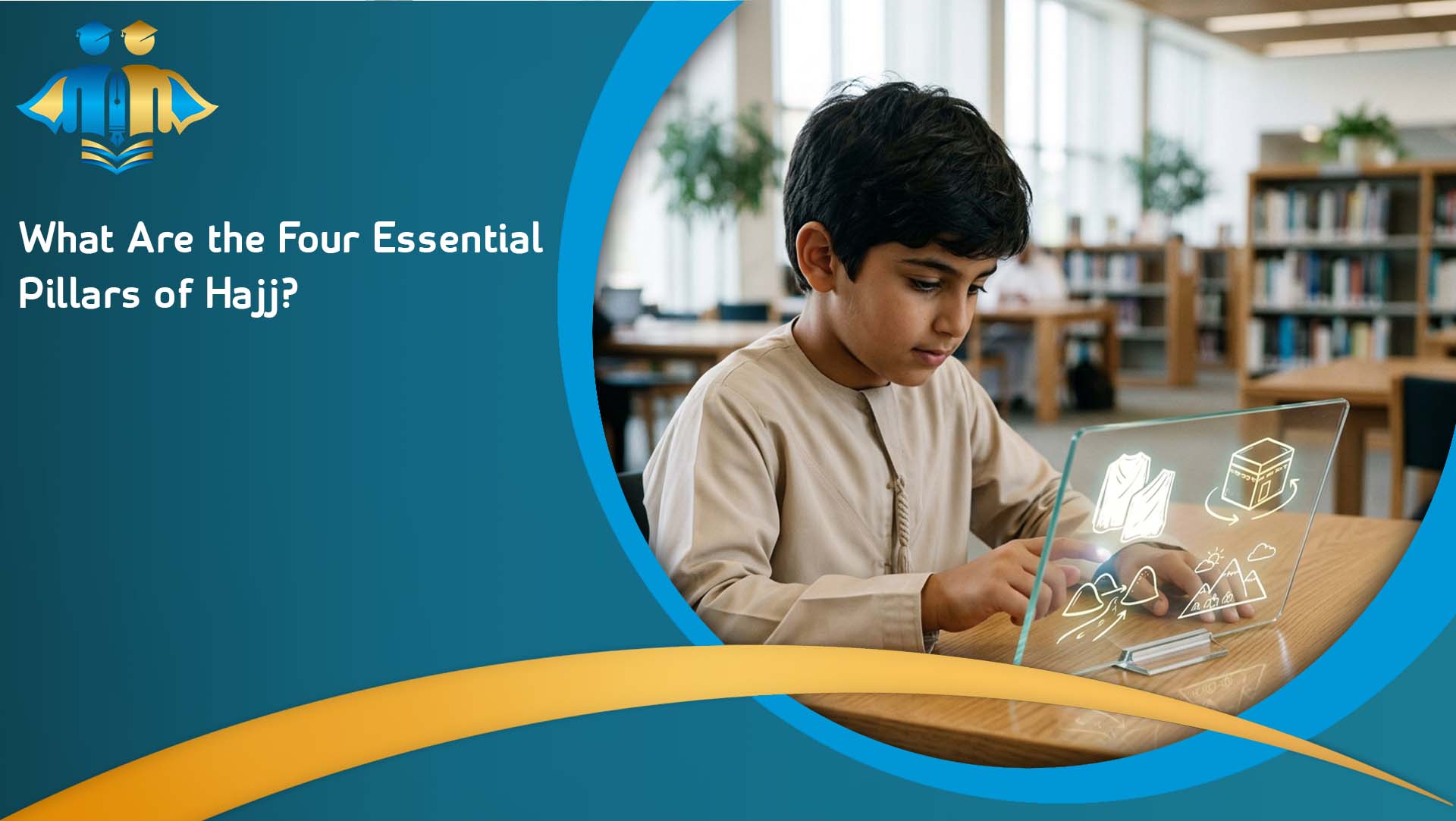
The pillars of Hajj are the fundamental acts that establish the validity of the pilgrimage. According to the majority of scholars, four essential pillars must be fulfilled rather than replaced by compensation. The four pillars of Hajj are:
- Ihram: Entering the state of pilgrimage through the intention to perform Hajj.
- Standing at Arafat: Being present within the recognized boundaries of Arafat during the prescribed time.
- Tawaf al-Ifadah: Circumambulating the Kaaba as part of the pilgrimage rites.
- Sa’i between Safa and Marwa: Completing the prescribed seven passages between the two sacred hills.
Each pillar has specific rules that pilgrims should learn before traveling. Although these rites are connected, they differ in purpose, timing, and the conditions associated with their performance.
It is also important to recognize that Islamic schools of jurisprudence differ in how they classify certain acts. For example, some jurists classify Ihram as a condition for Hajj rather than a pillar in the same technical sense used by other scholars. Therefore, learning the applicable rulings from a qualified scholar can help pilgrims understand their responsibilities accurately.
Start Learning the Quran with Trusted Egyptian Teachers Today
Ready to improve your Quran recitation, master Tajweed, or begin memorizing the Holy Quran with confidence? At Super Muslim Online Quran Academy, our experienced Egyptian Quran teachers provide personalized one-on-one lessons tailored to your age, level, and goals.
Enjoy flexible scheduling, live guidance, and a supportive learning environment that helps you make steady progress from the comfort of your home. Book your free trial class today and take the first step toward a stronger connection with the Book of Allah.

Pillar One: Ihram and the Intention to Perform Hajj
Ihram marks the beginning of the pilgrimage and establishes the pilgrim’s commitment to observing the rules of Hajj. It involves entering the prescribed state of consecration through intention, rather than merely wearing particular clothing.
For men, Ihram commonly involves two unstitched cloths, while women generally wear modest clothing that meets Islamic requirements. The specific clothing rules differ from the fundamental act of entering Ihram itself.
How to Enter Ihram Correctly
Preparing for Ihram involves several practical steps that help pilgrims begin their pilgrimage in an orderly manner.
- Prepare for cleanliness: Taking a bath before entering Ihram is recommended when possible. Personal grooming should be completed beforehand, as certain grooming acts become prohibited after entering the state.
- Wear appropriate clothing: Men should prepare the prescribed Ihram garments, while women should wear suitable modest clothing without assuming that a particular color is obligatory.
- Make the intention: Form the intention to perform Hajj, observing the appropriate rules for the chosen type of pilgrimage.
- Recite the Talbiyah: Say, “Labbayka Allahumma labbayk,” and continue with the established wording of the Talbiyah.
- Observe the Miqat: Enter Ihram at the applicable designated boundary before crossing it toward Makkah when the rules require it.
The Miqat is especially important because passing the applicable boundary without entering Ihram can create a religious obligation or require corrective action, depending on the circumstances and relevant scholarly ruling.
Pilgrims should therefore confirm their Miqat arrangements with their travel organizers or a knowledgeable scholar before departure. Those traveling by air may need to enter Ihram before the aircraft reaches the relevant boundary.
Prohibitions During Ihram
Once a pilgrim enters Ihram, specific restrictions apply. These rules differ according to whether the pilgrim is a man or woman and according to the act involved.
Common restrictions include:
- Removing hair or clipping nails without an applicable excuse or concession.
- Applying perfume after entering Ihram.
- Engaging in marital sexual relations.
- Hunting land game or participating in prohibited hunting activities.
- For men, wearing ordinary fitted garments in the prohibited manner specified by Islamic law.
- For men, covering the head in the prohibited manner, subject to relevant exceptions.
Women are not required to wear white Ihram garments. They should maintain appropriate modest dress and follow the applicable rules concerning face coverings and gloves during Ihram.
Not every mistake has the same consequence. Depending on the act, intention, circumstances, and school of jurisprudence, the ruling may involve repentance, compensation, or another corrective measure. Consequently, pilgrims should seek qualified guidance rather than assume that every violation invalidates Hajj.
Common Ihram Mistakes to Avoid
Several preventable errors occur when pilgrims enter Ihram without understanding its requirements.
- Crossing the applicable Miqat before entering Ihram.
- Confusing the intention with the clothing worn during pilgrimage.
- Applying perfume after entering Ihram.
- Assuming that bathing becomes prohibited throughout Ihram.
- Believing that all restrictions apply identically to men and women.
Proper preparation makes this first stage more manageable. In addition, reviewing the Pillars of Hajj before travel helps pilgrims distinguish the beginning of the pilgrimage from the other rituals that follow.
Pillar Two: Standing at Arafat — One of the Pillars of Hajj
Standing at Arafat is one of the most significant Pillars of Hajj, taking place on the ninth day of Dhul-Hijjah. The Prophet Muhammad, peace and blessings be upon him, emphasized its importance through the well-known statement, “Hajj is Arafat.”
Among the Pillars of Hajj, this rite holds a special position because pilgrims must be present within Arafat’s recognized boundaries during the prescribed period. Climbing Mount Arafat itself is unnecessary, since the requirement concerns the designated area rather than reaching a particular summit.
When and How Should Pilgrims Perform This Pillar of Hajj?
Understanding the timing of the Pillars of Hajj helps pilgrims fulfill their religious responsibilities correctly. According to the majority of scholars, the period for standing at Arafat begins after midday on the ninth of Dhul-Hijjah and extends until dawn on the tenth, although details differ among schools of jurisprudence. To fulfill this pillar correctly, pilgrims should:
- Confirm that their location falls within Arafat’s recognized boundaries.
- Remain present during a valid portion of the prescribed period.
- Spend time in supplication, remembrance of Allah, and reflection.
- Follow official instructions when moving between pilgrimage locations.
- Avoid leaving the designated area without understanding the relevant timing and rulings.
Standing at Arafat does not require remaining physically upright throughout the period. Sitting, resting, or using a wheelchair does not prevent fulfillment when the pilgrim meets the applicable requirements.
What Should Pilgrims Do at Arafat?
The Day of Arafat offers pilgrims an opportunity to seek forgiveness, guidance, mercy, and blessings. Although some prepare personal supplication lists, Muslims may also pray sincerely in their own words.
Furthermore, pilgrims should protect their health by drinking water appropriately, following medical advice, and avoiding unnecessary exertion in extreme heat. Learning about the Pillars of Hajj includes understanding how to perform worship responsibly while protecting personal safety.
Common Mistakes When Performing the Pillars of Hajj at Arafat
Several mistakes can affect the fulfillment of this essential rite:
- Remaining outside Arafat’s recognized boundaries.
- Assuming that visiting Mount Arafat alone fulfills the requirement.
- Leaving before completing the required presence.
- Confusing the ninth day of Dhul-Hijjah with the following day.
- Becoming distracted by photography and overlooking essential arrangements.
Therefore, pilgrims should verify their location and schedule carefully. Among the Pillars of Hajj, standing at Arafat requires particular attention because missing its prescribed period can prevent completion of the pilgrimage for that year.
Pillar Three: Tawaf al-Ifadah and the Pillars of Hajj
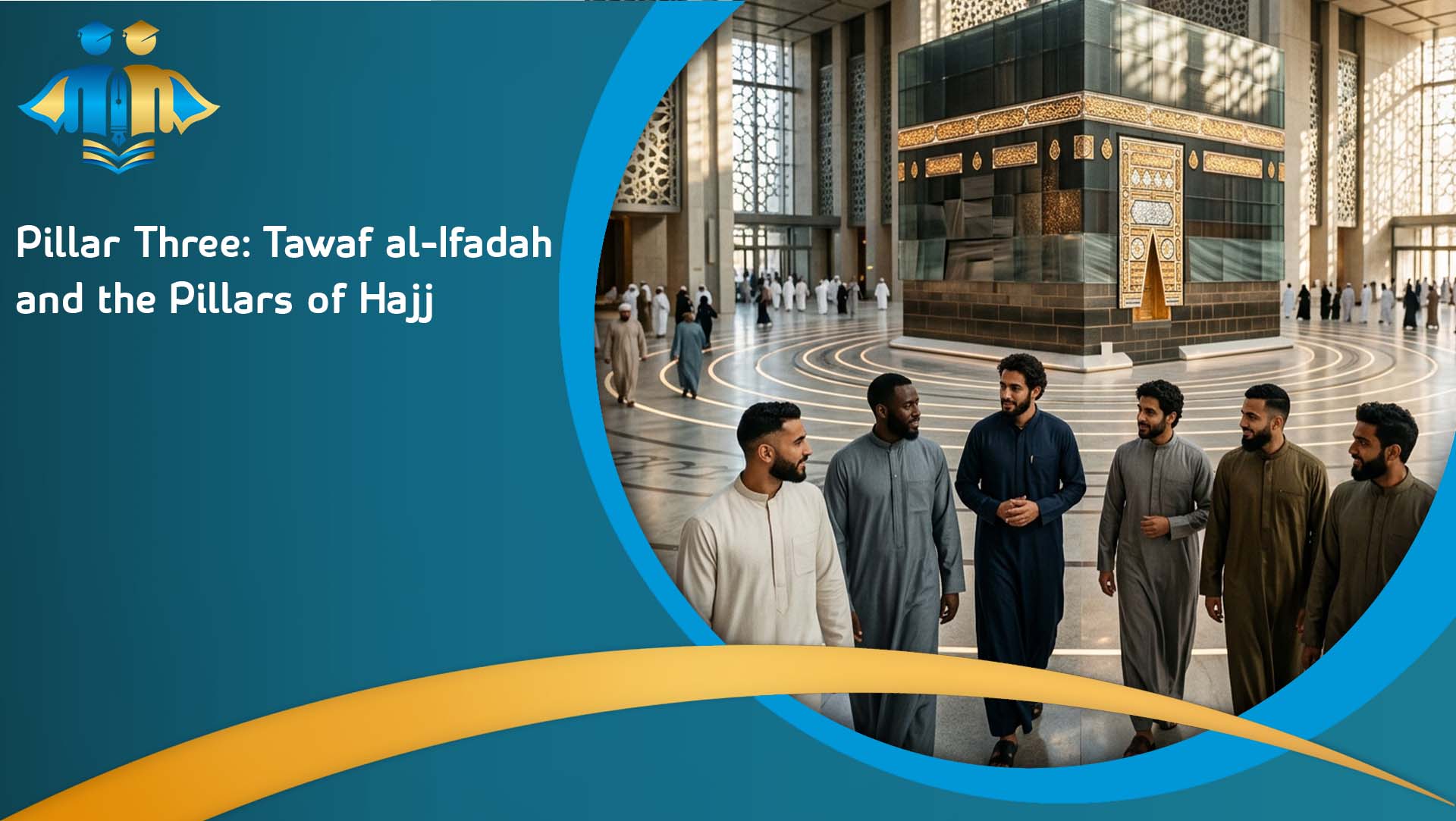
Tawaf al-Ifadah is the circumambulation of the Kaaba performed as part of the pilgrimage. According to the majority of scholars, it is one of the essential Pillars of Hajj and must be completed according to the applicable requirements.
This ritual differs from other forms of Tawaf performed during a pilgrim’s stay in Makkah. It is specifically associated with Hajj and is commonly performed after standing at Arafat, alongside the other relevant rites.
How to Perform Tawaf al-Ifadah Correctly
Learning the procedures associated with the Pillars of Hajj helps pilgrims avoid confusion during crowded periods. Tawaf al-Ifadah consists of seven complete circuits around the Kaaba, with the Kaaba remaining on the pilgrim’s left. The steps include:
- Prepare for Tawaf and observe the applicable requirements concerning ritual purity and covering the body.
- Begin each circuit at the marked line of the Black Stone.
- Walk around the Kaaba in the prescribed direction.
- Complete seven full circuits while keeping an accurate count.
- Finish the seventh circuit at the starting line.
Touching or kissing the Black Stone is not required for a valid circuit. When crowds prevent approaching it safely, pointing toward it while saying “Allahu Akbar” is an established alternative.
For sisters who want to strengthen their Quran recitation alongside their pilgrimage preparation, Best Online Tajweed Classes for Sisters can provide additional learning support.
Conditions and Common Mistakes During Tawaf
The detailed requirements of Tawaf differ across Islamic schools of jurisprudence. Pilgrims should maintain ablution whenever possible and seek qualified guidance if they lose it during the ritual.
Common mistakes include counting incomplete circuits as complete, starting from the wrong point, walking in the wrong direction, or pushing others to reach the Black Stone.
Understanding the Pillars of Hajj involves learning the correct procedure and knowing how to respond when unexpected circumstances arise. Consequently, pilgrims should prioritize safety, patience, and reliable religious guidance. Understanding related worship obligations, such as Wudu after Ghusl, may also help readers review questions about ritual purity.
Pillar Four: Sa’i Between Safa and Marwa
Sa’i is the ritual movement between Safa and Marwa, commemorating the perseverance associated with Hajar, the wife of Prophet Ibrahim, peace be upon them. According to the majority of scholars, it is one of the four Pillars of Hajj.
How to Complete Sa’i Among the Pillars of Hajj
Sa’i consists of seven passages, beginning at Safa and ending at Marwa. A journey from Safa to Marwa counts as one passage, while returning from Marwa to Safa counts as another.
Pilgrims should follow these steps:
- Begin at Safa and proceed toward Marwa.
- Count the journey from Safa to Marwa as the first passage.
- Return to Safa for the second passage.
- Continue until seven passages have been completed.
- Finish at Marwa after the seventh passage.
Men are generally encouraged to jog through the designated section when physically able and when doing so will not endanger others. Women ordinarily walk throughout the route.
Readers who wish to improve their everyday Arabic communication can explore Arabic Speaking Classes as a separate learning option.
Practical Guidance for Completing the Pillars of Hajj
Ritual purity is not generally considered a condition for the validity of Sa’i by the majority of scholars, although remaining in a state of purity is recommended. Pilgrims should follow the recognized route and keep an accurate count.
Helpful preparation includes wearing comfortable footwear, drinking water when appropriate, following official crowd-management instructions, and avoiding unnecessary rushing. Pilgrims should also learn the relevant fasting guidance before Ramadan by reviewing Ramadan Fasting Rules, which addresses a separate aspect of Islamic practice.
Common mistakes include starting at Marwa, counting a round trip as one passage, stopping before completing seven passages, and assuming that running is required throughout the route.
By learning these details beforehand, pilgrims can perform Sa’i with greater confidence and understand its place among the Pillars of Hajj. Those seeking structured Quran learning may also consider guidance from a Best Quran Teacher Online to support their broader religious studies.
Pillars of Hajj vs. Obligations of Hajj: Understanding the Difference
The Pillars of Hajj and its obligatory acts are related, but they are not interchangeable categories. Understanding the distinction helps pilgrims determine what is required and what consequences may follow if an act is missed.
Pillars are fundamental components of Hajj that cannot ordinarily be replaced by a compensatory sacrifice. If a required pillar is omitted, the pilgrim must address the omission according to the applicable religious ruling.
Obligatory acts are also binding requirements, but their omission may carry different consequences. In certain circumstances, compensation may be required when a wajib act is missed without a valid excuse.
Examples commonly classified as obligations by many scholars include prescribed stays at Muzdalifah and Mina and stoning the Jamarat. However, classification and details vary across schools of jurisprudence.
| Aspect | Pillars of Hajj | Obligations of Hajj |
|---|---|---|
| Religious status | Fundamental requirements | Binding ritual requirements |
| Consequences of omission | May prevent valid completion until addressed | May require compensation or corrective action |
| Can sacrifice replace the act? | Generally no | Sometimes, depending on the ruling |
| Need for scholarly guidance | Particularly important when a pillar is missed | Necessary to determine the appropriate remedy |
This distinction prevents pilgrims from assuming that every missed ritual invalidates Hajj. It also explains why understanding the Pillars of Hajj before departure is essential.
What Happens If a Pilgrim Misses One of the Pillars of Hajj?
The consequences depend on the missed pillar, whether its prescribed time has passed, and the applicable school of jurisprudence.
For example, someone who fails to stand at Arafat during the valid period has missed a fundamental requirement. Once that period expires, an ordinary compensatory sacrifice cannot simply replace the missed pillar.
However, if the required period has not ended, the pilgrim should seek immediate guidance about whether the requirement can still be fulfilled. Similarly, someone who has not completed Tawaf al-Ifadah should consult a qualified scholar about completing it and any associated restrictions.
Never treat the Pillars of Hajj as interchangeable with recommended acts or compensable obligations. Therefore, pilgrims should obtain advice based on their specific circumstances rather than make assumptions about the validity of their pilgrimage.
How to Prepare for the Pillars of Hajj Before Traveling
Preparation helps pilgrims focus on worship instead of trying to learn every procedure while navigating crowded sacred sites.
First, review the Pillars of Hajj and their requirements. Learn when Ihram begins, how the valid period at Arafat is determined, how Tawaf is counted, and how the seven passages of Sa’i are completed.
Second, organize travel documents and understand transportation arrangements. Follow official instructions concerning movement between the holy sites.
Third, prepare for the physical demands of pilgrimage. Hajj can involve substantial walking, heat exposure, waiting, and crowded conditions. Consult an appropriate healthcare professional about individual needs before traveling.
Finally, study reliable religious guidance. Super Muslim Online Quran Academy may help strengthen Quran reading and foundational Islamic knowledge, while qualified scholars should provide specialized Hajj rulings.
Building Islamic Knowledge Before Hajj
Understanding worship requires learning its purpose, conditions, and correct practice. Studying the Quran and foundational Islamic teachings can help Muslims approach religious responsibilities with greater awareness.
Super Muslim Online Quran Academy may provide an educational option for learners seeking to develop their Quran knowledge. Prospective students should review available subjects and teaching methods to determine whether they suit their goals.
A strong learning routine should focus on understanding rather than memorization alone. Learners can review relevant Quranic passages, study reliable explanations, and ask qualified teachers about unfamiliar concepts.
Tips for Performing the Pillars of Hajj Correctly
The pilgrimage brings spiritual rewards and practical challenges. Therefore, a thoughtful plan can help pilgrims manage both.
- Learn before departure: Review the rituals and clarify unfamiliar requirements.
- Follow authorized guidance: Respect official instructions about movement and designated locations.
- Protect your health: Rest when needed and avoid unnecessary physical exertion.
- Understand the sequence: Distinguish the Pillars of Hajj from other rituals and obligations.
- Ask when uncertain: Seek qualified advice promptly if a mistake occurs.
- Maintain patience: Consideration for other pilgrims remains essential in crowded areas.
Pilgrims should remember that the objective is sincere worship, not merely completing a checklist quickly. The physical acts of Hajj are accompanied by humility, remembrance, patience, and concern for others.
Super Muslim Online Quran Academy may form part of a broader learning plan for those wishing to improve their Quran knowledge before or after pilgrimage. Nevertheless, general Quran education should not be confused with individualized guidance on complex Hajj rulings.
The Spiritual Lessons of the Four Pillars of Hajj
The Pillars of Hajj represent more than a sequence of physical actions. They guide pilgrims through worship that combines intention, obedience, remembrance, and perseverance.
Ihram reminds Muslims to approach worship with sincere intention and respect for sacred boundaries. Standing at Arafat offers an opportunity for supplication, reflection, and seeking forgiveness.
Tawaf expresses devotion through circumambulation of the Kaaba, while Sa’i recalls the perseverance associated with Hajar. Together, these rituals connect physical participation with deeper spiritual awareness.
Understanding these meanings does not replace the legal requirements of the Pillars of Hajj. Instead, it helps pilgrims recognize why correct performance and sincere devotion belong together.
Frequently Asked Questions About the Pillars of Hajj
Frequently Asked Questions About the Pillars of Hajj explain their requirements, correct performance, common mistakes, and what pilgrims should know before beginning their sacred journey.
1. Can a pilgrim perform Hajj on behalf of someone who has died?
Yes, performing Hajj on behalf of a deceased Muslim is generally permitted when the relevant conditions are met. The circumstances should be reviewed with a qualified scholar, particularly regarding whether the person performing Hajj must first have completed their own obligatory pilgrimage.
2. Can a child participate in Hajj, and does it fulfill the obligation later?
A child can perform Hajj when the requirements are observed. However, Hajj performed before puberty generally does not fulfill the obligatory pilgrimage required after adulthood if the person later meets its conditions.
3. What should a pilgrim do if illness prevents completing a ritual?
The correct response depends on the ritual, the severity of the illness, and whether the requirement can still be fulfilled. Pilgrims should seek prompt advice from qualified religious authorities and appropriate medical professionals.
4. Does performing Hajj guarantee that every supplication will be answered exactly as requested?
Muslims are encouraged to make sincere supplications and maintain hope in Allah’s mercy. However, there is no basis for guaranteeing that every supplication will be granted in precisely the form or timing a person expects.
Conclusion
The Pillars of Hajj are essential to understanding how the pilgrimage is performed correctly. According to the majority of scholars, they include Ihram, standing at Arafat, Tawaf al-Ifadah, and Sa’i between Safa and Marwa, with jurisprudential details affecting the classification of certain acts.
Preparing in advance helps pilgrims understand the timing, procedures, and requirements of each ritual. Moreover, learning the difference between pillars and obligations makes it easier to respond appropriately when a mistake or unexpected circumstance occurs.
Above all, Hajj should be approached with sincere intention, patience, respect for fellow worshippers, and a commitment to learning. Reliable religious guidance and careful preparation help pilgrims undertake this significant act of worship with greater understanding and confidence.
Super Muslim Online Quran Academy may support broader Quran education, while detailed questions about pilgrimage should be directed to qualified scholars. A sound understanding of the Pillars of Hajj, combined with responsible preparation, helps Muslims approach this sacred journey with knowledge and devotion.

You may also like
Wudu After Ghusl: Do You Need to Perform Ablution Again?

Ramadan Fasting Rules: A Complete Guide for Muslims