
Wudu After Ghusl: Do You Need to Perform Ablution Again?
Wudu after Ghusl is a common question for Muslims who want to understand whether performing the ritual bath is sufficient for prayer or whether they must also perform ablution. The answer depends on the type of ghusl, how it is performed, and whether anything occurs that invalidates wudu during or after the bath. Therefore, understanding the relationship between ghusl and wudu helps Muslims approach daily worship with greater confidence.
In Islamic purification, ghusl refers to washing the entire body under specific conditions, while wudu is the prescribed ablution performed before prayer and certain acts of worship. Although these forms of purification are related, they are not identical. Learning the rules of Wudu after Ghusl requires distinguishing between the conditions of a valid ritual bath and the requirements for maintaining wudu.
This guide explains when wudu is necessary after ghusl, how the two acts of purification differ, which mistakes to avoid, and how scholarly opinions may vary. It also outlines practical steps for following reliable guidance without repeating purification unnecessarily.
What Is Wudu after Ghusl?

Wudu after Ghusl refers to performing ablution after completing the ritual bath. However, Muslims do not necessarily need to perform a separate wudu after every valid ghusl. In many circumstances, a complete ghusl can also include the actions of wudu, provided the relevant requirements are fulfilled, and nothing invalidates ablution.
Ghusl involves washing the body according to Islamic requirements. Wudu, by contrast, includes washing the face and arms, wiping the head, and washing the feet in the prescribed manner. Each practice has its own rules, so a person should understand what makes each form of purification valid.
The question of Wudu after Ghusl often arises after major ritual impurity, such as janabah. Muslims may also ask about ghusl performed after menstruation or postnatal bleeding. Although the circumstances differ, the general objective remains the same: ensuring that purification is completed according to the applicable Islamic ruling.
It is important to distinguish a religiously prescribed ghusl from an ordinary shower. Washing for cleanliness does not automatically establish that all requirements of ritual purification have been met. Likewise, completing ghusl does not mean that wudu remains valid if an event that invalidates it occurs afterward.
Start Learning the Quran with Trusted Egyptian Teachers Today
Ready to improve your Quran recitation, master Tajweed, or begin memorizing the Holy Quran with confidence? At Super Muslim Online Quran Academy, our experienced Egyptian Quran teachers provide personalized one-on-one lessons tailored to your age, level, and goals.
Enjoy flexible scheduling, live guidance, and a supportive learning environment that helps you make steady progress from the comfort of your home. Book your free trial class today and take the first step toward a stronger connection with the Book of Allah.

Is Wudu after Ghusl Necessary Before Prayer?
Whether Wudu after Ghusl is necessary depends on the type of ghusl, the method used, and the school of Islamic jurisprudence followed. A person who performs a valid ghusl from janabah and fulfills the relevant conditions may not need a separate wudu, according to many scholars.
However, the details matter. Some scholars discuss whether the person must intend wudu separately, whether the mouth and nose must be rinsed, and how the sequence of washing affects the ruling. These details should be understood through reliable guidance rather than assumptions based on an ordinary shower.
When a Separate Wudu May Not Be Required
A person who performs a valid ghusl from major ritual impurity may be sufficiently purified for prayer without performing another ablution, provided the requirements of the applicable school are satisfied, and no invalidating event occurs.
For example, someone may perform ghusl from janabah and include the required acts of wudu during the bath. Under relevant scholarly opinions, that person may proceed to prayer without repeating ablution. Therefore, Wudu after Ghusl is not automatically an additional obligation in every case.
Nevertheless, the validity of the bath and the person’s state of purification must be considered together. A person should not assume that every method of washing meets the conditions of ghusl or wudu.
When Wudu Is Required After Ghusl
A separate wudu is generally required if something that invalidates ablution occurs after the ritual bath and before prayer. For instance, passing wind after ghusl invalidates wudu, even though the ghusl itself may remain valid.
In this situation, the person does not ordinarily need to repeat the entire bath merely because wudu has been invalidated. Instead, the person performs ablution again according to the relevant rules.
Understanding this distinction makes Wudu after Ghusl easier to apply. Ghusl addresses major ritual impurity, while events that invalidate wudu can affect the person’s readiness for prayer independently.
Does Ghusl Replace Wudu in Islam?
Ghusl can replace the need for a separate wudu in certain circumstances, but the ruling should not be generalized to every bath. The reason for the ghusl, the way it is performed, and the requirements recognized by the person’s school of jurisprudence all matter.
For example, a valid ghusl from janabah may remove major ritual impurity and, according to many scholars, may also suffice for wudu when the relevant conditions are met. However, a bath taken simply to cool down or clean the body should not automatically be treated as a complete act of ritual purification.
The discussion of Wudu after Ghusl therefore requires more than asking whether water reached the body. It also involves understanding intention, the required washing, and any events that may invalidate ablution.
Ghusl From Janabah
Ghusl from janabah is required in specific circumstances identified in Islamic law. Its purpose is to remove major ritual impurity so that a person can perform acts of worship that require purification.
When performing this ghusl, a Muslim should ensure that water reaches the body as required and follow the relevant guidance concerning intention and other conditions. Many scholars hold that a valid ghusl from janabah can also suffice for wudu if the necessary conditions are fulfilled.
For this reason, Wudu after Ghusl may not require a separate ablution after a properly completed bath. Still, if a person is uncertain about a specific requirement, consulting a qualified scholar is preferable to relying on assumptions.
Ghusl for Cleanliness or Refreshment
An ordinary shower is different from a prescribed ritual bath. A person may wash thoroughly for personal hygiene without intending or fulfilling the requirements of a religiously prescribed ghusl.
Consequently, someone who takes a normal shower should not assume that the shower has automatically replaced wudu. If the person intends to prepare for prayer, the appropriate purification should be performed according to the relevant rules.
This distinction helps explain why Wudu after Ghusl depends on the circumstances rather than on the mere fact that someone has washed their body.
How Should You Perform Ghusl Correctly?
Performing ghusl correctly begins with understanding the requirements that apply to the particular situation. Muslims should learn the obligatory elements of the bath according to their school of jurisprudence and distinguish them from recommended practices. A commonly taught method of ghusl includes the following steps:
- Make the intention: Intend to perform the required ritual bath. The precise requirements concerning intention should be learned according to the school you follow.
- Wash the hands: Begin by washing the hands, following the established method of ghusl.
- Clean any impurity: If physical impurity is present, remove it before completing the bath.
- Perform wudu when appropriate: Many descriptions of the prophetic method include performing ablution during ghusl. Follow reliable guidance concerning the order and details.
- Wash the head: Ensure that water reaches the scalp and hair roots as required.
- Wash the entire body: Make sure water reaches all required external areas, including places that are easily overlooked.
- Check completion without excessive doubt: Confirm that the required washing has been completed, but do not repeatedly inspect yourself because of unsupported worries.
These steps provide a practical overview, not a replacement for detailed religious instruction. The obligatory and recommended elements may be explained differently across schools of jurisprudence.
When considering Wudu after Ghusl, the important point is that the bath must be valid under the applicable ruling. If a person performs ghusl correctly and the relevant conditions for wudu are fulfilled, another ablution may not be necessary.
Should You Perform Wudu Before or During Ghusl?
Many Muslims ask whether they should perform wudu before beginning ghusl or wait until the bath is complete. The answer depends partly on the method being followed and the purpose of the bath.
The commonly described prophetic method includes performing wudu as part of ghusl. Some people complete the washing of their feet at the end, depending on the circumstances and the method described in the guidance they follow. Muslims should learn the details from reliable sources rather than assuming that one sequence is mandatory in every circumstance.
Performing Wudu During Ghusl
Including wudu during ghusl can help a person follow a recognized method of ritual purification. The person should perform the prescribed actions carefully and ensure that the rest of the body is washed as required.
When Wudu after Ghusl is being considered, it is useful to understand that wudu performed during the bath may be sufficient under the applicable scholarly opinion. A separate ablution afterward is not automatically required simply because the person has finished washing.
However, if something invalidates wudu during the process, the person may need to perform ablution again. The exact implications depend on the circumstances and the relevant jurisprudential ruling.
Performing Wudu After Completing Ghusl
Some Muslims prefer to finish ghusl and then perform a separate wudu. This can be a practical way to ensure that they have completed ablution according to the method they know.
Although a separate wudu may be unnecessary in some cases, performing it is not inherently a problem when done correctly. The key is to avoid believing that every valid ghusl always requires an additional ablution.
For those who remain unsure about Wudu after Ghusl, learning the requirements of their school can help them establish a consistent routine without unnecessary repetition.
Does Touching Private Parts Invalidate Wudu During Ghusl?

Touching the private parts during ghusl is an issue on which scholars have differing views concerning its effect on wudu. Therefore, the answer should not be presented as identical across all schools of Islamic jurisprudence.
Some scholars hold that direct contact with the private parts invalidates wudu under specified conditions, while others distinguish between different types of contact or apply different criteria. The details may include whether the contact is direct, whether a barrier is present, and which legal school is followed.
Accordingly, someone who touches the private parts during ghusl should consider the ruling recognized by the school they follow. If that contact invalidates wudu under the applicable ruling, the person should perform ablution before prayer.
This is one reason Wudu after Ghusl cannot always be answered with a simple yes or no. The bath may be valid even when wudu needs to be renewed.
A person should also avoid repeating the entire ghusl unnecessarily. If the only issue concerns the validity of wudu, repeating the bath is not ordinarily required solely for that reason.
What Happens If You Pass Wind After Ghusl?
Passing wind after completing ghusl generally invalidates wudu. However, it does not ordinarily mean that the ritual bath itself has become invalid.
For example, someone may complete ghusl from janabah and then pass wind before performing prayer. In that case, the person should perform wudu again before prayer. There is generally no need to repeat ghusl merely because wind has passed.
This distinction is central to understanding Wudu after Ghusl. Ghusl addresses major ritual impurity, whereas passing wind is an event that invalidates ablution. Parents who want to help their children build consistent worship habits can also explore these Islamic Parenting Tips for Raising Quran-Loving Kids.
The same principle applies to other events recognized as invalidating wudu under the school of jurisprudence a person follows. The individual should identify which form of purification is affected and renew only what is required.
If someone experiences persistent or involuntary conditions that make maintaining wudu difficult, the ruling may involve additional details. In that situation, qualified scholarly guidance can help the person understand the relevant concessions and practical requirements.
Is Wudu after Ghusl Different for Men and Women?
The basic principles of purification apply to men and women, but the circumstances requiring ghusl can differ. For example, ghusl may be required after janabah, while women may also need to perform ghusl after menstruation or postnatal bleeding has ended.
The ruling about whether a separate wudu is necessary after a valid ritual bath depends on the applicable conditions and scholarly interpretation, not simply on whether the person is male or female.
Wudu After Ghusl for Men
Men may need ghusl after circumstances that cause major ritual impurity. When performing the bath, they should follow the relevant requirements and ensure that water reaches all required external areas.
If the ghusl is valid and the conditions for sufficing in place of wudu are met, a separate ablution may not be necessary. However, an event that invalidates wudu after the bath can require a new ablution before prayer.
Therefore, Wudu after Ghusl for men depends on how the bath was performed and what occurred afterward. Learners who need a structured starting point for Quranic education can review this guide to the Best Online Quran Academy for Kids 2026.
Wudu After Ghusl for Women
Women may perform ghusl after menstruation or postnatal bleeding has ended, as well as in other circumstances requiring a ritual bath. They should ensure that the relevant requirements are met and follow reliable guidance concerning hair, water reaching the scalp, and other details.
After a valid ghusl, a separate wudu may not be necessary under the applicable scholarly opinion if the required conditions are satisfied. Nevertheless, if an event invalidates wudu afterward, ablution may be required before prayer.
Questions involving the end of menstruation, continuing discharge, or other individual circumstances may require a more specific ruling. In such cases, a qualified scholar can explain how the general rules apply.
What Are the Differences Between Ghusl and Wudu?
Although ghusl and wudu both relate to ritual purification, they serve different functions and involve different requirements. Understanding these differences helps Muslims determine which act of purification is needed in a particular situation.
| Point of comparison | Ghusl | Wudu |
|---|---|---|
| Main purpose | Removes major ritual impurity when required | Provides purification from minor ritual impurity |
| Washing | Involves washing the body according to the applicable requirements | Includes specific actions involving the face, arms, head, and feet |
| When required | In circumstances such as janabah and after menstruation or postnatal bleeding ends | Before prayer when wudu is required and valid ablution is not present |
| Relationship | May suffice for wudu in certain circumstances | Does not ordinarily replace a required ghusl |
| Effect of later events | A later event that invalidates wudu does not automatically invalidate the bath | May be invalidated by recognized events, requiring new ablution |
The table provides a general overview. Specific requirements and details can vary according to the school of jurisprudence followed.
The relationship between the two practices explains why Wudu after Ghusl is not always necessary. A valid ghusl may fulfill the need for both forms of purification in certain circumstances, while other situations require a separate wudu. Those comparing structured Islamic learning with other educational settings may also find this overview of Online Quran Classes vs Traditional Madrasa useful.
Can You Pray Immediately After Ghusl?
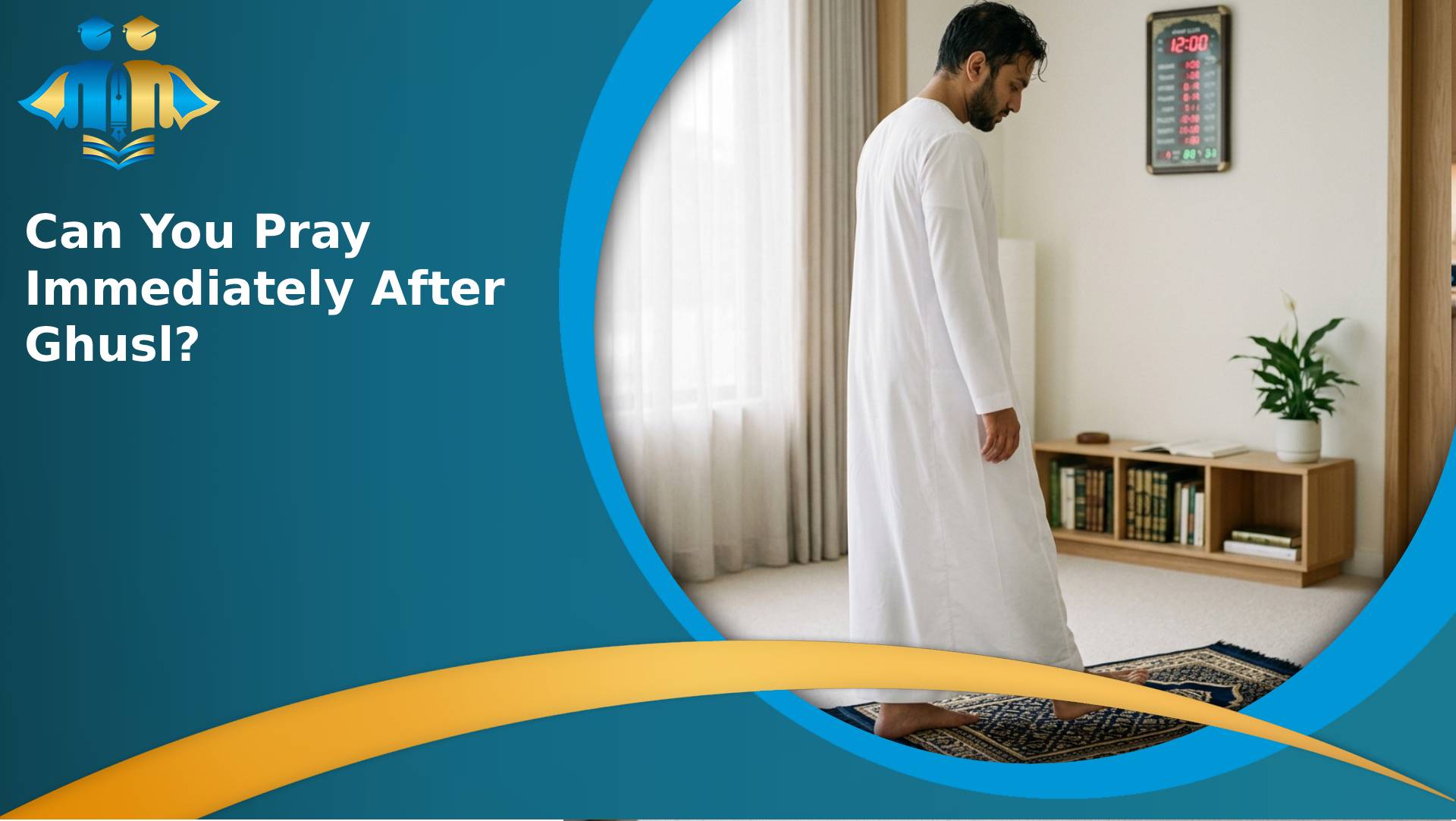
A person may pray after completing a valid ghusl when the requirements for prayer are satisfied, and no condition requiring further purification remains. Whether separate wudu is needed depends on the nature of the bath and the relevant scholarly ruling.
For example, a person who performs a valid ghusl from janabah may be able to pray without separate wudu if the bath fulfills the applicable requirements and no event invalidates ablution. By contrast, a person who takes an ordinary shower should not assume that it automatically fulfills the requirements of ritual purification.
The timing of prayer also matters. The person should ensure that the prayer time has begun and that other conditions of prayer are met. Correct purification is one essential part of preparing for worship, but it is not the only condition. For more information about memorization planning and study expectations, read How Long It Does Take to Memorize the Quran?
When unsure about Wudu after Ghusl, Muslims should distinguish between a confirmed issue and a mere doubt. A clear omission or an event known to invalidate wudu should be addressed according to the relevant ruling. Unsupported worries, however, should not become a reason for repeatedly washing or delaying prayer.
How Can You Avoid Common Mistakes in Wudu after Ghusl?
Many questions about ritual purification arise because people confuse recommended actions with obligatory conditions or assume that every shower automatically replaces wudu. Understanding Wudu after Ghusl helps avoid these mistakes and makes purification easier to practice.
Learn the Requirements of Your School
Start by identifying the Islamic school of jurisprudence whose rulings you normally follow. This is particularly important when learning about intention, rinsing the mouth and nose, and events that may invalidate wudu. Following reliable guidance clarifies Wudu after Ghusl.
Ensure Complete Washing
During ghusl, pay attention to the scalp, skin folds, and other areas that may be difficult to reach. Water must reach the required external areas for the bath to be valid. Complete washing is essential for valid Wudu after Ghusl.
Avoid Unnecessary Repetition
Once you have completed a valid ghusl, do not repeat it simply because of an unfounded doubt. Understanding Wudu after Ghusl can prevent unnecessary repetition and help you approach worship confidently.
If you know that a requirement was missed, correct the omission according to the applicable ruling. However, a vague concern without evidence is not the same as knowing that the bath was incomplete. This distinction matters when applying Wudu after Ghusl.
Ask Qualified Scholars About Specific Cases
Some questions depend on personal circumstances, such as persistent discharge, medical conditions affecting purification, or uncertainty about the end of menstruation. General guidance about Wudu after Ghusl may not address every situation.
In such cases, a qualified scholar can explain the relevant ruling without encouraging unnecessary repetition or making unsupported assumptions. Reliable guidance about Wudu after Ghusl is especially useful when scholarly opinions differ.
Super Muslim Online Quran Academy can serve as a learning resource for Muslims who want to strengthen their understanding of Islamic practices through organized study and guidance. Learners can explore Wudu after Ghusl alongside other essential topics in Islamic worship, developing a clearer understanding of purification. With suitable instruction, students can apply Wudu after Ghusl more confidently and distinguish general educational guidance from rulings that require individual scholarly advice.
Building Trust in Your Purification Knowledge
Building a clear understanding of Islamic purification helps Muslims perform acts of worship with confidence and avoid unnecessary doubts. Learning the rules of Wudu after Ghusl requires distinguishing between obligatory conditions, recommended practices, and situations that may require a separate ablution. Therefore, reliable educational resources should explain these differences accurately and present scholarly opinions without confusing learners.
When studying purification, focus on understanding why ghusl is required, how to complete it correctly, and which events invalidate wudu afterward. In addition, remember that some rulings differ among Islamic schools of jurisprudence. For personal circumstances, consulting a qualified scholar can help you apply the relevant guidance appropriately.
Choosing a reliable learning resource is equally important. Before enrolling in an Islamic education program, review its teaching approach, qualifications, and clarity of explanations. These Signs of a Trustworthy Online Quran Academy can help you evaluate educational options. With accurate knowledge and consistent learning, you can strengthen your understanding of purification and approach daily worship with greater confidence.
How Can Super Muslim Online Quran Academy Help You Learn?

Learning the rules of purification is easier when information is organized and presented clearly. Students can benefit from studying the foundations of Islamic worship, understanding important terminology, and learning how to distinguish general principles from rulings that require individual advice.
Super Muslim Online Quran Academy provides a learning context for students who want to strengthen their understanding of Quranic and Islamic studies. Educational lessons can help learners approach topics systematically, review essential concepts, and identify questions that should be taken to a qualified scholar.
When studying Wudu after Ghusl, learners should focus on the difference between major and minor ritual impurity, the conditions of a valid ghusl, and the events that may invalidate wudu. These distinctions are more useful than memorizing a single answer without understanding when it applies.
The academy’s educational role should be understood separately from issuing individualized religious rulings. Students with questions about menstruation, persistent discharge, medical circumstances, or differences between legal schools should consult an appropriately qualified scholar.
A structured learning approach can help students build a reliable foundation, ask clearer questions, and practice purification with greater understanding. Above all, the goal is to learn the applicable rules accurately without introducing unnecessary hardship into daily worship.
Frequently Asked Questions About Wudu after Ghusl
Find clear answers to common questions about Wudu after Ghusl, including when separate wudu is necessary and whether you can pray immediately after ghusl.
1. Can I pray without wudu after ghusl?
In many circumstances, yes. A valid ghusl from janabah may suffice for wudu if the relevant requirements are fulfilled and nothing invalidates ablution afterward. The ruling depends on the method of ghusl and the school of jurisprudence followed.
2. Do I need to perform wudu again after taking a shower?
An ordinary shower does not automatically replace wudu or a required ritual bath. If you intend to prepare for prayer, follow the rules of purification that apply to your circumstances. A valid ritual ghusl may suffice for wudu under the relevant conditions.
3. What should I do if I pass wind after ghusl?
Passing wind generally invalidates wudu, but it does not ordinarily invalidate the ghusl itself. Perform wudu again before prayer rather than repeating the entire ritual bath solely for that reason.
4. Does touching the private parts after ghusl require new wudu?
Scholars differ on the conditions under which touching the private parts invalidates wudu. Follow the ruling of the school of jurisprudence you normally follow, and perform a new wudu before prayer if that ruling requires it.
In conclusion, Wudu after Ghusl is not always required as a separate act of purification. In many circumstances, a valid ghusl from janabah can also suffice for wudu when the relevant conditions are fulfilled. However, an ordinary shower does not automatically replace ritual purification, and an event that invalidates wudu after ghusl may require a new ablution before prayer.
The most practical approach is to learn the requirements of ghusl and wudu according to a reliable school of Islamic jurisprudence. Pay attention to the necessary washing, understand which actions may invalidate ablution, and avoid repeating purification because of unsupported doubts.
When a question involves individual circumstances or a difference of scholarly opinion, seek guidance from a qualified scholar. With accurate knowledge and a consistent routine, Muslims can approach purification and prayer with greater confidence.

You may also like

Ramadan Fasting Rules: A Complete Guide for Muslims

Zakat Guide: Rules, Nisab, Calculation, and Payment