Ramadan Fasting Rules: A Complete Guide for Muslims
Ramadan Fasting Rules help Muslims understand how to observe this important act of worship correctly, from the beginning of the fast at dawn until sunset. Fasting in Ramadan is more than avoiding food and drink. It is an opportunity to worship Allah, practice self-control, improve character, and become more mindful of everyday actions.
For families, understanding the rules clearly can make Ramadan easier to observe and easier to explain to children. A child may ask why Muslims fast, when the fast begins, what can invalidate it, or whether children are expected to fast. Adults may have different questions about illness, travel, medication, suhoor, and making up missed fasts.
Therefore, learning the essential Ramadan Fasting Rules provides a practical foundation for observing the month with confidence while appreciating its spiritual purpose.
What Are the Rules for Fasting in Ramadan?

Ramadan Fasting Rules are the principles that explain how Muslims observe the obligatory fast during the Islamic month of Ramadan. In simple terms, a fasting Muslim abstains from food, drink, and other acts that invalidate the fast from the arrival of true dawn until sunset, while also maintaining the behavior expected from someone engaged in worship.
However, the physical part of fasting is only one aspect of the experience. Muslims are also encouraged to guard their speech, actions, intentions, and treatment of other people.
The Quran establishes the obligation of fasting in Surah Al-Baqarah, where Allah explains that fasting was prescribed so that believers may develop taqwa, or God-consciousness.
Consequently, Ramadan Fasting Rules should not be viewed merely as a list of restrictions. They provide a framework for worship while helping Muslims develop patience, discipline, gratitude, and awareness of Allah.
Start Learning the Quran with Trusted Egyptian Teachers Today
Ready to improve your Quran recitation, master Tajweed, or begin memorizing the Holy Quran with confidence? At Super Muslim Online Quran Academy, our experienced Egyptian Quran teachers provide personalized one-on-one lessons tailored to your age, level, and goals.
Enjoy flexible scheduling, live guidance, and a supportive learning environment that helps you make steady progress from the comfort of your home. Book your free trial class today and take the first step toward a stronger connection with the Book of Allah.

Why Do Muslims Fast During Ramadan?
One of the most important Ramadan Fasting Rules to understand is that fasting is an act of worship rather than simply a dietary practice. Muslims fast because Allah has prescribed fasting during Ramadan for those who are able to observe it.
The Quran says:
“Fasting is prescribed for you as it was prescribed for those before you, that you may become righteous.”
— Surah Al-Baqarah 2:183
This verse points to the deeper purpose behind fasting. Hunger and thirst are physical experiences, but the ultimate goal is spiritual development. During Ramadan, Muslims have an opportunity to:
- Strengthen their relationship with Allah.
- Practice patience and self-control.
- Appreciate everyday blessings.
- Increase acts of charity and generosity.
- Avoid harmful speech and behavior.
- Spend more time in prayer and Quran recitation.
- Develop habits that can continue after Ramadan.
For children, these ideas can be introduced gradually. Instead of presenting fasting as simply “not eating,” parents can explain that Ramadan teaches Muslims how to control themselves, care about others, and become closer to Allah.
Who Is Required to Fast?
The obligation of fasting applies to Muslims who meet the conditions established in Islamic law. Generally, this includes adults who are mentally competent and physically capable of fasting.
Children who have not reached puberty are not obligated to perform the obligatory Ramadan fast. Nevertheless, some families allow children to practice fasting for part of the day when they are able to do so safely.
The purpose of this practice is preparation rather than obligation. A child might begin by fasting for a few hours and gradually increase the period as they become older and more accustomed to the experience.
Parents should consider a child’s age, health, maturity, and individual circumstances. Fasting should be introduced as an act of worship rather than something that causes unnecessary physical strain.
These distinctions are important when explaining Ramadan Fasting Rules to young learners because children need to understand the difference between learning about an obligation and being legally responsible for it.
Who May Be Excused From Fasting?
Islamic law provides concessions for people who cannot safely observe the fast or who have circumstances that permit them to postpone it. Depending on the situation, exemptions or concessions may apply to:
- People who are ill and would be harmed by fasting.
- Travelers who meet the relevant conditions for the travel concession.
- Elderly people who are unable to fast.
- Pregnant or breastfeeding women when fasting could cause harm to themselves or their child.
- Other people with circumstances recognized by Islamic law.
The way a missed fast is dealt with depends on the reason for missing it and the person’s circumstances. Some people make up missed fasting days later, while others may have a different obligation when they are permanently unable to fast.
Because individual cases can differ, someone with a medical condition or a complicated circumstance should ask a qualified scholar and, when appropriate, a healthcare professional.
This is an important part of understanding Ramadan Fasting Rules: the objective is worship without ignoring legitimate concessions provided by Islamic law.
When Does the Ramadan Fast Begin and End?
A fasting day begins at true dawn, which corresponds to the beginning of Fajr, and ends at sunset, when Maghrib begins.
This distinction matters because fasting is not based simply on sunrise and sunset.
Before dawn, Muslims may eat and drink during suhoor. Once the time for Fajr begins, the fasting period starts. The fast continues throughout the daylight hours until sunset. At sunset, the fasting period ends, and Muslims may break their fast with iftar.
Because prayer times change from one location to another and from one day to another, Muslims should rely on a reliable local timetable or an authoritative source for the correct Fajr and Maghrib times.
Understanding this timing is one of the most practical Ramadan Fasting Rules because it affects when a person stops eating and drinking and when the fast may be broken.
What Are the Main Ramadan Fasting Rules?
The basic Ramadan Fasting Rules can be understood through several connected principles. A person observing the fast should abstain from acts that invalidate the fast during the fasting period while also protecting the spiritual purpose of worship. The central practices include:
- Beginning the fast at the correct time.
- Abstaining from food and drink during daylight.
- Avoiding acts that invalidate the fast.
- Maintaining good manners and avoiding sinful behavior.
- Breaking the fast once sunset arrives.
- Observing the fast with sincere intention.
Fasting therefore combines an outward practice with an inward purpose. Someone may successfully avoid food and drink but still miss important spiritual lessons if they continue lying, insulting others, fighting, or deliberately engaging in harmful behavior.
The Prophet Muhammad ﷺ warned against false speech and evil actions while fasting. This demonstrates that Ramadan Fasting Rules involve more than physical hunger.
What Should Muslims Avoid While Fasting?

During the fasting period, Muslims must avoid eating and drinking intentionally. This includes ordinary food, water, and other drinks.
However, the rules extend beyond eating and drinking in terms of the behavior expected from a fasting person. Ramadan is an opportunity to control the tongue and avoid actions that contradict the spirit of worship. A fasting Muslim should make an effort to avoid:
- Lying and false statements.
- Insults and abusive speech.
- Unnecessary arguments.
- Deliberately hurting other people.
- Harmful or sinful behavior.
- Actions that intentionally invalidate the fast.
This does not mean that every bad word automatically makes the fast legally invalid. Rather, sinful behavior can diminish the reward and contradict the purpose of fasting.
For that reason, Ramadan Fasting Rules should be taught alongside good character. Children, in particular, can understand the concept through everyday examples such as speaking politely, avoiding fights, sharing with siblings, and helping parents.
What Does Not Normally Invalidate the Fast?
Many Muslims, particularly children and beginners, worry about ordinary activities that happen during the day.
Some natural actions do not invalidate the fast. For example, swallowing one’s normal saliva does not break the fast. Taking a shower is also permissible, provided a person does not deliberately allow water to enter the body in a way that invalidates the fast.
Similarly, a person who eats or drinks forgetfully should stop once they remember that they are fasting and continue the fast. The Prophet Muhammad ﷺ taught that someone who eats or drinks forgetfully should complete the fast.
Brushing the teeth also requires attention to detail. A person should take care not to swallow toothpaste or water. Because scholars may differ regarding details of certain actions, anyone uncertain about a particular situation should ask a qualified scholar.
These examples show why Ramadan Fasting Rules should be learned with context rather than reduced to an overly simple list of “allowed” and “forbidden” actions.
What Happens If Someone Eats or Drinks by Mistake?
Accidental eating or drinking is different from deliberately eating or drinking. If a fasting person genuinely forgets that they are fasting and consumes something, the prophetic guidance indicates that they should stop when they remember and continue their fast.
There is no reason for a person to panic in this situation. Forgetfulness is not the same as intentionally choosing to break the fast.
This point is especially useful when teaching children because young learners may become frightened after making an accidental mistake. Parents can calmly explain the difference between an accident and a deliberate action.
The lesson is not only about the legal status of the fast. It also teaches children that Islamic worship is based on intention, responsibility, and mercy.
As a result, Ramadan Fasting Rules should be presented in a way that gives learners accurate knowledge without creating unnecessary fear.
What Happens If a Person Deliberately Breaks the Fast?
Deliberately breaking an obligatory Ramadan fast without a valid excuse is a serious matter. The exact ruling and required response depend on how the fast was broken and the circumstances involved. For Muslims who are also working on a structured Quran routine, a Quran Memorization Schedule for Working Adults can help organize worship alongside daily responsibilities.
In some situations, a missed obligatory fast must be made up later. In other circumstances, additional expiation may apply. The details are discussed differently by scholars depending on the specific act and school of Islamic jurisprudence.
Therefore, it is better not to treat every deliberate violation as having the same consequence. Someone who deliberately breaks a Ramadan fast should ask a qualified scholar about the particular situation rather than relying on a general internet statement.
This careful approach makes Ramadan Fasting Rules more reliable and prevents learners from confusing different legal cases. Those who are new to Islam may also benefit from a New Muslim Revert Guide: First Steps in Islam when learning how Ramadan fits into their broader Islamic practice.
What Is the Role of Intention in Fasting?
Intention is an essential part of worship. A Muslim fasts Ramadan because they intend to worship Allah, not simply because they are following a diet or family routine.
For beginners, intention can be explained simply: the person knows that they are fasting Ramadan for the sake of Allah.
The details concerning when the intention must be made can differ according to the type of fast and scholarly opinion. Therefore, learners who want a detailed fiqh ruling should consult a qualified teacher or scholar.
For children, the concept can be introduced without unnecessary complexity. Parents can explain that before beginning the fasting day, the child understands that they are fasting as an act of worship. Before starting online Quran lessons during Ramadan, families may also find it useful to understand what to Expect From a Free Online Quran Trial Class.
This spiritual awareness helps children understand why Ramadan Fasting Rules exist in the first place.
How Should Muslims Prepare for Fasting?
Preparing for Ramadan involves more than deciding what to eat. A practical routine can make fasting easier while leaving enough energy for prayer, study, work, and family responsibilities.
One important part of preparation is establishing a consistent sleep schedule. Going to bed at a reasonable time can make waking for suhoor easier. It is also useful to plan meals rather than relying entirely on heavy food at night.
During suhoor, balanced foods can help provide sustained energy. Depending on individual needs, a meal may include:
- Whole grains.
- Eggs or another source of protein.
- Yogurt or other suitable dairy foods.
- Fruits and vegetables.
- Water and other appropriate fluids before the fast begins.
The goal is not to eat as much as possible. Instead, a balanced meal and adequate hydration can support a more comfortable fasting day.
These practical habits complement Ramadan Fasting Rules by helping Muslims prepare physically while remaining focused on worship. For broader questions about religious guidance, resources such as Islamic Laws for Women can provide additional areas of study.
What Is Suhoor and Why Is It Important?
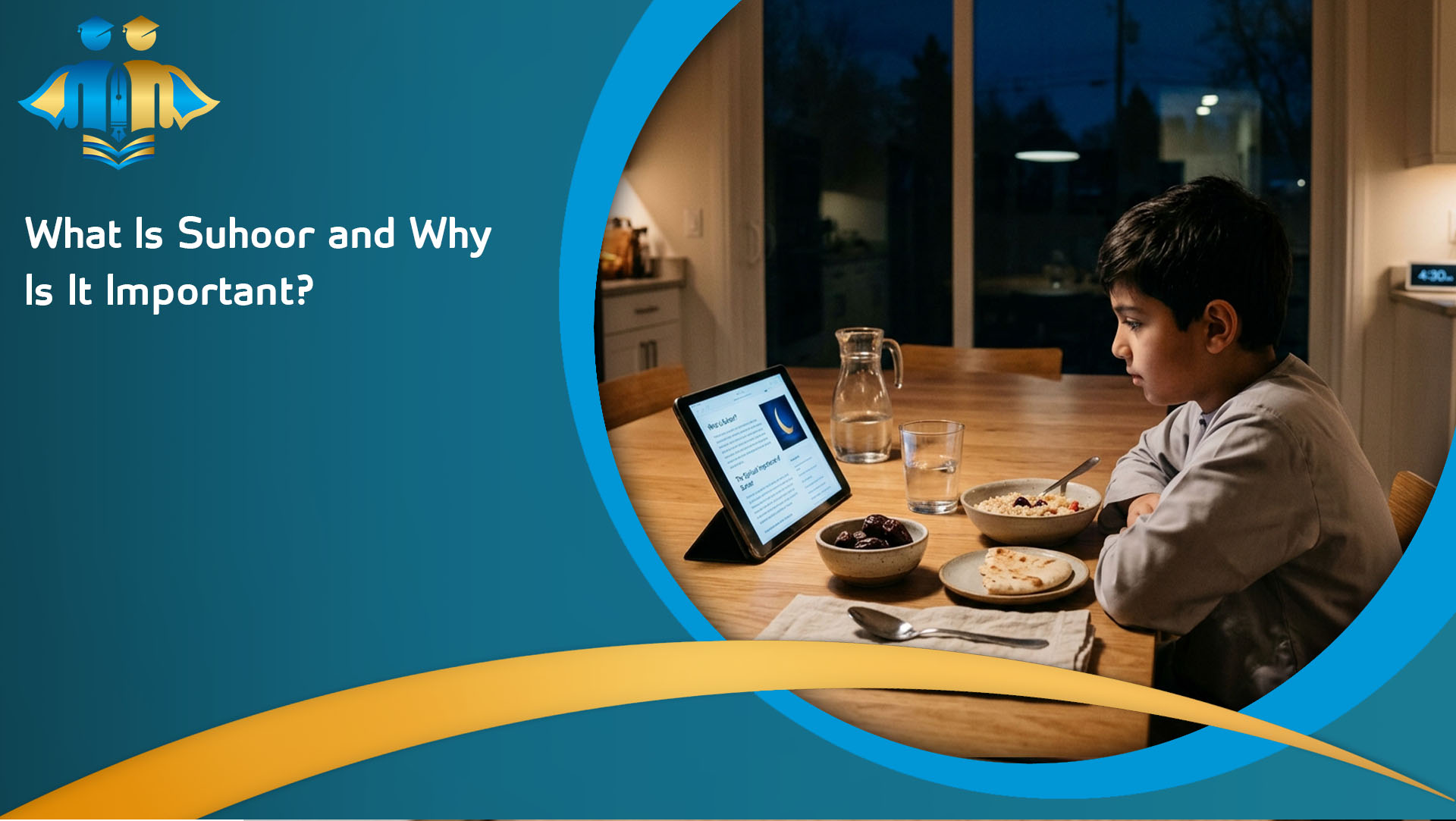
Suhoor is the pre-dawn meal eaten before the fasting period begins. It is a recommended practice in Islam and carries blessings.
The Prophet Muhammad ﷺ encouraged Muslims to eat suhoor. Therefore, families can use this meal as both a practical and spiritual part of their Ramadan routine.
A useful suhoor does not need to be complicated. A family might prepare a simple meal containing a combination of carbohydrates, protein, fruit, and fluids.
Children can participate by helping set the table or choosing suitable foods with their parents.
For young children who are practicing partial fasts, suhoor can also become an opportunity to teach them about the sequence of the day: suhoor, Fajr, daytime fasting, Maghrib, and iftar.
In this way, Ramadan Fasting Rules become easier for children to remember because they are connected to real family routines. Families can also introduce children to other acts of worship, including learning about Zakat Guide as part of understanding Ramadan and charitable responsibility.
How Should Muslims Break the Fast?
The fast ends when the sun has set, and Maghrib begins. Traditionally, Muslims often break the fast with dates and water. Afterward, they may eat a fuller meal according to their preferences and needs.
Breaking the fast should be approached with gratitude rather than overeating. After many hours without food or drink, eating slowly can make the transition more comfortable.
A family can also use iftar as a moment for dua, gratitude, and connection.
Children can learn that iftar is not simply the reward for being hungry. It marks the completion of an act of worship and provides an opportunity to thank Allah for the food and blessings available to them.
Consequently, Ramadan Fasting Rules are connected to both discipline during the day and gratitude when the fast ends.
What Are the Spiritual Benefits of Fasting?
The benefits of fasting cannot be measured only by how many hours a person goes without food. Ramadan can help Muslims develop qualities that influence their lives long after the month ends.
Patience and Self-Control: Hunger and thirst create opportunities to practice restraint. Instead of immediately responding to discomfort or frustration, a fasting person learns to remain patient.
That discipline can influence other areas of life, including speech, spending, eating habits, and reactions to difficult situations.
- Gratitude: Experiencing hunger can make ordinary blessings more noticeable. A glass of water, a simple meal, and the opportunity to sit with family at iftar may feel more meaningful after a day of fasting.
- Compassion: Fasting can also encourage empathy toward people who experience hunger and hardship. For this reason, charity and generosity are important parts of Ramadan.
- Stronger Worship: Many Muslims use Ramadan to increase Quran recitation, dua, prayer, remembrance of Allah, and other acts of worship.
These spiritual goals give Ramadan Fasting Rules a broader meaning. The purpose is not simply to complete a physical challenge but to use the month as an opportunity for personal and spiritual growth.
How Can Parents Teach Ramadan Fasting Rules to Children?
Children learn best when complex ideas are broken into simple concepts. Parents can begin by explaining why Muslims fast before discussing detailed rules. Once the child understands the purpose, individual practices become easier to remember. A practical approach may include:
- Explain the meaning of Ramadan.
- Teach what fasting means.
- Show the difference between suhoor and iftar.
- Explain when fasting begins and ends.
- Teach basic actions that invalidate the fast.
- Encourage good manners throughout the day.
- Allow children to ask questions.
- Introduce voluntary practice according to their age and circumstances.
Children should not be made to feel guilty for being unable to complete a fast. Before puberty, they are not legally obligated to perform the obligatory Ramadan fast.
Instead, families can make Ramadan enjoyable by involving children in age-appropriate activities and worship.
Super Muslim Online Quran Academy can also support families by providing structured Islamic learning that helps children understand religious concepts in an accessible way.
Fun Ramadan Activities for Children
Children can participate in Ramadan even when they are not required to fast. For example, they can help prepare the dining table for iftar, organize dates and water, or assist with simple household tasks. Another useful activity is creating a Ramadan journal. A child can record:
- A good deed completed that day.
- A short surah they reviewed.
- Something new they learned.
- A kind action toward another person.
- A personal reflection about Ramadan.
Children can also listen to stories about the Prophets, review the Quran, practice dua, and learn about the Five Pillars of Islam.
These activities allow children to experience the atmosphere of Ramadan without making the entire month revolve around food or fasting.
Moreover, they reinforce the moral lessons associated with Ramadan Fasting Rules and help children understand that worship includes both personal discipline and kindness toward others.
How Can Families Make Ramadan Easier for Children?
A child’s Ramadan experience can influence how they feel about Islamic worship in the future. Therefore, parents should combine education with encouragement while introducing Ramadan Fasting Rules in an age-appropriate way.
Rather than focusing constantly on whether a child managed to fast for a certain number of hours, parents can praise effort, honesty, kindness, and participation. This helps children understand Ramadan Fasting Rules without feeling that fasting is only about completing a specific number of hours.
For example, a child who cannot complete a practice fast can still receive encouragement for waking up for suhoor, praying Fajr, helping prepare iftar, or reading Quran. These activities can reinforce the values behind Ramadan Fasting Rules.
It is also helpful to avoid comparing siblings. Children develop at different rates, and physical ability varies. Parents can explain Ramadan Fasting Rules according to each child’s level of understanding.
Families can create simple routines that make Ramadan predictable. A child may know that the family wakes for suhoor, prays, spends time learning Quran, prepares for iftar, and gathers together at sunset.
Through this environment, Ramadan Fasting Rules become part of a meaningful experience rather than an isolated collection of restrictions.
Common Mistakes When Learning Ramadan Fasting Rules
New learners can easily become confused when they receive information from different sources. Some common mistakes involve treating Ramadan Fasting Rules as though every issue has one simple answer.
One mistake is assuming that fasting means avoiding food and drink while ignoring behavior. Although sinful speech does not necessarily invalidate the fast in the same legal sense as eating or drinking, it conflicts with the character that fasting should develop.
Another mistake is treating every missed fast identically. The ruling can depend on why the fast was missed and whether the person is temporarily or permanently unable to fast.
A third mistake is relying on random social media posts for detailed religious rulings. Short posts often remove important context, making Ramadan Fasting Rules appear more complicated or simpler than they actually are.
Finally, children may believe that making an accidental mistake means their entire fast is automatically ruined. Parents should explain the difference between forgetfulness, accident, and deliberate action when teaching Ramadan Fasting Rules.
Learning Ramadan Fasting Rules from trustworthy Islamic instruction can reduce these misunderstandings.
How Can Students Learn Ramadan Fasting Rules Online?
Online Islamic education can provide a structured environment for students who want to learn about Ramadan, fasting, Quran, and Islamic manners from home. It can also make Ramadan Fasting Rules easier to understand through organized lessons.
A well-organized lesson can divide a broad subject into manageable topics. Instead of presenting dozens of rules at once, students can learn one concept, ask questions, review an example, and then move to the next topic.
This approach can be particularly useful for children who need explanations suited to their age. It allows Ramadan Fasting Rules to be introduced gradually rather than overwhelming young learners.
Super Muslim Online Quran Academy can incorporate Ramadan-related Islamic education into a broader learning experience, helping students connect fasting with Quran learning, worship, manners, and everyday Muslim life.
Parents should nevertheless distinguish between general educational content and personalized religious rulings. When a question involves an individual medical condition, a complicated fasting situation, or a detailed fiqh matter, qualified professional guidance remains important.
Ramadan Fasting Rules for Families to Remember
A simple checklist can help families remember the central Ramadan Fasting Rules without becoming overwhelmed by details. Before Ramadan or at the beginning of the month, families can review:
- Fasting is an act of worship.
- The fast begins at true dawn and ends at sunset.
- Eating and drinking intentionally during the fasting period invalidate the fast.
- Forgetful eating or drinking is treated differently from deliberate consumption.
- Children before puberty are not obligated to perform the obligatory fast.
- Legitimate concessions exist for certain circumstances.
- Good character is an important part of the spirit of fasting.
- Suhoor is a recommended practice.
- Iftar begins after sunset.
- Detailed or personal cases should be referred to qualified scholars.
This summary makes Ramadan Fasting Rules easier to remember while leaving room for more detailed study.
How Super Muslim Supports Ramadan Learning?
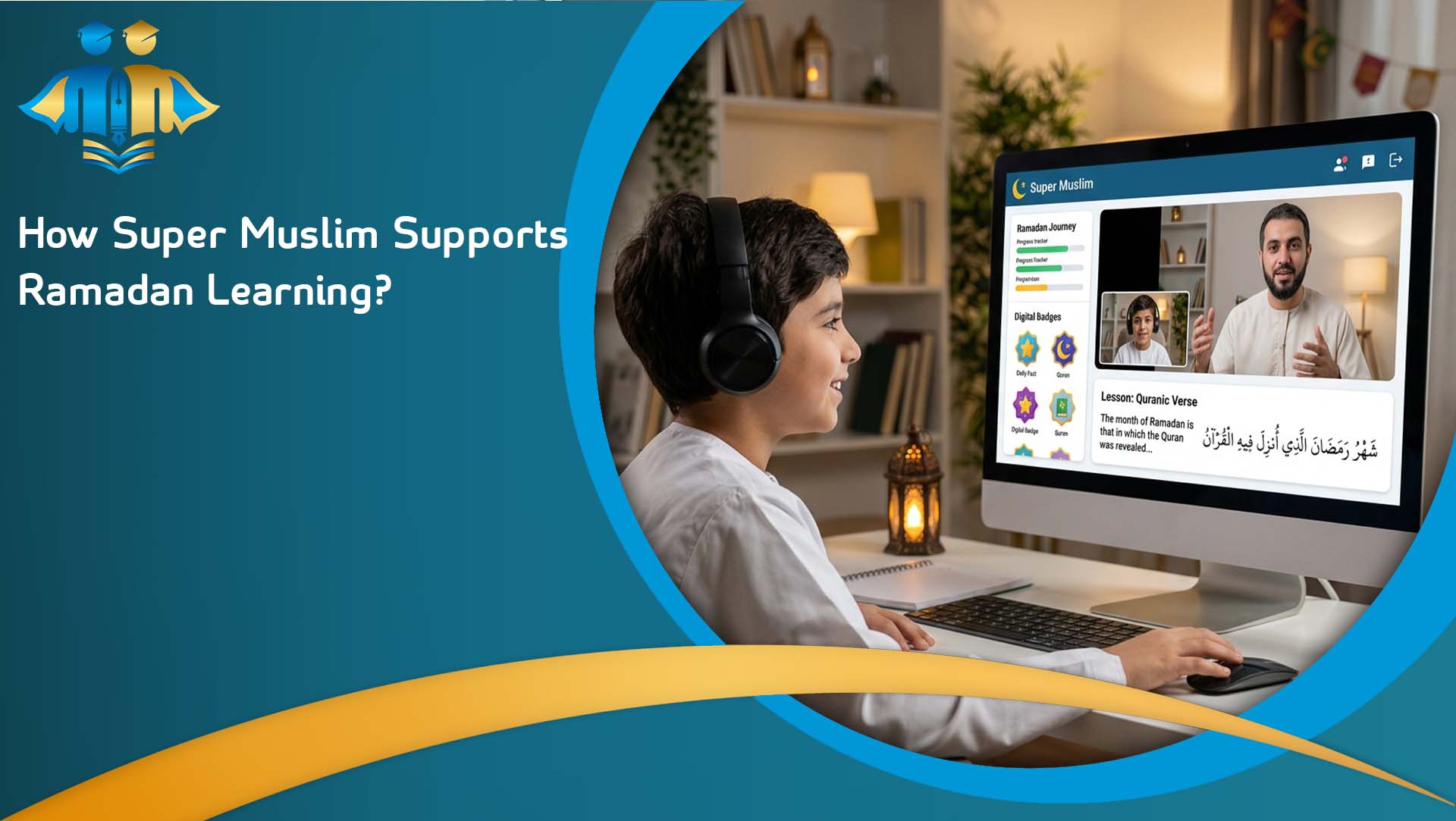
Super Muslim Online Quran Academy can be part of a child’s wider Islamic learning journey during Ramadan. Rather than treating fasting as an isolated topic, Islamic education can connect it with Quran reading, dua, prayer, manners, and the values of patience and generosity.
For younger students, lessons can use simple explanations and practical examples. Older students can explore the purpose of fasting in greater depth and discuss questions about worship and personal responsibility.
A structured learning environment may also give parents a useful way to reinforce what children are learning at home.
The most valuable outcome is not simply memorizing a list of Ramadan Fasting Rules. Students should understand why Muslims fast, how fasting relates to worship, and how Ramadan can influence their behavior.
Through age-appropriate Islamic education, Super Muslim Online Quran Academy can help learners approach Ramadan with greater understanding and appreciation.
Frequently Asked Questions About Ramadan Fasting Rules
Provide clear answers to common questions about fasting, intention, exemptions, and everyday Ramadan practices.
1. Can a person fast Ramadan while following a regular school or work schedule?
Yes. Many Muslims continue their normal responsibilities while fasting. Planning sleep, meals, prayer times, and workload can make the daily routine easier. Individual circumstances may require adjustments, especially when work involves significant physical exertion.
2. Can a new Muslim begin fasting even if they do not know all the detailed rules?
Yes. A new Muslim can begin learning and practicing fasting while gradually gaining knowledge. They do not need to master every advanced fiqh detail before learning the basic requirements of worship. Reliable Islamic instruction can help them build their understanding step by step.
3. What should someone do if they are unsure whether a particular action affected their fast?
They should avoid making a rushed assumption. If the situation is unclear, they can ask a qualified Islamic scholar and explain exactly what happened. The answer may depend on whether the action was intentional, accidental, necessary, or performed during or outside the fasting period.
4. How can someone continue the lessons of Ramadan after Eid?
A useful approach is to preserve one or two habits developed during Ramadan instead of trying to maintain everything at once. For example, a person might continue regular Quran reading, voluntary fasting when appropriate, charity, daily dua, or greater attention to their speech and behavior.
Conclusion
Ramadan Fasting Rules provide the practical foundation for observing the fast correctly, but understanding Ramadan requires looking beyond food and drink. Fasting is an act of worship designed to develop taqwa, patience, self-control, gratitude, and compassion.
Muslims should know when the fasting day begins and ends, what intentionally breaks the fast, who may receive a concession, and how missed fasts should be handled according to the circumstances. At the same time, they should remember that good character and sincere worship are central to the experience.
For children, Ramadan can become an opportunity to learn through family routines, Quran study, good deeds, stories, and age-appropriate fasting practice. Parents can encourage participation without placing unnecessary pressure on young learners.
Super Muslim Online Quran Academy can complement this process by helping students build a stronger understanding of Islamic teachings alongside their Quran education.
Ultimately, Ramadan is not only about enduring hunger and thirst. It is a month for turning toward Allah, improving our actions, appreciating His blessings, and carrying the lessons of worship into everyday life.

You may also like

Wudu After Ghusl: Do You Need to Perform Ablution Again?

Zakat Guide: Rules, Nisab, Calculation, and Payment