

Noorani Qaida With Tajweed for Better Quran Reading
Noorani Qaida with Tajweed is one of the most effective methods for beginners who want to build a strong foundation in Quran reading and learn how to pronounce Arabic letters correctly from the beginning. This structured learning approach helps children and adults understand the basics of Arabic pronunciation, recognize Quranic letters, and apply essential Tajweed principles before moving to Quran recitation.
Learning the Quran requires more than simply recognizing Arabic letters. Correct recitation depends on understanding where each letter comes from, how its sound is produced, and how different letters interact when they appear together. That is why many beginners start their Quran journey with a carefully designed Qaida that introduces reading skills step by step.
For students who do not speak Arabic as their first language, learning through a gradual system makes the process easier and more organized. Instead of memorizing random rules, learners develop their skills through practical exercises that improve pronunciation, fluency, and confidence.
Super Muslim Online Quran Academy provides structured Quran learning programs designed to help beginners learn to read the Quran with qualified teachers through interactive online classes. The academy focuses on creating a supportive environment where students can learn according to their level and improve their recitation skills gradually.
In this complete guide, we will explain the importance of Noorani Qaida, its lessons, the Tajweed rules included in the method, benefits for beginners, common mistakes, and how students can successfully start their Quran learning journey.
What Is Noorani Qaida with Tajweed?
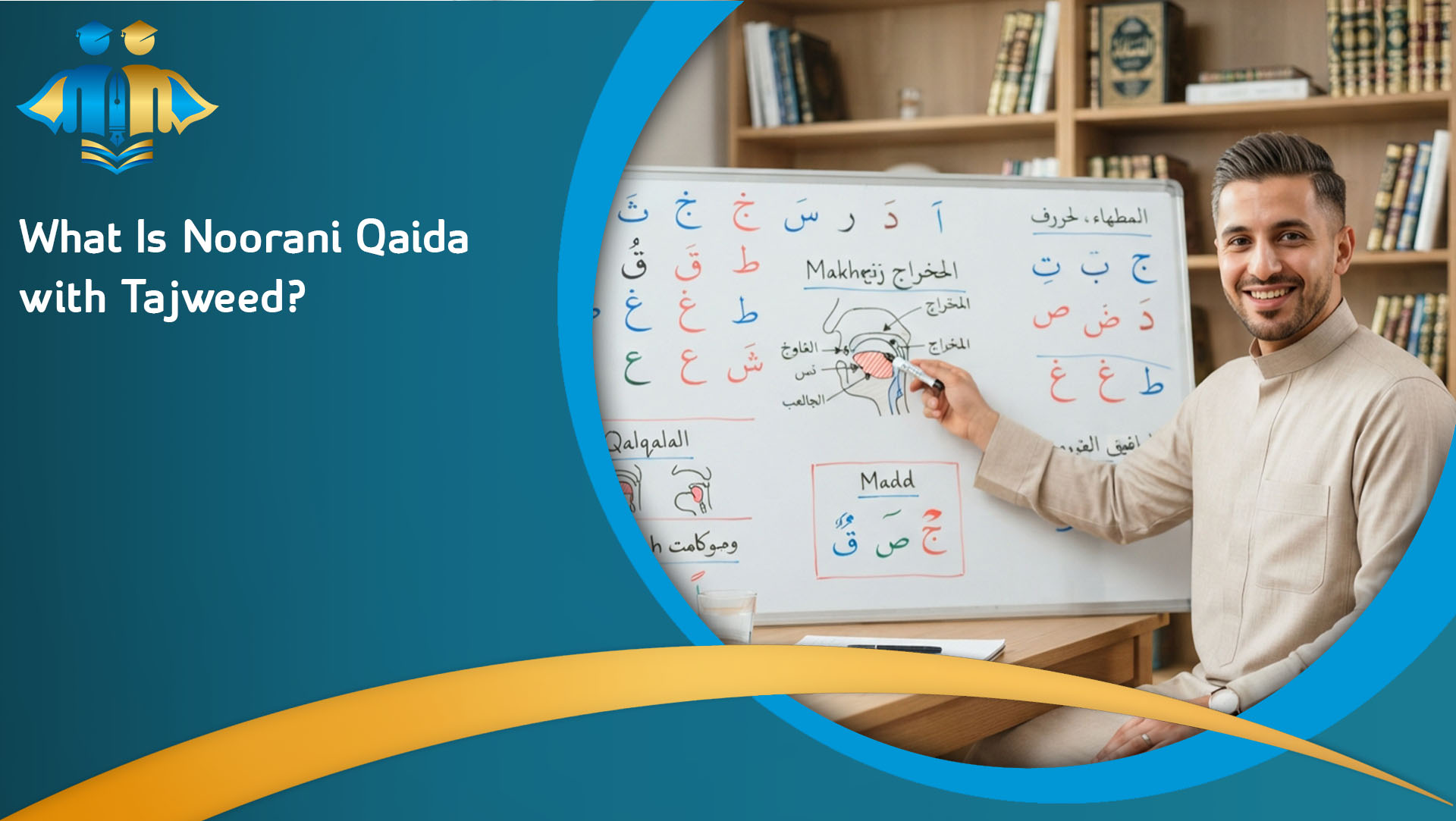
Noorani Qaida with Tajweed is an educational booklet and teaching method created to help beginners learn the Arabic alphabet and Quranic pronunciation in a systematic way. It is commonly used for children, new learners, and non-Arabic speakers because it starts from the basics and gradually develops reading abilities.
The main purpose of this method is to teach students how to identify Arabic letters, pronounce them correctly, combine letters to form words, and apply Tajweed rules while reading Quranic text. Through Noorani Qaida with Tajweed, learners can practice these skills progressively instead of trying to understand complete Quranic passages immediately.
Unlike traditional reading methods that may focus only on memorizing letters, this approach introduces pronunciation skills from the beginning. Students learn the relationship between letters, vowels, sounds, and Quranic reading patterns. Noorani Qaida with Tajweed therefore allows beginners to practice pronunciation while they are still developing their basic reading abilities.
The method usually begins with recognizing individual Arabic letters before progressing to:
- Joined letters and letter combinations.
- Short vowel sounds (Fatha, Kasra, and Damma).
- Tanween rules.
- Sukoon and Shaddah.
- Long vowels and Madd.
- Basic Tajweed rules needed for Quran recitation.
This step-by-step approach prevents beginners from developing incorrect pronunciation habits. When students understand the foundation correctly, they can later read Quran verses with more accuracy and confidence. Regular practice with Noorani Qaida with Tajweed can also help learners become more comfortable with Arabic sounds and Quranic reading patterns.
Start Learning the Quran with Trusted Egyptian Teachers Today
Ready to improve your Quran recitation, master Tajweed, or begin memorizing the Holy Quran with confidence? At Super Muslim Online Quran Academy, our experienced Egyptian Quran teachers provide personalized one-on-one lessons tailored to your age, level, and goals.
Enjoy flexible scheduling, live guidance, and a supportive learning environment that helps you make steady progress from the comfort of your home. Book your free trial class today and take the first step toward a stronger connection with the Book of Allah.

Why Is Noorani Qaida with Tajweed Important for Quran Beginners?
Many beginners struggle with Quran reading because Arabic contains sounds that do not exist in many other languages. Letters such as ع, ح, خ, ص, ض, and ط require specific movements of the tongue and throat. Learning Noorani Qaida with Tajweed can help students recognize these pronunciation differences before they begin reading longer Quranic passages.
Without proper guidance, learners may pronounce these letters incorrectly, which can affect the accuracy of Quran recitation. A structured learning method helps students recognize these differences early and practice them repeatedly. Noorani Qaida with Tajweed is designed to support this process through simple examples and gradual exercises.
There are several reasons why this learning approach is valuable:
1. Building Correct Pronunciation From the Beginning
The first stage of Quran learning should focus on developing correct pronunciation. Once a learner becomes accustomed to incorrect sounds, changing those habits can become more difficult.
Through regular practice, students learn the correct articulation points of Arabic letters and understand how each sound should be produced. Using Noorani Qaida with Tajweed at this stage allows beginners to focus on pronunciation before moving to more complex Quran reading tasks.
2. Preparing Students for Quran Recitation
Reading Quran directly without understanding basic Arabic sounds can create confusion for beginners. A structured Qaida prepares students before they start reading complete Quran chapters.
Students first practice smaller examples before applying their knowledge to real Quran verses. In this way, Noorani Qaida with Tajweed creates a gradual transition from basic Arabic reading to Quran recitation.
3. Making Tajweed Easier to Understand
Tajweed includes many rules related to pronunciation, elongation, stopping, and letter characteristics. Introducing these concepts gradually helps learners understand them naturally.
Instead of studying complicated rules separately, students practice them while developing their reading skills. Noorani Qaida with Tajweed combines basic reading practice with essential best online tajweed course principles, making the learning process more practical for beginners.
4. Helping Children Develop Strong Quran Skills
Children often learn languages quickly when they receive proper instruction at an early age. Introducing Quran reading through an organized method helps children build confidence and avoid pronunciation problems.
Super Muslim Online Quran Academy offers beginner-friendly Quran programs where children can learn gradually with teachers who understand different learning levels and needs. With consistent practice, Noorani Qaida with Tajweed can help young students establish essential Quran reading skills before progressing to longer Surahs.
How Does Noorani Qaida with Tajweed Work?
The learning process follows a progressive structure. Each lesson introduces a new skill while reviewing previous concepts to strengthen understanding. This organized sequence allows students to develop their reading abilities without becoming overwhelmed.
A typical learning journey includes several stages:
Stage One: Learning Arabic Letters
The first step is recognizing Arabic letters individually. Students learn:
- The shape of each letter.
- The correct name of each letter.
- The correct pronunciation.
- The articulation point of every sound.
At this stage, learners focus on accuracy rather than speed. A strong foundation makes later lessons easier. Noorani Qaida with tajweed quran rules helps students repeat these basic sounds until they become familiar with Arabic pronunciation.
Stage Two: Connecting Arabic Letters
Arabic letters change their shape depending on their position in a word. Students learn how letters connect and how their pronunciation remains consistent.
This helps beginners move from recognizing isolated letters to reading simple combinations. With Noorani Qaida with Tajweed, learners gradually become familiar with the visual and phonetic changes that occur when Arabic letters are joined.
Stage Three: Learning Harakat (Short Vowels)
Arabic vowels play an important role in Quran reading. Students learn:
- Fatha (َ)
- Kasra (ِ)
- Damma (ُ)
These signs help learners understand how letters should be pronounced.
For example, the same letter can produce different sounds depending on the vowel attached to it. Practicing these differences through Noorani Qaida with Tajweed helps beginners understand the relationship between Arabic letters and their vowel sounds.
Stage Four: Understanding Sukoon and Shaddah
Students learn how letters behave when they have no vowel or when they are doubled.
Sukoon teaches learners how to stop the movement of a letter, while Shaddah teaches how to pronounce a strengthened letter correctly. These concepts are important for accurate Quran reading and become easier when students practice them through Noorani Qaida with Tajweed.
Stage Five: Practicing Madd and Long Sounds
Arabic pronunciation depends greatly on correct timing. Learners practice extending certain sounds according to Quranic reading rules.
This prepares them for smoother and more accurate recite quran with tajweed. Noorani Qaida with Tajweed introduces these exercises gradually so that beginners can develop better control over the length of Quranic sounds.
Main Tajweed Rules Included in Noorani Qaida with Tajweed
Tajweed is the science of reading the Quran correctly. It protects the pronunciation of Quranic words and helps preserve the beauty of recitation.
Some important Tajweed rules introduced during beginner lessons include:
Noon Sakinah and Tanween Rules
Noon Sakinah refers to the letter ن with no vowel, while Tanween appears as double vowel marks at the end of words.
There are four main rules:
1. Izhar (Clear Pronunciation)
Izhar means pronouncing Noon Sakinah or Tanween clearly without hiding or merging the sound.
It occurs when these letters come after Noon Sakinah or Tanween:
ء، هـ، ع، ح، غ، خ
Students learn to pronounce the sound clearly from its proper place. Practicing Izhar through Noorani Qaida with Tajweed helps beginners recognize when the Noon sound should remain clear.
2. Idgham (Merging)
Idgham means combining one sound with another.
It occurs when Noon Sakinah or Tanween is followed by certain letters. The pronunciation changes because the sounds merge together.
Idgham is divided into:
- Idgham with Ghunnah.
- Idgham without Ghunnah.
3. Iqlab (Changing)
Iqlab occurs when Noon Sakinah or Tanween comes before the letter ب.
In this case, the Noon sound changes into a hidden Meem sound with nasalization. Noorani Qaida with Tajweed gives beginners an opportunity to recognize this rule and practice its correct pronunciation before encountering it frequently in Quranic verses.
4. Ikhfa (Hiding)
Ikhfa means partially hiding the Noon sound while maintaining Ghunnah.
This rule requires practice because learners need to balance between clear pronunciation and complete merging. Regular exercises in Noorani Qaida with Tajweed can help students become more confident when applying Ikhfa during Quran recitation.
Meem Sakinah Rules
Students also learn the three rules related to Meem Sakinah:
Ikhfa Shafawi
This occurs when Meem Sakinah is followed by the letter ب.
The Meem sound is hidden with light nasalization. Students can practice this pronunciation gradually through Noorani Qaida with Tajweed before applying it to complete Quranic passages.
Idgham Shafawi
This happens when Meem Sakinah is followed by another Meem.
The two Meem sounds merge.
Izhar Shafawi
This means pronouncing Meem Sakinah clearly when followed by other letters.
Madd Rules in Noorani Qaida
Madd refers to extending vowel sounds. Correct timing is important because shortening or lengthening sounds incorrectly can affect Quran recitation.
Beginners learn:
- Natural Madd.
- Connected Madd.
- Separated Madd.
- Necessary Madd.
Understanding these rules helps students develop proper Quran reading rhythm. By practicing Madd through Noorani Qaida with Tajweed, beginners can gradually improve their ability to recognize and pronounce extended sounds correctly.



You may also like

Quran Recitation With Tajweed | Improve Your Recitation

Tajweed For Beginners | Learn Correct Quran Recitation