
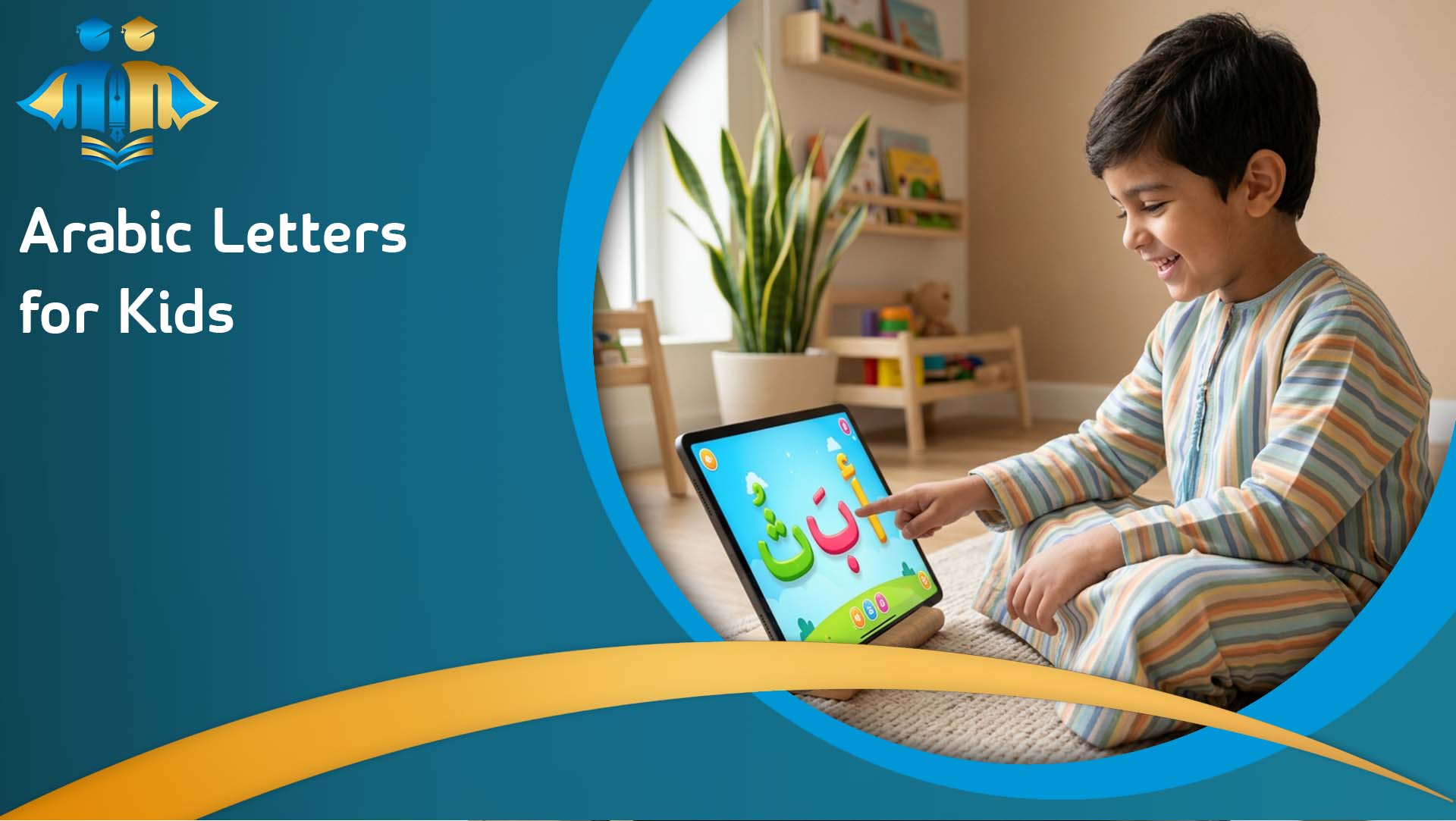
Arabic Letters for Kids: Easy Step-by-Step Learning
Arabic letters for kids made easy with Super Muslim Online Quran Academy, where children learn through simple, structured, and engaging methods designed to build strong reading and writing foundations from an early age. This ties in well with online Arabic school, something a lot of students ask about too. For a closer look at online Arabic academy, it helps to read through the details first.
The academy focuses on step-by-step learning, starting with letter recognition, correct pronunciation, and gradual writing practice to ensure a smooth and enjoyable experience. Interactive activities, repetition techniques, and visual aids help children stay motivated and confident while learning.
With a supportive environment and expert guidance, kids develop essential Arabic language skills naturally. This approach ensures steady progress, improved memory, and a strong connection to Arabic reading, making learning both effective and enjoyable for young learners.
Best Way to Teach the Arabic Alphabet to Children
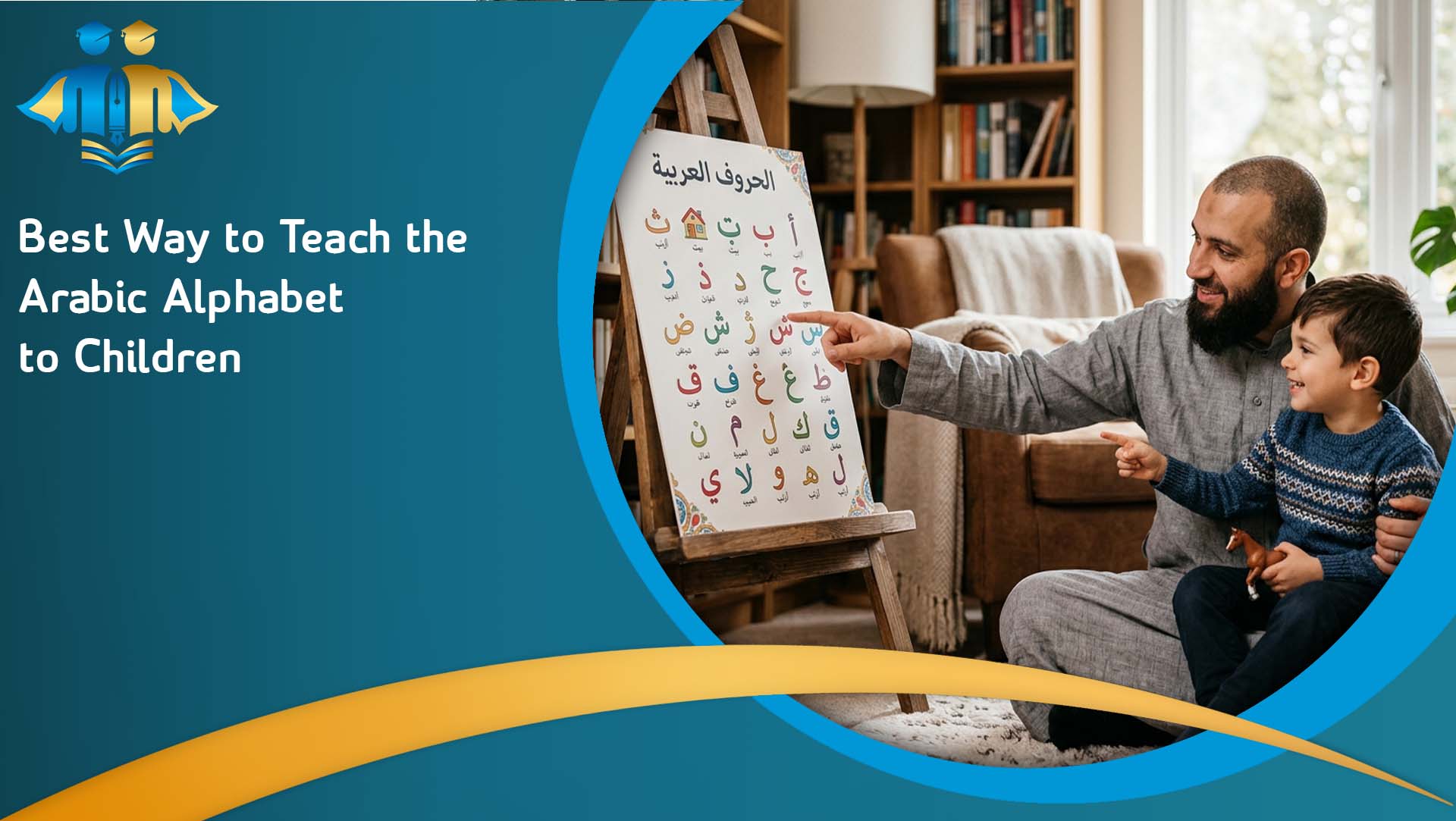
Helping children learn the Arabic alphabet is one of the most valuable investments parents can make in their child’s educational and spiritual development. Whether your goal is to prepare your child for reading the Quran, speaking Arabic, or building a strong language foundation, choosing the right teaching approach makes a significant difference.
Many parents assume that teaching Arabic letters means asking children to memorize all 28 letters in alphabetical order. While this traditional method may eventually work, it is rarely the fastest or most enjoyable way for young learners. Children learn more effectively when lessons are interactive, organized, and adapted to their age and learning style.
The most successful approach focuses on recognition, pronunciation, listening, and writing step by step without overwhelming the child. Instead of rushing through every letter, children should develop confidence with each new lesson before moving to the next one.
Start Your Quran Learning Journey Today
Begin your journey toward a deeper and more meaningful connection with the Holy Quran through a structured, clear, and supportive learning approach designed to help you build confidence, consistency, and ease while gradually improving your recitation skills step by step in a natural and steady way.
Whether your goal is to enhance Quran reading, master Tajweed rules, strengthen understanding, or maintain consistent memorization, learning under the guidance of an experienced teacher can make a significant difference by providing direction, motivation, and a well-organized study path tailored to your individual needs.
Start with a simple level assessment to identify your current abilities, then follow a personalized learning plan adapted to your schedule, goals, and pace, ensuring steady progress, continuous improvement, and strong long-term results over time.

Why Learning the Arabic Alphabet Early Matters?
Early childhood is the ideal time to introduce new languages. During these years, children naturally absorb sounds, recognize visual patterns, and imitate correct pronunciation more easily than adults. Learning Arabic letters at an early age offers many long-term benefits, including:
- Preparing children to read the Quran confidently.
- Building strong Arabic reading skills.
- Improving listening and pronunciation.
- Strengthening memory and concentration.
- Develop handwriting skills gradually.
- Creating familiarity with Islamic vocabulary from an early age.
Children who begin learning gradually often find it much easier to read complete Arabic alphabet for beginners words later because they already recognize individual letters with confidence.
Start with Sounds Before Letter Names
One of the biggest mistakes many beginners make is teaching children only the names of the letters. While learning names such as Alif, Ba, and Ta is useful, children benefit much more when they first associate every letter with its correct sound.
Reading depends on connecting sounds rather than memorizing names. For example, when a child sees the letter ب, the first response should be recognizing its sound instead of simply remembering its name. This method helps children:
- Read simple words earlier.
- Improve pronunciation naturally.
- Build phonics skills.
- Develop confidence when reading unfamiliar words.
Once children become comfortable producing the correct sounds, learning the official names of the letters becomes much easier.
Teach Similar Letters Together
Arabic letters contain many visual patterns. Instead of presenting every letter as a completely new shape, group letters that share the same structure.For example:
- ب ت ث
- ج ح خ
- د ذ
- ر ز
- س ش
When children notice these similarities, they begin to understand the overall writing system rather than memorizing isolated symbols.
This reduces confusion and allows them to remember new letters more quickly because they only need to identify differences in the number and position of dots. Grouping letters also improves visual discrimination, an essential reading skill that supports fluent Arabic reading later.
Introduce Writing Gradually
Writing should never become a source of frustration. Before asking children to write independently, allow them to learn gradually through guided practice and tracing activities.
- Watch the letter being written.
- Trace large printed letters.
- Follow dotted outlines.
- Copy letters slowly.
- Practice independently.
Using large writing spaces helps children control pencil movement while understanding the correct direction of each stroke. Short writing sessions are far more effective than long, repetitive exercises.
Make Learning Interactive
Young children rarely stay engaged through memorization alone. Interactive learning transforms every lesson into an enjoyable experience that keeps children motivated. Simple activities include:
- Matching letters with pictures.
- Finding letters in storybooks.
- Alphabet puzzles.
- Flashcards.
- Letter sorting games.
- Magnetic letters.
- Whiteboard activities.
- Coloring worksheets.
These activities encourage children to interact with letters naturally while reinforcing recognition through repetition and improving memory skills.
Use More Than One Sense
Children remember information better when several senses work together. Instead of relying only on visual learning, combine multiple activities during every lesson. For example, children can:
- Listen to the sound.
- Repeat it aloud.
- Trace the letter.
- Write it.
- Point to it.
- Match it with pictures.
- Read simple examples.
This combination strengthens memory and helps children connect sounds, shapes, and movement simultaneously, improving overall learning efficiency.
Keep Lessons Short and Consistent
Consistency is far more valuable than long study sessions. Most preschool and early elementary children learn best place to learn Arabic through lessons lasting between 10 and 15 minutes. A simple daily routine may include:
- Reviewing previously learned letters.
- Introducing one new letter or one letter group.
- Practicing pronunciation.
- Completing one writing activity.
- Ending with a fun review game.
Daily exposure builds confidence in children over time and helps strengthen their learning gradually while keeping them engaged and motivated and preventing feelings of fatigue, stress, or being overwhelmed during the learning process.
Encourage Positive Reinforcement
Children thrive when their efforts are appreciated in a positive and supportive environment. Positive reinforcement helps build confidence and motivation when learning Arabic letters.
Praising small achievements, such as correct pronunciation or successful tracing, encourages children to keep trying and improves their emotional connection to learning. Simple rewards like verbal praise, stickers, or certificates can make learning enjoyable. It is also important to avoid comparing children with others, as each child learns at their own pace. Focusing on personal progress builds confidence and reduces pressure.
Create a Supportive Learning Environment
A supportive learning environment greatly improves a child’s ability to learn Arabic. Surrounding children with Arabic letters through posters, labeled household objects, and storybooks helps them recognize words naturally. These small daily exposures make learning part of everyday life rather than a formal task.
Reading together as a family also improves pronunciation and strengthens bonding. When Arabic is included in daily routines, children become more comfortable and confident. This consistent exposure helps improve recognition, memory, and overall language development naturally and enjoyably.
Building from Letters to Real Reading Skills
Once children become familiar with Arabic language classes for beginners and can recognize letters and their shapes and sounds, the next important step is moving toward simple reading. This stage should be gradual and carefully structured so the child does not feel overwhelmed.
At this point, children begin to connect letters to form small, meaningful sounds. Instead of jumping directly into full words, it is better to start with simple combinations such as:
- ب + ا = با
- ت + ا = تا
- س + ا = سا
These early combinations help children understand how Arabic letters work together in a flowing system rather than as isolated symbols.
This stage is where Arabic letters for kids become more than just recognition—it turns into real reading ability. The child starts to realize that letters are not just shapes but building blocks of words.
Transitioning from Recognition to Fluency
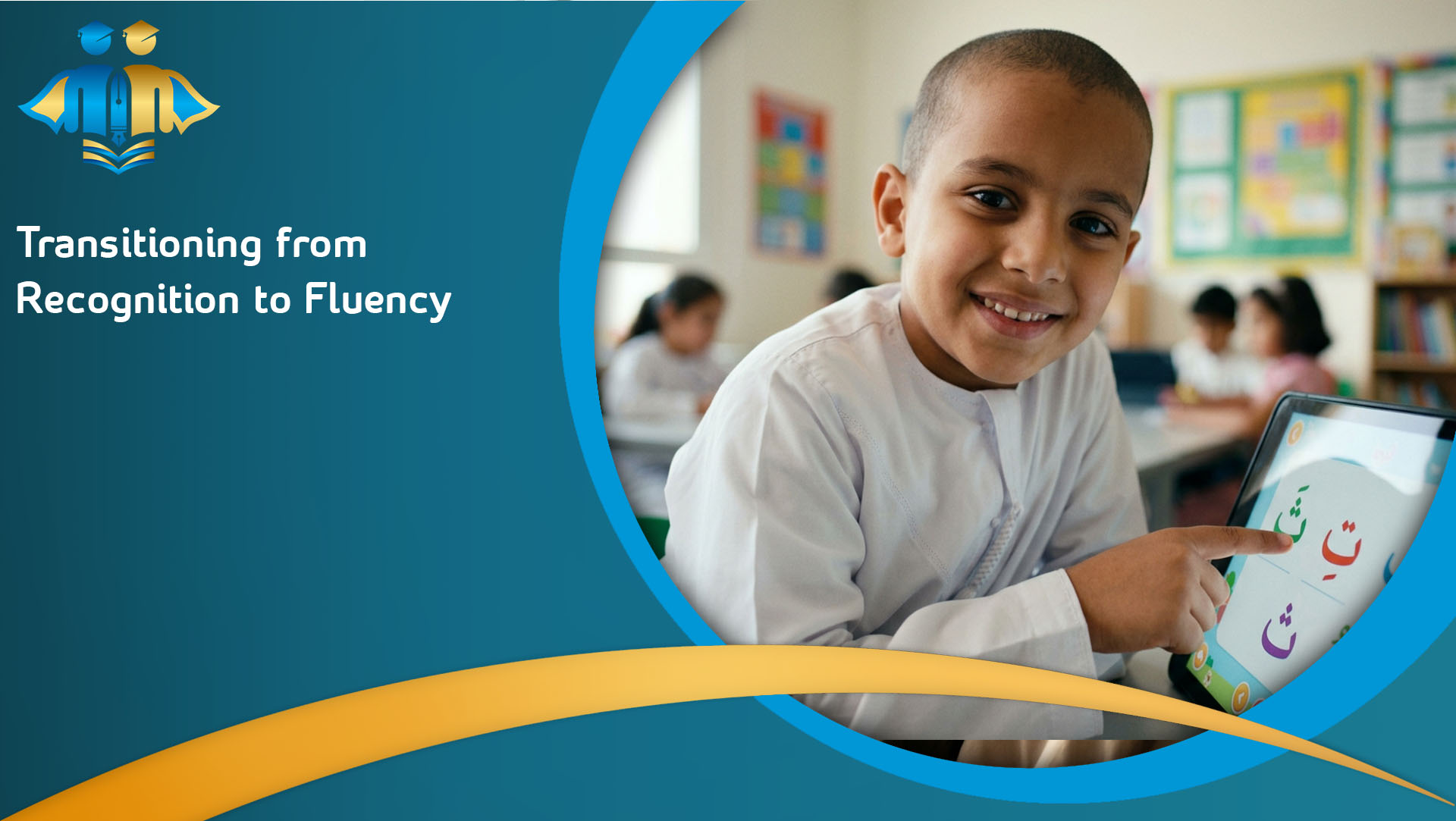
A common challenge many parents face is knowing when their child is ready to move from letter recognition to reading fluency. The right time is when the child can:
- Recognize most letters instantly
- Pronounce their sounds correctly
- Distinguish between similar-shaped letters
- Write at least basic letters with confidence
Once these skills are stable, reading simple syllables becomes much easier and more natural.At this stage, repetition is very important, but it should not feel boring. Activities like storytelling, sound games, and interactive reading exercises help maintain engagement.
Children also benefit greatly from structured programs such as Super Muslim Online Quran Academy, where lessons are designed to guide learners step by step from letters to reading Quranic words in a balanced and age-appropriate way.
Common Mistakes Parents Should Avoid
Many parents unintentionally slow down their child’s progress by following methods that feel traditional but are not effective for young learners.
One of the most common mistakes is forcing memorization of all 28 letters too quickly. This creates pressure and confusion instead of understanding.
Another mistake is skipping pronunciation practice. Without correct sound training, children may recognize letters visually but struggle when reading words later.
Some parents also focus too much on writing too early. Writing requires fine motor skills that develop gradually, so pushing children too soon can lead to frustration. Avoiding these mistakes ensures that learning remains smooth, natural, and enjoyable.
The Role of Parents in Daily Learning
Parents play a much more important role than most people realize. Even a few minutes of involvement each day can significantly improve a child’s progress.Simple actions such as:
- Practicing letters during daily routines
- Reading aloud together
- Asking the child to identify letters in objects
- Encouraging repetition without pressure
These small interactions create a strong learning environment at home. When parents are consistent and supportive, children develop confidence faster and show more interest in learning Arabic language classes online naturally.
Programs like Super Muslim Online Quran Academy also help parents by providing structured lessons that reduce the pressure of planning and ensure the child follows a clear learning path.
Strengthening Memory Through Repetition
Repetition is one of the most powerful tools in early learning, but it must be used correctly. Instead of repeating the same activity in a boring way, it should be mixed with variety. For example:
- One day focuses on listening
- Another day focuses on tracing
- Another day focuses on games
- Another day focuses on writing
This variety keeps children engaged while reinforcing the same core knowledge. Over time, repetition builds long-term memory, allowing children to recall letters instantly without hesitation.
Introducing Word Formation Gradually
After mastering letters and simple syllables, children can begin forming small words. This is an exciting stage because it shows real progress. Start with very simple words such as:
- باب
- بيت
- سمك
At this stage, children start understanding that Arabic letters for kids are not just individual symbols but part of meaningful communication. It is important not to rush this phase. Each word should be repeated several times until the child is fully comfortable before moving to the next one.
Emotional Connection with Learning
Children learn better when they feel emotionally connected to what they are studying. If learning feels like pressure, progress slows down. If it feels like play and discovery, progress becomes natural.
That is why positive reinforcement, encouragement, and patience are essential. Every small achievement should be acknowledged, no matter how minor it seems. This emotional support builds confidence and keeps children motivated to continue learning Arabic over time.
Why Structured Learning Makes a Difference?
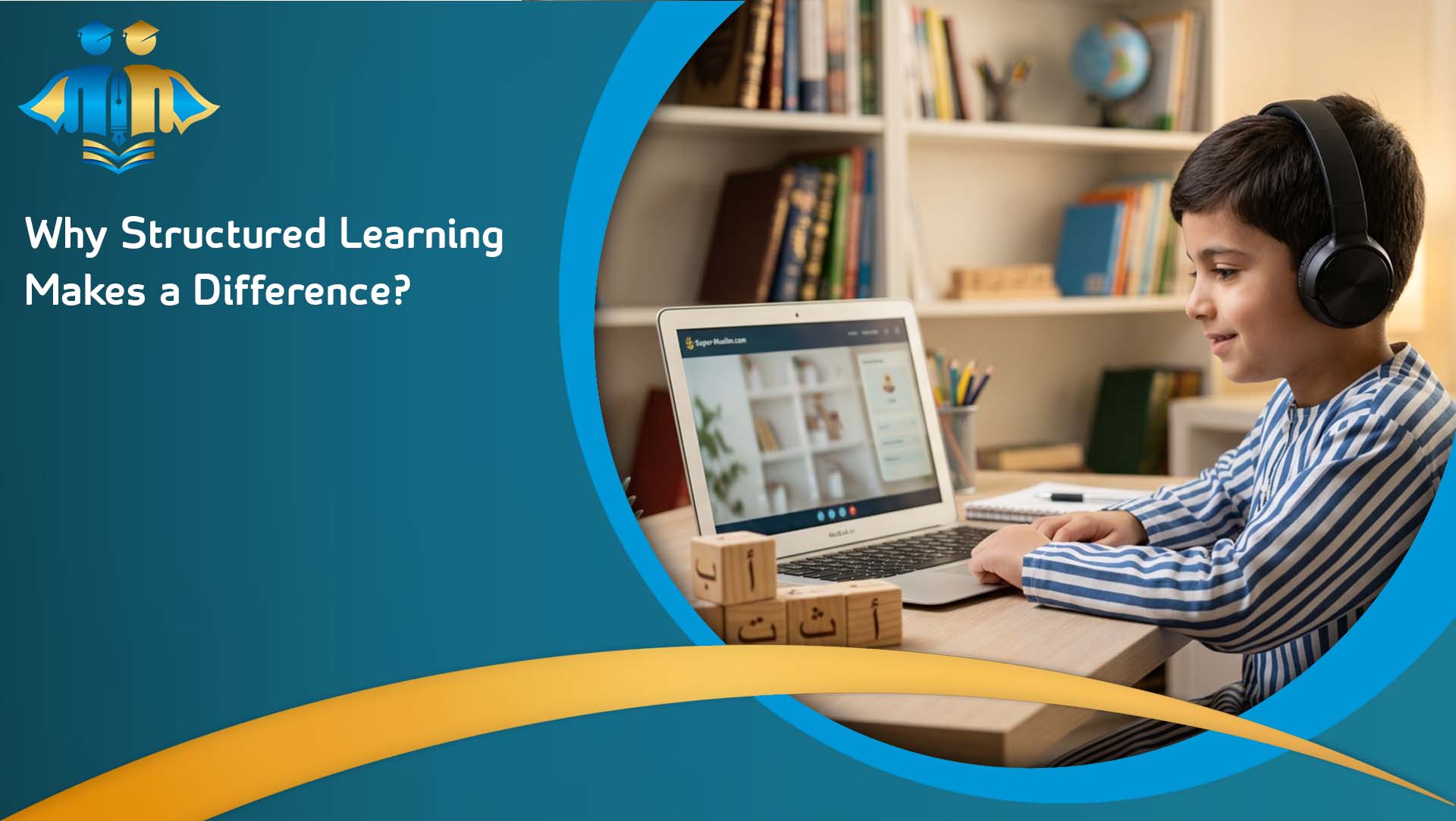
While parents play a key role, structured learning environments provide consistency and direction that can be difficult to maintain at home alone.
Super Muslim Online Quran Academy offers a structured approach that guides children step by step from basic letters to reading Quranic text with proper pronunciation. The lessons are designed to match the child’s pace, ensuring that no stage is rushed or skipped.
In addition, Super Muslim Online Quran Academy focuses on building both knowledge and confidence, which is essential for long-term success in Arabic reading.
Many families choose Super Muslim Online Quran Academy because it provides clarity, structure, and steady progress without overwhelming the child.
Keeping Motivation Strong Over Time
Motivation is one of the biggest factors in a child’s learning journey. Even the best teaching methods will not work if the child loses interest. To maintain motivation:
- Keep sessions short and enjoyable
- Use games and visual aids
- Celebrate progress regularly
- Avoid pressure or comparison
- Allow breaks when needed
When learning remains enjoyable, children naturally want to continue. At this stage, the foundation of Arabic letters for kids becomes stronger and more meaningful, preparing the child for advanced reading and Quranic learning.
Developing Reading Fluency Step by Step
At this stage, children begin to move beyond basic letter recognition and simple syllables into smoother reading. This transition should always feel natural, not forced. Fluency in reading develops when the child repeatedly sees letters in different contexts and slowly becomes familiar with how they connect in real words.
Instead of introducing long and complex words, it is better to continue building gradually with short, familiar vocabulary. The goal is not speed at this point, but accuracy and confidence.
Children should be encouraged to read slowly, sound out each letter, and then blend them. Over time, this process becomes automatic, and reading feels less like effort and more like understanding.
This is where the foundation of Arabic letters for kids truly shows its impact, because strong letter recognition leads directly to smoother reading ability without confusion.
Strengthening Confidence Through Real Practice
Confidence plays a major role in whether a child continues progressing or feels discouraged. Many children who know the letters still hesitate when they try to read complete words. This is completely normal and should be handled with patience.At this stage, repetition in real reading contexts becomes very important. Children should be exposed to:
- Simple short sentences
- Repeated vocabulary patterns
- Familiar words from daily life
- Illustrated reading materials
When children recognize words in different contexts, they stop seeing Arabic as something abstract and begin understanding it as a real communication tool.
Encouragement during this phase is essential. Even small improvements should be acknowledged to build motivation and reduce fear of making mistakes.
The Role of Structured Learning Support
While home learning is important, structured guidance can significantly improve consistency and long-term progress. A well-designed program ensures that each stage is introduced at the right time, without overwhelming the child.
A platform such as Super Muslim Online Quran Academy provides a structured path that helps children move from letters to reading in a gradual and organized way. Lessons are designed to match the child’s pace, ensuring they understand each stage before moving forward.
Another advantage of Super Muslim Online Quran Academy is that it reduces pressure on parents by providing clear lesson plans and guided progression. This allows families to focus more on encouragement and practice rather than planning content.
Many learners also benefit from Super Muslim Online Quran Academy because it maintains consistency, which is one of the most important factors in language learning success.
Emotional Development and Learning Growth
Emotions strongly influence how children respond to learning. A positive emotional environment encourages curiosity and reduces resistance.
If a child feels supported and safe while learning, they are more likely to try again after mistakes. On the other hand, pressure and criticism can create hesitation and fear.
That is why patience, encouragement, and positive reinforcement are essential throughout the entire learning journey. Children should feel that learning online with an Arabic tutor for kids is a rewarding experience, not a difficult task.
Natural Reading Skills for Kids Learning Arabic Letters
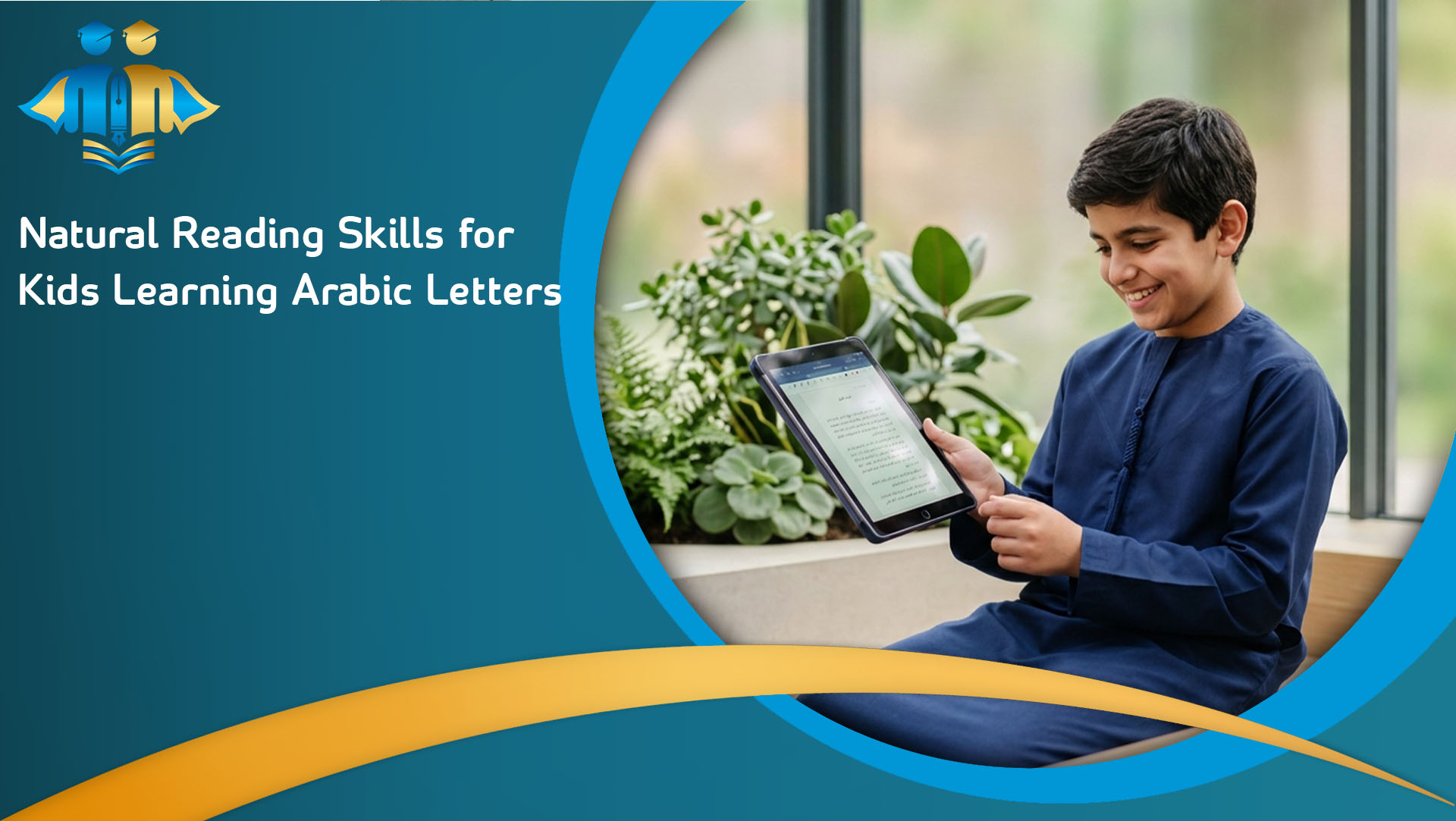
Eventually, children reach a stage where reading becomes more natural. They no longer need to focus on individual letters but can recognize whole words and phrases. At this stage, reading begins to feel smooth and meaningful. Children can:
- Read short sentences independently
- Recognize common vocabulary instantly
- Understand simple meanings
- Read basic Quranic words with guidance
This stage represents the full success of the early learning process, where all previous steps come together. Strong foundations built through Arabic letters for kids ensure that this final stage feels natural rather than difficult.
Frequently Asked Questions
Frequently Asked Questions provide clear answers to common queries, helping learners better understand Quran study, Arabic learning, and effective educational methods.
1. What is the best age for a child to become fluent in Arabic reading?
Most children begin developing reading fluency between the ages of 6 and 8, depending on consistency and exposure. Early practice with letters and sounds greatly influences how quickly fluency develops later.
2. How can parents help if they do not speak Arabic fluently?
Parents do not need to be fluent in Arabic to support their child. Simple daily encouragement, listening practice, and using structured programs like Super Muslim Online Quran Academy can effectively guide children through each stage of learning.
3. How long should daily Arabic learning sessions be for best results?
Short and consistent sessions of 10–15 minutes daily are more effective than long irregular study periods. Consistency helps children retain information and stay motivated.
In conclusion, Arabic letters for kids become easy and enjoyable when taught through a structured and supportive approach. Super Muslim Online Quran Academy helps children build strong foundations in reading, writing, and pronunciation step by step.
With consistent practice, interactive activities, and positive encouragement, young learners gain confidence and develop a lasting connection with the Arabic language. This gradual method ensures steady progress, improved memory, and long-term learning success.

You may also like
Quran Learning for Non-Arabic Speakers: A Simple Guide
Arabic Letters for Quran Learning with Easy Lessons