
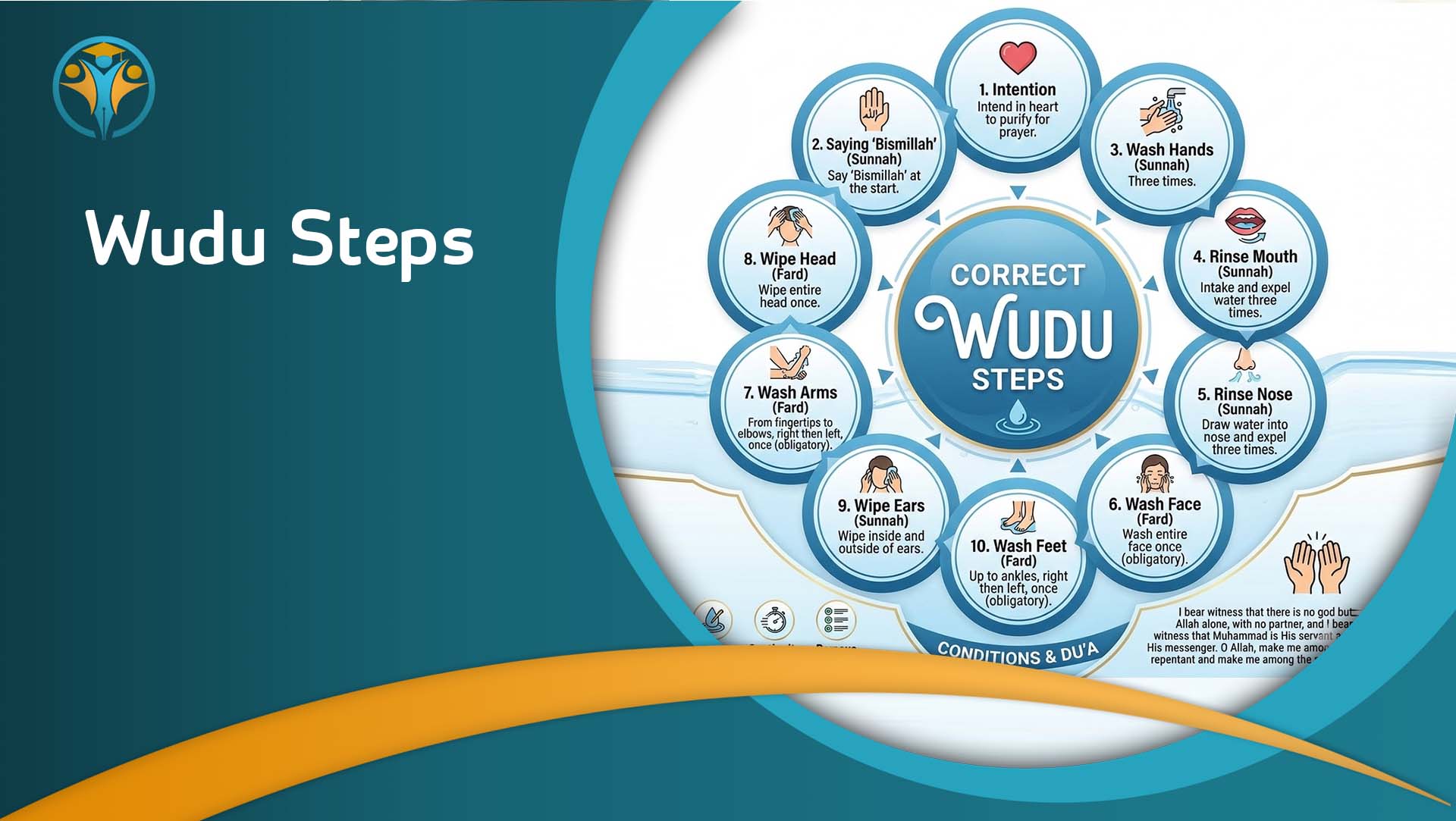
Wudu Steps: Simple Guide to Perform Ablution Correctly 2026
Wudu steps are essential for every Muslim to perform before prayer to achieve both physical and spiritual purification. At Super Muslim Academy, we stress the importance of learning these steps correctly, as they ensure the validity of prayers and help Muslims prepare mentally and spiritually for worship.
Performing the Wudu steps with care cultivates mindfulness, patience, and discipline, while following the prophetic example in daily life. Understanding and practicing the correct Wudu steps is not only a ritual requirement but also a way to strengthen one’s connection with Allah and enhance the spiritual benefits of every prayer.
Wudu Steps and Their Purpose

Wudu is the Islamic ritual of purification performed before prayer, involving specific cleansing actions. Following the Wudu steps ensures spiritual and physical readiness for worship.
Understanding Wudu
If you are not Muslim, you might wonder why your Muslim friends often look for a place to wash themselves, including their hands and feet, before prayer. This practice is an important part of daily life for Muslims and is connected to both physical cleanliness and spiritual preparation.
The Importance of Wudu in Daily Prayer
Muslims are required to pray five times a day, and the times and procedures for these prayers are clearly described in the Quran. Before performing any of these prayers, it is necessary to complete a ritual called Wudu, which is a form of purification. Wudu steps are a sequence of actions designed to cleanse specific parts of the body, ensuring that the person is spiritually and physically ready to stand in prayer.
Step-by-Step Wudu Guide
- Washing the hands
- Rinsing the mouth and nose
- Washing the face and arms
- Wiping the head
- Cleaning the ears
Washing the feet
Each step has a specific order and intention, making the ritual not only an act of hygiene but also a mindful spiritual practice. Performing the Wudu steps correctly allows Muslims to focus their minds and hearts on prayer without distraction.
Spiritual and Physical Benefits
Understanding and following the proper Wudu steps reflects discipline, devotion, and respect for the spiritual act of prayer. It is more than just washing; it is a way to prepare the body and mind to connect with God, symbolizing purity, humility, and readiness. By consistently performing these Wudu steps, Muslims maintain both physical cleanliness and spiritual awareness, creating a sense of inner peace and focus before engaging in worship.
Online Quran Academy Super Muslim
Online Quran Academy Super Muslim is a specialized online platform for teaching the Holy Quran and its sciences, provided through Super Muslim Academy, which includes a team of qualified and experienced teachers.
The academy aims to help students recite the Quran correctly, learn Tajweed rules, and memorize the Quran in an easy and modern way suitable for all ages. With flexible schedules and continuous student support, the academy makes learning the Quran an effective and inspiring experience.

The Obligatory Wudu Steps in Order
Wudu, the Islamic ritual of purification, is essential for Muslims before performing prayers. Performing the Wudu steps correctly ensures both spiritual and physical cleanliness. Each step must be done in a specific order, as skipping any step can make the Wudu invalid.
1. Washing the Face
The first of the Wudu steps is washing the face completely. This includes the entire face, from the forehead to the chin and from one ear to the other. Water must cover all parts of the face to ensure proper purification and to prepare the person mentally for prayer.
2. Washing the Hands and Arms up to the Elbows
The second of the Wudu steps involves washing both hands and arms from the fingertips to the elbows. Each hand and arm should be washed at least once, making sure no area is left dry. This step symbolizes cleansing one’s actions and readiness for worship.
3. Wiping the Head
The third step in the Wudu steps is wiping the head. Using wet hands, one passes over the head, usually from the forehead to the back. This step represents mental and spiritual preparation, helping the person focus on the prayer ahead.
4. Washing the Feet up to the Ankles
The final step in Wudu is washing the feet, including the areas between the toes, up to the ankles. Complete coverage ensures that the body is fully purified and ready to stand in prayer.
Important Note
If any of the Wudu steps are missed, the Wudu becomes invalid. A person without proper Wudu is not spiritually pure and cannot perform prayers or other acts of worship. Following the correct Wudu steps allows Muslims to maintain both physical cleanliness and spiritual readiness, ensuring a focused and mindful prayer.
Sunnah Wudu: Essential Practices for Perfect Ablution
In Islam, Wudu is not only about performing the obligatory cleansing steps; there are also Sunnah actions—recommended practices that the Prophet ﷺ used to do. These actions are not mandatory, but performing them increases the reward and brings the Wudu closer to the way of the Prophet ﷺ. Including the Wudu steps properly allows Muslims to gain both spiritual and physical purification.
1. Intention (Niyyah)
Before starting Wudu, it is recommended to have the intention in your heart that you are performing the Wudu steps to get closer to Allah. This mental preparation helps focus on the spiritual purpose of the act.
2. Saying “Bismillah”
Starting Wudu with “Bismillah” (In the name of Allah) is a Sunnah. It serves as a reminder that the act is for worship and purity, linking the physical act to spiritual mindfulness and completing the Wudu steps in a thoughtful manner.
3. Washing Hands Before Mending
It is Sunnah to begin Wudu by washing the hands three times. This step prepares the body and symbolizes cleanliness before touching the mouth and face, forming an essential part of the Wudu steps.
4. Rinsing the Mouth and Nose
Rinsing the mouth (Mouth rinsing) and inhaling water into the nose (Istinshaq) are Sunnah practices. The Prophet ﷺ used to do this three times, helping cleanse and refresh the senses as part of the recommended Wudu steps.
5. Washing Limbs Multiple Times
While the obligatory Wudu requires washing the face, arms, and feet once, the Sunnah encourages washing each of these three times. This ensures thorough cleansing and adds extra spiritual reward.
6. Wiping the Head and Ears
The Sunnah involves wiping the entire head (while the obligatory action requires only part) and wiping the ears, which is highly recommended though not obligatory.
7. Following the Prophet’s Order
Following the exact order of Wudu as practiced by the Prophet ﷺ is also a Sunnah. It emphasizes mindfulness, discipline, and respect for the prophetic example.
Performing these Sunnah actions enhances the Wudu steps both physically and spiritually. By including them, Muslims purify not only their bodies but also their hearts, drawing closer to the Prophet ﷺ and the spiritual essence of worship.
The Four Obligatory Wudu Steps
Wudu, the ritual purification before prayer, has specific actions that are considered obligatory (Fard). While there are additional Sunnah steps that can enhance Wudu, these four steps are essential for the Wudu to be valid. Performing the Wudu steps properly ensures spiritual and physical cleanliness, preparing a person for prayer.
1. Intention (Niyyah) – Optional
Before starting Wudu, it is recommended to form the intention in the heart that you are performing Wudu for Allah. Although this is optional for the obligatory Wudu steps, having the Niyyah helps focus the mind on the purpose of purification and prepares one spiritually.
2. Washing the Face
The first obligatory step in Wudu is washing the face thoroughly. This includes washing from the forehead to the chin and from the right ear to the left ear. Ensuring that water reaches every part of the face is necessary for the Wudu to fulfill its purpose.
3. Washing Hands and Arms up to the Elbows
The second step involves washing both hands and arms from the fingertips to the elbows. Each part must be washed completely, making sure water covers all areas. This step is an essential part of the Wudu steps, symbolizing the cleansing of one’s actions in preparation for worship.
4. Wiping the Head
The third obligatory step is wiping part of the head with wet hands. While this is a smaller portion compared to the Sunnah practice, it is necessary for the validity of Wudu.
5. Washing the Feet
The final step in the obligatory Wudu steps is washing the feet up to the ankles, ensuring the entire foot is covered, including between the toes.Performing the Wudu steps in the prescribed order is considered Sunnah rather than obligatory. However, following the steps carefully ensures both physical and spiritual purification, making the prayer valid and the worshipper fully prepared to connect with Allah.
The Difference Between Sunnah and Fard in Wudu
In Islam, Wudu is the ritual of purification before prayer, and it consists of different types of actions: Fard (obligatory) and Sunnah (recommended). Understanding the difference between them is important to ensure both the validity of the Wudu and the spiritual benefits it provides.
Fard (Obligatory)
The Fard Wudu steps are mandatory actions that must be performed for the Wudu to be valid. If any of these steps are omitted, the Wudu is incomplete, and the person is not considered spiritually pure to perform prayer or other acts of worship. The Fard steps include washing the face, washing the hands and arms up to the elbows, wiping part of the head, and washing the feet up to the ankles. These steps are the foundation of Wudu and represent the essential purification required in Islam.
Sunnah (Recommended)
On the other hand, the Sunnah Wudu steps are recommended practices that the Prophet ﷺ regularly performed. These steps are not obligatory, so skipping them does not invalidate the Wudu. However, performing them brings extra reward and brings the Wudu closer to the prophetic example. Sunnah actions include saying “Bismillah” before starting, rinsing the mouth and nose, washing limbs three times instead of once, wiping the entire head, and wiping the ears.
Importance of Understanding the Difference
Knowing the difference between Sunnah and Fard in Wudu helps Muslims perform the ritual correctly and gain maximum spiritual benefit. While the Fard Wudu steps ensure the validity of prayer, the Sunnah Wudu steps enhance its spiritual value. Performing both demonstrates mindfulness, devotion, and adherence to the example of the Prophet ﷺ.
By following the Wudu steps carefully, including both Fard and Sunnah practices, Muslims achieve both physical cleanliness and spiritual readiness, ensuring their prayers are accepted and their hearts are prepared for worship.
Spiritual and Health Benefits of Wudu
Wudu, the ritual purification in Islam, is more than just a physical cleansing. It has numerous spiritual and health benefits that enhance a Muslim’s overall well-being. Performing the Wudu steps regularly allows individuals to maintain both body and soul in a state of readiness for worship.
Physical Benefits
One of the main health benefits of Wudu is that it refreshes the body and improves blood circulation. Washing the hands, face, arms, and feet stimulates the nerves and improves blood flow, which can have a positive effect on overall physical health. The act of washing and massaging different parts of the body gently during Wudu also helps to relieve tension and stress.
Mental and Spiritual Benefits
Wudu also enhances focus and mindfulness. Performing each of the Wudu steps with care and attention helps the individual shift their focus away from daily distractions and prepare mentally for prayer. This mental preparation allows a person to be fully present in their worship, improving concentration during Salah.
Additionally, Wudu helps spiritually prepare a person for worship. It is a symbolic act of purification that removes spiritual impurities and readies the heart to connect with Allah. The Prophet ﷺ said:
“When a Muslim performs Wudu, he washes his face of every sin he looked at with his eyes until he comes out purified from sins.” (Sahih Muslim)
Connecting Body and Soul
By performing the Wudu steps, Muslims achieve a balance between physical cleanliness and spiritual purity. This harmony allows worshippers to approach prayer with a clear mind, a refreshed body, and a purified heart. It reinforces the connection between body and soul, making the act of worship more meaningful.
Overall, Wudu is not just a ritual; it is a daily practice that nurtures both health and spirituality. Following the Wudu steps properly ensures that every prayer is approached in a state of physical freshness and spiritual readiness.
Common Mistakes During Wudu
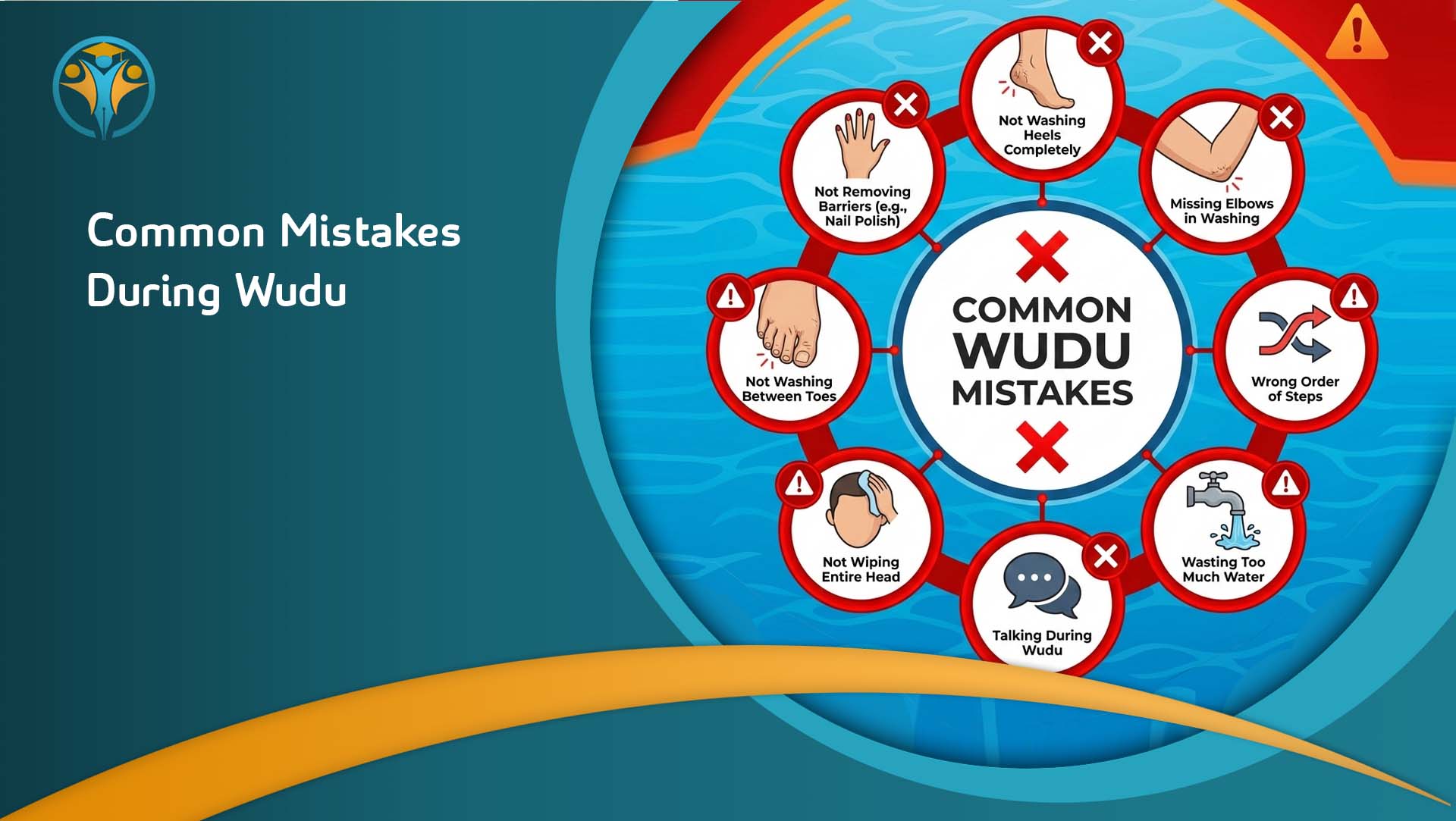
Performing Wudu correctly is essential for spiritual purity and valid prayer. However, many people make mistakes that can affect the validity of their Wudu or reduce its spiritual benefits. Being aware of these mistakes can help Muslims perform the Wudu steps more mindfully and correctly.
1. Forgetting to Wash Parts of the Face or Hands Completely
One of the most common mistakes is not washing the entire face or hands during Wudu. Water must reach every part of the face, including from the forehead to the chin and from ear to ear, as well as the hands and arms up to the elbows. Missing any area can make the Wudu incomplete, so attention to detail is crucial when performing the Wudu steps.
2. Leaving Makeup or Nail Polish
Makeup, nail polish, or other coatings on the skin can prevent water from reaching the required areas. If these are not removed or broken before Wudu, the cleansing process may not be valid. This is an easily overlooked mistake but one that directly affects the effectiveness of the Wudu steps.
3. Talking or Becoming Distracted
Engaging in conversation or letting the mind wander while performing Wudu reduces mindfulness and focus. Wudu is not just a physical act; it is a spiritual preparation. Losing focus can make the process mechanical rather than a conscious act of worship.
4. Rushing Through Wudu
Another common error is performing Wudu too quickly without awareness. Speed can lead to missing parts of the body or forgetting steps, which invalidates the Wudu. Taking time ensures each part of the Wudu steps is performed properly.
5. Not Following the Correct Order
Although the order of steps is sometimes considered Sunnah rather than Fard, following the proper sequence of washing and wiping helps maintain mindfulness and replicates the Prophet ﷺ’s practice. Skipping the order can lead to confusion and an incomplete Wudu.
By being aware of these mistakes, Muslims can ensure their Wudu steps are performed correctly, both physically and spiritually, resulting in valid prayer and a stronger connection with Allah.
Frequently Asked Questions About Wudu Steps
These questions address common inquiries about performing Wudu correctly, including the proper order of washing, what invalidates Wudu, and its spiritual and physical benefits. They help Muslims ensure their worship is valid and complete.
1. What are the Wudu steps?
The Wudu steps include washing the hands, mouth, nose, face, arms, wiping the head and ears, and washing the feet. These steps ensure both physical and spiritual purity before prayer.
2. Why are Wudu steps important?
Performing the Wudu steps properly prepares Muslims mentally, physically, and spiritually for prayer. It ensures cleanliness and reflects mindfulness and devotion.
3. Are all Wudu steps obligatory?
Some Wudu steps are Fard (obligatory) and must be performed for the Wudu to be valid, while others are Sunnah (recommended) and add extra reward but do not invalidate Wudu if missed.
4. Can I perform Wudu steps if I have nail polish or makeup?
Water must reach the skin for Wudu to be valid. Nail polish, makeup, or any barrier should be removed or broken before performing Wudu.
5. Is there a specific order for Wudu steps?
Yes, following the traditional order is Sunnah and recommended. It ensures mindfulness and aligns with the practice of the Prophet ﷺ.
6. How many times should each part be washed?
Fard Wudu requires washing each obligatory part at least once, while Sunnah practices may include washing limbs multiple times for extra reward.
7. Can Wudu steps be performed quickly?
While speed is allowed, rushing may cause mistakes. Each step should be performed carefully to ensure the Wudu is complete and valid.
In conclusion, mastering the Wudu steps is more than just a ritual act; it is a path to spiritual and physical purification. At Super Muslim Academy, we encourage every student to practice these steps carefully and mindfully, ensuring that each prayer is performed with sincerity and devotion.
By following the proper Wudu steps, Muslims not only maintain cleanliness but also strengthen their connection with Allah, making every act of worship meaningful and spiritually fulfilling.
read also:

You may also like

How to Perform Hajj: Step by Step Complete Guide

Tafseer Classes Sydney – Learn Quran Interpretation 2026