Islamic Fiqh Basics: A Complete Beginner’s Guide 2026
Islamic fiqh basics form the foundation of understanding Islamic law, guiding Muslims in worship, social interactions, and ethical decision-making. At Super Muslim Academy, students are introduced to these essential principles, exploring the sources, objectives, and practical applications of Sharia in daily life.
By studying Islamic fiqh basics, learners gain the knowledge and tools necessary to navigate both traditional practices and contemporary challenges, ensuring that their actions are aligned with the ethical, legal, and spiritual framework of Islam. This comprehensive approach not only strengthens personal faith but also equips individuals to engage responsibly with modern society.
The Concept of Islamic Fiqh
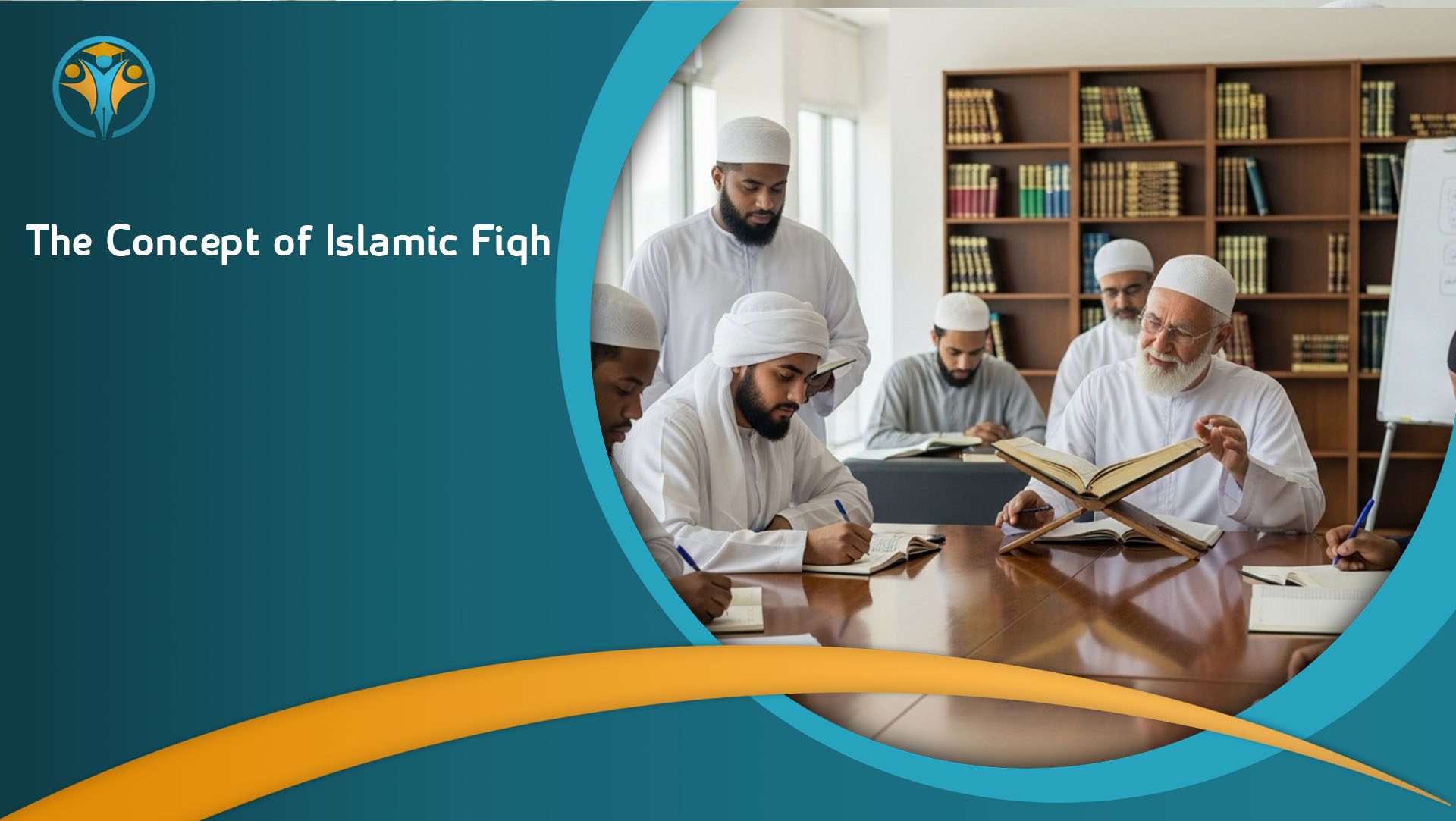
The concept of fiqh originates from the Arabic root which denotes deep understanding, insight, and precise comprehension. Linguistically, it goes beyond surface-level knowledge to reflect the mental effort required to grasp subtle meanings and hidden implications. This foundational meaning is essential to islamic fiqh basics, as it emphasizes thoughtful reasoning and careful interpretation rather than blind imitation.
Technical Definition of Islamic Fiqh
In Islamic terminology, fiqh refers to the science that studies practical Islamic rulings derived from detailed legal evidence. These rulings regulate human actions and guide Muslims in their daily lives. As part of islamic fiqh basics, this discipline focuses on understanding how divine guidance is translated into applicable laws that govern behavior, worship, and social interaction.
Primary Sources of Fiqh
Islamic jurisprudence is derived from four primary sources. The Qur’an serves as the foundational text, followed by the Sunnah of the Prophet Muhammad ﷺ, which explains and elaborates Qur’anic teachings. Scholarly consensus (Ijma‘) ensures unity and continuity, while analogical reasoning (Qiyas) allows scholars to address new issues. Together, these sources form the backbone of islamic fiqh basics and ensure both authenticity and flexibility.
Scope and Areas Covered by Fiqh
Fiqh encompasses a wide range of human activities, including acts of worship, financial transactions, family relations, and ethical conduct. It provides structured guidance for both personal and communal life, ensuring balance between spiritual obligations and worldly responsibilities within the framework of islamic fiqh basics.
The Dynamic Nature of Fiqh
Although rooted in unchanging divine principles, fiqh remains adaptable. Its ability to respond to new circumstances and evolving societies highlights its vitality, making it a living science that remains relevant across different cultures and eras.
Online Quran Academy
At Super Muslim Academy, the Online Quran Academy provides students worldwide with a flexible and effective way to learn the Quran. Combining traditional tajweed methods with modern online tools, the academy ensures each student receives personalized guidance. Qualified instructors focus on proper recitation, pronunciation, understanding of meanings, and memorization techniques.
Whether a beginner or advanced learner, students can progress at their own pace while maintaining high standards of learning. By joining the Online Quran Academy at Super Muslim Academy, learners strengthen their spiritual connection, deepen their knowledge of the Quran, and apply its teachings confidently in daily life.

Qur’anic Foundations of Islamic Fiqh
The Holy Qur’an represents the first and most essential source of Islamic law. It contains explicit legal rulings as well as broad ethical principles that guide human behavior in worship, social relations, and moral conduct.
These divine instructions form the backbone of Islamic legislation and establish the core framework of islamic fiqh basics, combining clarity with flexibility to address diverse life situations.
The Role of the Prophetic Sunnah
The Sunnah of the Prophet Muhammad ﷺ serves as a vital explanatory source that complements the Qur’an. Through his words, actions, and approvals, the Prophet demonstrated how Qur’anic teachings should be applied in real life. Within islamic fiqh basics, the Sunnah transforms theoretical rulings into practical guidance that Muslims can follow with confidence.
Practical Application of Legal Principles
Many Qur’anic commands require further explanation, which is provided by the Sunnah. For instance, while the Qur’an commands prayer, the Sunnah clarifies its conditions, times, and method of performance. Likewise, it defines prohibited financial practices such as usury and unlawful trade. These applications are central to understanding islamic fiqh basics in daily life.
Scholarly Efforts and Legal Reasoning
After the Prophet’s era, Muslim scholars played a key role in developing fiqh by interpreting texts and applying them to new situations. Through scholarly consensus (Ijma‘) and analogical reasoning (Qiyas), jurists ensured continuity and adaptability. These methods are fundamental components of islamic fiqh basics and reflect the intellectual depth of Islamic jurisprudence.
The Dynamic Nature of Fiqh Development
Although rooted in divine revelation, fiqh remains dynamic and responsive to changing circumstances. This balance between stability and flexibility allows Islamic law to remain relevant across cultures and generations, highlighting the enduring importance of islamic fiqh basics.
Sources of Islamic Fiqh
Islamic fiqh draws its principles from four primary sources, collectively known as the fundamentals of fiqh (Usul al-Fiqh). These sources provide a comprehensive framework for deriving legal rulings and ensuring consistency in applying Islamic law.
1. The Holy Qur’an
The Qur’an is the foundational text of Islam, containing 6,236 verses, many of which include legislative and ethical guidance. These can be categorized as:
- Explicit rulings: such as the obligation of prayer, the prohibition of alcohol, and rules of inheritance.
- General principles: such as the establishment of justice, mercy, and accountability, for example:
“Be just; that is nearer to piety” (Qur’an 5:8).
The Qur’an thus forms the primary pillar of Islamic fiqh basics, combining clear commands with broader moral guidance.
2. The Prophetic Sunnah
The Sunnah encompasses the sayings, actions, and approvals of Prophet Muhammad ﷺ. It explains and elaborates on Qur’anic rulings, providing practical examples such as:
- Specifying the times, forms, and number of units for prayer.
- Clarifying rulings not explicitly mentioned in the Qur’an, like the prohibition of certain foods.
The integration of the Qur’an and Sunnah ensures a balanced methodology that underpins Islamic fiqh basics, combining textual authority with practical application.
3. Scholarly Consensus (Ijma‘)
Consensus refers to the agreement of qualified scholars on a legal ruling regarding a specific issue. It serves as a mechanism for addressing new or unprecedented matters, such as:
- Compiling the Qur’an into a single manuscript.
- Permitting organ donation under specific conditions in modern times.
Ijma‘ represents collective wisdom, maintaining the authenticity and flexibility inherent in Islamic fiqh basics.
4. Analogical Reasoning (Qiyas)
Qiyas involves extending a ruling from a known case to a new case based on shared underlying causes. For example:
- Prohibiting drugs by analogy to alcohol due to their intoxicating effects.
Through qiyas, Islamic jurisprudence remains capable of addressing contemporary issues while adhering to its core principles, highlighting the ongoing relevance of Islamic fiqh basics.
The Five Fundamental Objectives of Islamic Sharia
Islamic Sharia aims to preserve the essential necessities of human life and society. These objectives form a core part of Islamic fiqh basics, guiding Muslims in understanding the purpose behind legal rulings and ethical obligations.
1. Preservation of Religion
The first objective is to safeguard religion by ensuring freedom of worship and protecting religious rituals and institutions. Within Islamic fiqh basics, this principle emphasizes the importance of maintaining faith and devotion while promoting respect for spiritual practices.
2. Preservation of Life
Islamic law protects human life by prohibiting murder, oppression, and all actions that endanger safety. Encouraging practices that maintain health and security is also central. In Islamic fiqh basics, these rulings demonstrate how the law serves to uphold life as a sacred trust.
3. Preservation of Intellect
The third objective focuses on protecting the mind. This includes forbidding substances like alcohol and drugs that impair judgment, while promoting education, knowledge, and rational thought. In this context, Islamic fiqh basics provide a framework for understanding legal measures that preserve mental well-being and intellectual growth.
4. Preservation of Lineage
The Sharia also aims to safeguard family and social structures. This is achieved by regulating marriage, inheritance, and ethical family conduct. These rules ensure the stability of society and form an essential component of Islamic fiqh basics, emphasizing the protection of family and social cohesion.
5. Preservation of Wealth
Finally, Sharia seeks to protect wealth by prohibiting theft, fraud, and usury, while promoting economic justice and the fair distribution of resources through mechanisms like zakat. In Islamic fiqh basics, these principles illustrate the balance between individual rights and societal welfare.
Through these five objectives, Islamic law demonstrates its comprehensive nature, addressing spiritual, personal, intellectual, familial, and economic dimensions of life. Understanding these goals is fundamental to mastering Islamic fiqh basics.
Islamic Legal Schools (Madhahib)
The diversity of legal schools reflects the richness and flexibility of Islamic jurisprudence. Understanding these schools is an important part of Islamic fiqh basics, as it helps students appreciate the variety of approaches within a unified legal framework.
1. Hanafi School
The Hanafi school relies heavily on analogical reasoning (Qiyas) and juristic preference (Istihsan). Its methodology emphasizes rational interpretation and flexibility, making it widely followed in South Asia, Turkey, and parts of the Arab world. The Hanafi approach is a key component of Islamic fiqh basics, illustrating how reason and analogy can guide practical rulings.
2. Maliki School
The Maliki school places great importance on the practices of the people of Medina (Amal Ahl al-Madina) as a source of legal guidance. This approach demonstrates the integration of lived community practice into legal reasoning, an essential concept in Islamic fiqh basics.
3. Shafi‘i School
The Shafi‘i school is known for its rigorous methodology in the principles of jurisprudence (Usul al-Fiqh). It prioritizes systematic reasoning and textual evidence from the Qur’an and Sunnah. Studying this methodology is crucial for mastering Islamic fiqh basics, as it highlights precision and consistency in legal deduction.
4. Hanbali School
The Hanbali school emphasizes textual evidence over personal opinion. While strict in its reliance on scripture, it contributes to the depth and diversity of Islamic legal thought. Understanding its methodology also forms part of Islamic fiqh basics, demonstrating the balance between textual fidelity and reasoned application.
Despite methodological differences, all schools rely on the same core sources: the Qur’an, Sunnah, consensus, and analogy. This diversity enriches Islamic jurisprudence without fragmenting it, offering multiple pathways to understand and apply Islamic fiqh basics effectively.
Fiqh of Worship: Connection with God
The fiqh of worship forms the heart of Islamic practice, guiding Muslims in their spiritual and ritual obligations. Understanding this area is a key component of Islamic fiqh basics, as it ensures that worship is performed correctly, meaningfully, and in accordance with divine guidance.
1. Purification (Taharah)
Purification is a prerequisite for all acts of worship. It includes:
- Ablution (Wudu’): ritual washing before prayer.
- Full ritual bath (Ghusl): required in certain circumstances to achieve complete cleanliness.
- Personal hygiene: maintaining general cleanliness of the body, clothing, and environment.
2. Prayer (Salah)
Prayer is the central act of worship in Islam. Islamic fiqh basics cover its conditions, pillars, and timings, ensuring that each prayer is valid and spiritually effective.
3. Fasting (Sawm)
Fasting includes the obligatory fasts of Ramadan as well as voluntary fasts. Fiqh addresses rules, exemptions, and concessions, providing practical guidance for Muslims to observe this worship correctly.
4. Zakat and Charity (Sadaqah)
Financial worship such as zakat and voluntary charity purifies wealth and supports community welfare. Understanding the principles of calculation, eligibility, and distribution is essential in Islamic fiqh basics.
5. Pilgrimage (Hajj and Umrah)
Hajj and Umrah are the pinnacle of physical and spiritual devotion. Knowledge of the rites, obligations, and recommended practices ensures that pilgrims fulfill these acts correctly, reflecting both obedience and devotion.
Mastering the fiqh of worship ensures that acts of devotion are not only technically correct but also spiritually meaningful. It forms a foundational element of Islamic fiqh basics, connecting Muslims directly with God through disciplined and conscious practice.
Fiqh of Transactions: Ethics in Daily Life
Fiqh also governs economic and social interactions, ensuring that daily life aligns with ethical and legal principles. Understanding this area is an essential part of Islamic fiqh basics, as it provides guidance for fairness, honesty, and integrity in all transactions.
1. Trade and Contracts
Islamic law regulates trade and contracts to ensure transparency, mutual consent, and ethical conduct. Knowledge of contractual obligations, rights, and responsibilities is central to Islamic fiqh basics, helping Muslims conduct business with justice.
2. Prohibition of Usury and Permissible Alternatives
The prohibition of interest (riba) is a fundamental principle in Islam. Fiqh provides guidance on lawful financial alternatives, encouraging equitable transactions while avoiding exploitation. Understanding these rules is a core component of Islamic fiqh basics.
3. Buying and Selling
Rules governing sales, purchases, and commercial dealings ensure honesty and fairness in everyday transactions. Compliance with these principles prevents disputes and promotes trust in business relationships, reinforcing the ethical framework of Islamic fiqh basics.
4. Labor Rights
Fiqh outlines the rights and responsibilities of employers and employees. Fair treatment, timely compensation, and respect for workers’ rights are emphasized, demonstrating the practical application of Islamic fiqh basics in modern society.
5. Loans, Gifts, and Debts
Regulations regarding loans, gifts, and repayment of debts maintain financial justice and social stability. Fiqh ensures that obligations are fulfilled ethically and transparently, highlighting the moral dimension of financial transactions within Islamic fiqh basics.
By mastering the fiqh of transactions, Muslims can integrate ethical principles into everyday life, ensuring justice, honesty, and accountability in economic and social dealings. This aspect of Islamic law reinforces the comprehensive nature of Islamic fiqh basics, bridging spirituality and daily practice.
Islamic Rulings on What Is Allowed and Prohibited
Fiqh helps Muslims distinguish between what is permissible (halal) and forbidden (haram) in all aspects of life. Understanding these classifications is a core component of Islamic fiqh basics, providing clarity and confidence in daily decision-making.
1. Obligatory (Wajib)
Actions that are required by Sharia. Performing them is rewarded, and neglecting them is sinful. Knowledge of obligatory acts is central to Islamic fiqh basics, as it ensures adherence to essential duties.
2. Recommended (Mandub)
Actions that are encouraged but not compulsory. Performing them earns reward, while neglecting them does not incur punishment. Recognizing recommended deeds helps Muslims enhance their spirituality and ethical conduct.
3. Permissible (Mubah)
Actions that are neutral, neither rewarded nor punished. Understanding what is permissible provides flexibility and balance in daily life, an important aspect of Islamic fiqh basics.
4. Disliked (Makruh)
Actions discouraged but not strictly forbidden. Avoiding them is rewarded, while performing them is not sinful. Knowing what is disliked helps refine ethical behavior and decision-making.
5. Forbidden (Haram)
Actions explicitly prohibited by Sharia. Engaging in them is sinful. Awareness of forbidden acts is essential for maintaining moral integrity and obedience to divine guidance.
By mastering the distinctions between halal and haram, Muslims gain a practical framework for ethical and legal conduct. This knowledge is fundamental to Islamic fiqh basics, helping individuals live responsibly, make informed choices, and uphold justice and morality in everyday life.
Challenges Facing Islamic Fiqh in the Modern Era
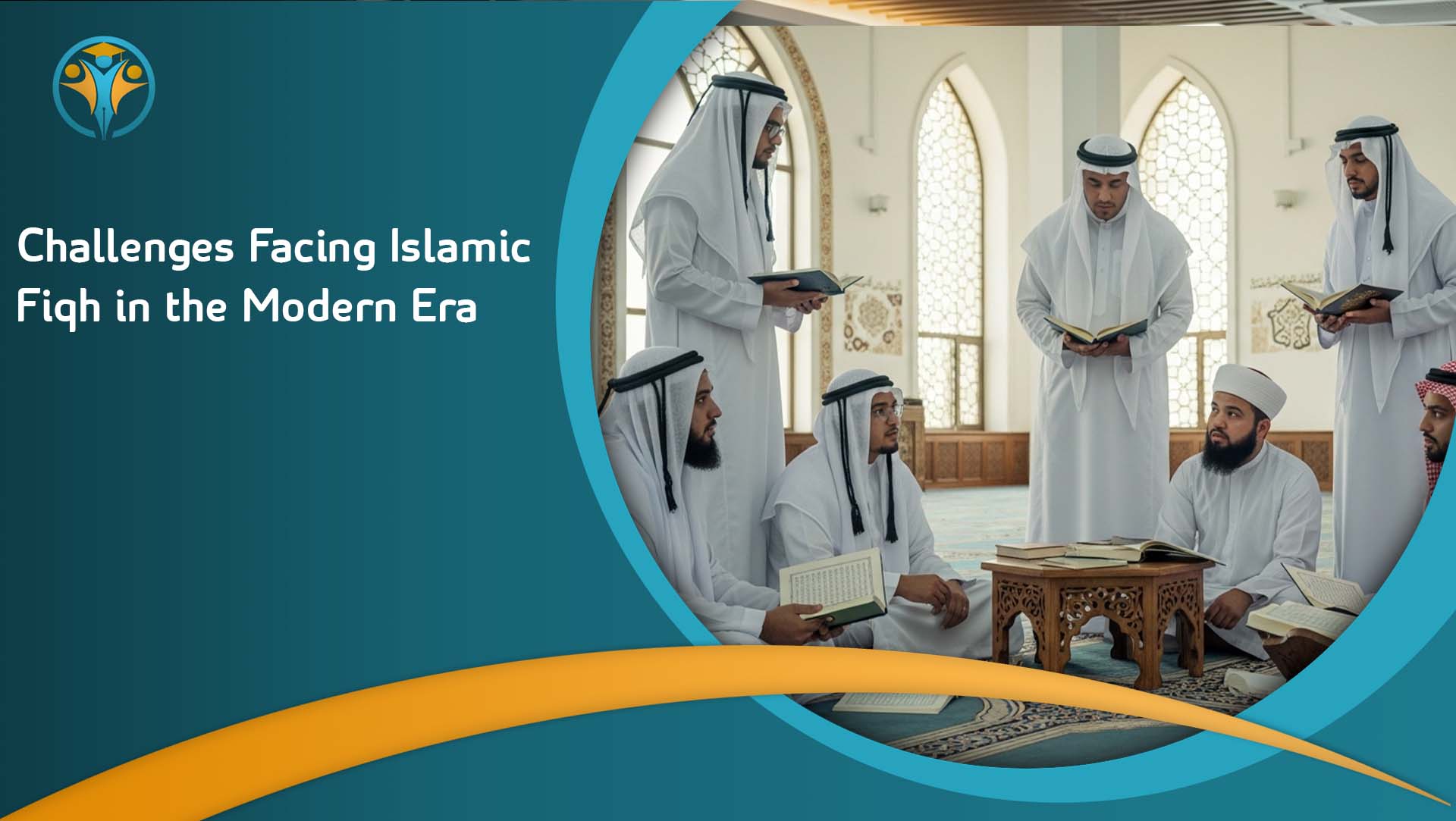
Islamic fiqh faces several contemporary challenges that require thoughtful interpretation and application. Understanding these issues is an essential part of Islamic fiqh basics, helping scholars and practitioners navigate modern life while remaining faithful to Sharia principles.
1. Interpretation and Adaptation
Traditional rulings must be interpreted to address modern issues such as technology, biotechnology, and finance. Applying Islamic fiqh basics in a contemporary context ensures that Sharia remains relevant and practical.
2. Diversity and Differences
The existence of multiple schools of thought and legal traditions requires balancing unity and diversity. Awareness of these differences is critical for applying Islamic fiqh basics in a way that respects the richness of Islamic scholarship.
3. Women’s Rights and Gender Equality
Reconciling traditional interpretations with modern human rights developments is a key challenge. Islamic fiqh basics provide tools to navigate these issues while maintaining ethical and legal integrity.
4. Engagement with Modern Sciences and Technology
Guidance is needed to ensure that emerging fields, such as artificial intelligence, genetic engineering, and new medical technologies, align with Sharia principles. Applying Islamic fiqh basics helps integrate ethical oversight with innovation.
5. Interaction with National Laws
Islamic fiqh must be harmonized with the civil and legal systems of Muslim-majority countries. Knowledge of Islamic fiqh basics aids in bridging the gap between traditional rulings and modern legislative frameworks.
6. Globalization and Cross-Border Issues
Challenges like migration, international trade, and human rights require fiqh to operate beyond local contexts. Islamic fiqh basics provide foundational principles for addressing these global and transnational matters effectively.
By understanding and addressing these modern challenges, Muslims can ensure that Islamic law remains dynamic, relevant, and ethically grounded, while maintaining the core principles of Islamic fiqh basics in contemporary life.
Frequently Asked Questions About Islamic Fiqh Basics
provide clear answers to common queries about Islamic jurisprudence, its principles, and daily applications. They help Muslims understand and apply Sharia confidently in modern life.
1. What are Islamic fiqh basics?
Islamic fiqh basics are the fundamental principles and rules of Islamic jurisprudence that guide Muslims in worship, social interactions, and ethical behavior. They cover acts of worship, transactions, and moral conduct.
2. What are the primary sources of Islamic fiqh?
The main sources are the Quran, the Sunnah (Prophetic traditions), Ijma (consensus), and Qiyas (analogical reasoning). Some schools also use Istihsan (juridical preference) and local customs.
3. Why is learning Islamic fiqh basics important?
Understanding fiqh basics helps Muslims perform religious duties correctly, make ethical decisions, and navigate modern challenges while remaining true to Islamic law.
4. What are the five categories of actions in fiqh?
The five categories are: Obligatory (Wajib), Recommended (Mandub), Permissible (Mubah), Disliked (Makruh), and Forbidden (Haram). Each category guides Muslims in assessing the permissibility of actions.
5. How do fiqh basics apply to daily life?
Fiqh basics influence prayer, fasting, charity, business transactions, family matters, and ethical behavior, ensuring Muslims live according to Sharia in all aspects of life.
6. Can Islamic fiqh adapt to modern challenges?
Yes. Islamic fiqh basics provide tools to address contemporary issues like technology, finance, human rights, and globalization, while remaining faithful to core principles.
7. How can students learn Islamic fiqh basics?
Institutions like Super Muslim Academy offer structured courses and guidance, combining traditional scholarship with practical applications for modern life.
In conclusion, Islamic fiqh basics serve as the cornerstone for guiding Muslims in every aspect of life, from worship and personal conduct to social and economic interactions. Through a comprehensive understanding of its principles, sources, and objectives, individuals are empowered to make informed, ethical, and responsible decisions.
At Super Muslim Academy, students are encouraged to master these fundamentals, bridging the gap between traditional jurisprudence and contemporary challenges. By applying Islamic fiqh basics thoughtfully, Muslims can uphold justice, morality, and spiritual integrity, ensuring that their actions remain aligned with the teachings of Islam while navigating the complexities of modern life.
Ultimately, the study of Islamic fiqh basics equips believers with the knowledge and confidence to live purposefully, ethically, and harmoniously within both their communities and the wider world.
read more:

You may also like

Best Online Islamic Classes for All Ages

Online Islamic Courses for Beginners USA 2026