

Basic Tajweed Rules USA for Learners 2026
Basic Tajweed Rules USA are fundamental guidelines that help learners recite the Quran correctly and beautifully. This research is presented by Super Muslim Academy, an institution committed to teaching the principles of Tajweed in a clear and practical way.
Understanding these basic rules allows students to pronounce letters accurately, observe proper pauses, and follow the correct rhythm of recitation.
Super Muslim Academy focuses on providing structured lessons, continuous practice, and personalized guidance to ensure every learner can apply these rules effectively.Mastery of Tajweed not only enhances recitation skills but also deepens the spiritual connection with the Quran.
What Are the Tajweed Rules in the Quran for Beginners?

Welcome to this easy and clear guide about Tajweed rules for beginners. If you’re just starting your journey with Quran recitation, this guide will help you understand the basics without feeling overwhelmed.
Tajweed comes from the Arabic word “jawwada,” which means to make something better or more precise. In simple terms, Tajweed is about reading the Quran the right way—pronouncing each letter correctly and giving it its proper sound, just as the Quran was revealed. Learning basic tajweed rules usa is especially helpful for beginners who want structured and accessible guidance.
In this guide, we’ll walk through the most important Tajweed foundations every beginner should know. You’ll learn why Tajweed matters, how it improves your recitation, and how to apply the most common rules step by step. Whether you’re learning on your own or through classes, understanding basic tajweed rules usa will make your recitation clearer and more confident.
Our goal is to keep things simple, practical, and easy to follow. By focusing on basic tajweed rules usa, you’ll start noticing improvement in your pronunciation and flow while reciting the Quran. These basics are the first step toward reading the Quran with respect, accuracy, and peace of heart.
Join us as we explore the beauty of Tajweed in a simple and friendly way. With consistent practice and a focus on basic tajweed rules usa, you can build a strong foundation and grow closer to the Quran, one verse at a time.
Start Your Inspiring Learning Journey with Super Muslim Academy Today
Join Super Muslim Academy today and give yourself or your children a complete educational experience that combines strong Islamic values with modern learning methods. We offer well-structured programs led by qualified teachers, using interactive curricula designed for all ages and levels.
At Super Muslim, we focus on building character, strengthening morals, and developing essential skills with confidence and consistency. Don’t delay your growth—your future begins with a smart decision. Enroll now and benefit from a motivating learning environment, continuous support, and real results you can see from the very first experience.
 What Is Tajweed?
Tajweed is the science of Quran recitation. It was carefully developed to make sure the words of the Quran are pronounced clearly and correctly. The word Tajweed comes from the Arabic root “jawwada,” which means to improve or perfect. In simple terms, Tajweed helps readers recite the Quran in the best possible way, just as it was revealed.
The main idea of Tajweed is correct pronunciation. This includes saying each letter from its proper place in the mouth or throat, giving letters their correct characteristics, and reading words and verses smoothly and clearly. When learning basic tajweed rules usa, beginners focus on how long to stretch sounds, when to shorten them, and how to maintain a balanced tone and rhythm while reciting.
Tajweed also includes a set of clear rules that organize how Arabic letters should sound when they appear together. These rules help prevent mistakes and make the recitation easier to understand and more pleasant to hear. For many learners, starting with basic tajweed rules usa makes the process less confusing and more practical.
Beyond correct reading, Tajweed shows respect for the Quran. Following Tajweed rules helps convey meanings more clearly and allows the reader to recite with humility and focus. By practicing basic tajweed rules usa, reciters often feel a deeper spiritual connection to the words they are reading.
In short, Tajweed is both a skill and an act of worship. It allows Muslims to recite the Quran with care, sincerity, and accuracy. Learning basic tajweed rules usa is a strong first step toward improving recitation and honoring the beauty and greatness of the Quran.
Benefits of Learning Tajweed for Children Online
Understanding the importance of learning Tajweed for children online is essential for fostering proper Quranic recitation skills and spiritual growth. Learning Tajweed allows children to enhance their recitation abilities and develop a deeper connection with the Quran.
- Enhanced Focus: Learning Tajweed requires attention to detail, improving children’s concentration in recitation and other activities.
- Spiritual Growth: Correct recitation strengthens their connection with the Quran and deepens their spirituality through practicing basic tajweed rules usa.
- Increased Confidence: Understanding and applying Tajweed rules boosts children’s self-confidence in reciting the Quran accurately.
- Mastery of Quranic Recitation: Online Tajweed learning helps children gradually master recitation with proper pronunciation, rhythm, and adherence to basic tajweed rules usa.
- Accessible Learning: Digital platforms make it easier for children to learn and practice Tajweed at their own pace, following basic tajweed rules usa effectively.
- Discipline and Focus: Regular practice nurtures patience, discipline, and love for Quranic studies.
- Spiritual Awareness: Encourages mindfulness and reflection during recitation, reinforcing moral and religious development.
What Is a Tajweed Mushaf?
A Tajweed Mushaf is a special edition of the Holy Qur’an designed to help readers recite the Qur’an correctly by applying the rules of Tajweed. It includes visual signs, symbols, and color coding that guide proper pronunciation, articulation, and rhythm during recitation. This type of Mushaf is especially useful for beginners and non-native Arabic speakers who want to learn and practice basic tajweed rules usa in a clear, practical, and structured way.
Key Features of a Tajweed Mushaf:
Tajweed symbols:
Colored letters or specific marks placed above or below the text indicate pronunciation rules such as elongation (madd), nasalization (ghunnah), and concealment (ikhfa). These visual aids help readers easily recognize and apply basic tajweed rules usa while reciting.
Phonetic guidance:
Some Tajweed Mushafs include pronunciation tips or phonetic spellings to support learners who are not fluent in Arabic. This feature is especially helpful for mastering basic tajweed rules usa with confidence and accuracy.
Translations and explanations:
Many Tajweed Mushafs provide translations of Qur’anic meanings along with brief explanations of verses. This allows readers to understand the message of the Qur’an while focusing on correct recitation and applying basic tajweed rules usa.
Audio recitations:
Digital Tajweed Mushafs often include high-quality audio recitations by skilled Qur’an reciters. Listening to these recordings helps learners hear correct pronunciation, imitate proper recitation, and reinforce basic tajweed rules usa through repetition.
Overall, a Tajweed Mushaf is a valuable and effective resource for anyone seeking to improve Qur’an recitation while strictly adhering to the authentic and correct rules of Tajweed.
Why Should We Learn Tajweed?
Learning the rules of Tajweed is essential for every Muslim, especially beginners, who wish to develop a strong and meaningful connection with the Qur’an.
Understanding basic tajweed rules usa helps ensure that recitation is accurate, beautiful, and spiritually uplifting. For those starting their Qur’an journey, focusing on basic tajweed rules usa provides a solid foundation for lifelong learning and devotion.
- Preserving the Qur’anic text: Tajweed guarantees that the Qur’an is recited exactly as it was revealed to the Prophet ﷺ. Applying basic tajweed rules usa ensures the text remains authentic, protecting it from errors in pronunciation.
- Improving understanding: Correct pronunciation through Tajweed allows the reader to fully grasp the meanings of the verses. Learning basic tajweed rules usa makes it easier to recognize subtle differences in sounds that can alter meanings, helping the reader engage with the Qur’an deeply and accurately.
- Enhancing spiritual connection: Reciting with Tajweed elevates focus, humility, and emotional impact during worship. Mastering basic tajweed rules usa encourages consistent practice and strengthens the bond between the believer and Allah.
- Honoring the Qur’an: Following Tajweed rules reflects respect and reverence for the words of Allah. When a Muslim learns basic tajweed rules usa, it demonstrates care, devotion, and appreciation for the sacred text.
- Complete act of worship: Correct recitation is considered a full act of worship, allowing believers to draw closer to Allah. Additionally, Tajweed highlights the beauty and precision of the Arabic language, making recitation more melodious and engaging.
In summary, learning Tajweed and basic tajweed rules usa is both a spiritual and practical necessity. It preserves the Qur’an, deepens understanding, enhances worship, and nurtures a lifelong, profound connection with Allah’s words.
Basic Tajweed Rules for Beginners
Learning the Quran correctly starts with understanding its Tajweed rules. Tajweed refers to the proper articulation, pronunciation, and intonation of each letter, word, and verse. For beginners, focusing on basic tajweed rules usa provides a clear foundation for accurate and melodious recitation. Here’s an overview of the most important rules:
Noon Sakinah & Tanween
Noon Sakinah is a noon letter with sukoon (no vowel), while Tanween indicates double vowels at the end of a word. Correct pronunciation prevents letters from merging and preserves the word’s meaning. Using basic tajweed rules usa, beginners learn to distinguish these sounds clearly.
Meem Sakinah
Meem Sakinah is a meem letter with sukoon. Pronouncing it correctly maintains the distinctiveness of each word and prevents blending of sounds. Basic tajweed rules usa emphasize practicing these sounds carefully.
Ghunnah
Ghunnah is the nasalization of certain letters like noon and meem in specific contexts. Mastering Ghunnah adds resonance and beauty to your recitation, an essential part of basic tajweed rules usa for beginners.
Idhaar & Idghaam
Idhaar means clear pronunciation without merging, while Idghaam involves blending letters smoothly. Both rules ensure that your recitation flows naturally and maintains clarity. Following basic tajweed rules usa helps beginners apply these correctly.
Iqlaab
Iqlaab involves changing noon or Tanween into a meem sound before certain letters. It ensures smooth transitions without abrupt stops.
Noon & Meem Mushaddad
Letters with shaddah (doubling) must be pronounced with emphasis and elongation to convey their importance.
Al-Madd & Madd Lazim
Al-Madd refers to prolonging letters to maintain rhythm, while Madd Lazim is the mandatory elongation required by grammar. Both add musicality and accuracy to your recitation.
Qalqalah
Qalqalah produces a bouncing or echoing sound on certain letters, giving energy and emphasis to the recitation.
Ikhfaa & Ikhfaa Shafawy
These rules involve subtle concealment of letters to maintain smoothness and rhythm in recitation.
Idghaam Shafawy
Idghaam Shafawy merges specific letters for a seamless flow, preventing interruptions while reciting.
By starting with these basic tajweed rules usa, beginners can read the Quran correctly, beautifully, and confidently. Practicing these rules regularly will not only improve pronunciation but also deepen your spiritual connection with the Quran.
Waqf Rules in Tajweed
Waqf rules in Tajweed are the guidelines that govern pauses and stops during Quranic recitation. Proper understanding and application of Waqf are essential for maintaining the correct rhythm, flow, and meaning of the verses. For beginners, mastering Waqf alongside the basic tajweed rules usa ensures clarity, fluency, and spiritual connection while reciting the Qur’an.
Types of Waqf:
- Waqf Ja’iz (Permissible Stop): A stop that may occur at the end of a verse, between two verses, or at punctuation marks.
- Waqf Wajib (Obligatory Stop): A stop that must occur at specific points dictated by grammatical or religious rules.
- Waqf Sunnah (Recommended Stop): A stop that is recommended to enhance flow and comprehension but is not obligatory.
Rules for Waqf:
- End of Verses: Pauses are often permissible at the end of a verse, indicated by punctuation such as a Jazm (sukoon) or a Raqm (Arabic numeral). Following basic tajweed rules usa helps determine where such pauses should occur.
- End of Phrases: Waqf can also take place at the end of a grammatical phrase, allowing the reciter to reflect on the meaning while maintaining the rules of Tajweed.
- Avoiding Inappropriate Stops: Stopping in the middle of a verse or at unsuitable places can alter the meaning or disrupt the recitation flow. Observing basic tajweed rules usa helps prevent such mistakes.
- Length of Stops: The pause should be proportional to the context and maintain the smooth rhythm of recitation.
- Places of Continuation: Some words or phrases indicate continuity and should not be interrupted. Following Waqf rules alongside basic tajweed rules usa ensures proper connection between words and verses.
Mastering Waqf along with the basic tajweed rules usa enhances Quranic recitation, making it accurate, melodious, and spiritually impactful. Beginners who practice both gain confidence, preserve the Qur’anic text, and develop a deeper connection with the words of Allah.
Three Main Rules of Tanween
Tanween rules in Arabic are essential for anyone learning the basic tajweed rules usa. Tanween refers to the double vowels (nunation) added at the end of words to indicate indefinite nouns. These rules are a core part of Tajweed, the science of Quranic recitation, as they dictate how Tanween is pronounced in different contexts. There are three main rules for applying Tanween correctly.
Izhar (Clear Pronunciation of Tanween):
Izhar involves pronouncing the Tanween clearly and distinctly as a nasal sound, with the nasal passage slightly open, especially when followed by specific letters in Tajweed.
When using Izhar, the Tanween is articulated audibly and clearly without any merging or alteration. Understanding and practicing Izhar is a key step for beginners following basic tajweed rules usa, ensuring precise and correct recitation.
Example:
In the word “بَيْتٌ” (baytun), the Tanween (ٌ) is pronounced as a clear ‘n’ sound, with the nasal passage slightly open, before the letter ب (ba). This demonstrates the correct application of Izhar, maintaining clarity and fluency in recitation.
Mastering Izhar strengthens recitation skills and forms the foundation for applying all other basic tajweed rules usa. Practicing these rules regularly helps learners maintain accuracy and rhythm, making the recitation more beautiful and meaningful.
By focusing on Tanween and the rule of Izhar, beginners can build confidence in their Quranic recitation while adhering to basic tajweed rules usa. Proper application of Tanween also prepares learners to understand and implement the remaining Tajweed rules correctly, completing the framework of basic tajweed rules usa for accurate and melodious recitation.
Iqlab and Idgham in Tanween
Iqlab is the conversion of Tanween into an ‘m’ sound when followed by the letter ba, while Idgham is the merging of Tanween with the next letter to produce a single continuous sound, ensuring smooth and flowing recitation.
Iqlab (Changing Tanween into an ‘M’ Sound):
Iqlab refers to the transformation of Tanween into a nasal ‘m’ sound, with the lips lightly touching, when it is followed by the letter ب (ba).
This conversion allows for a smooth and natural transition between the Tanween and the following ب (ba) sound, maintaining the melody and flow of recitation. Mastering Iqlab is an important part of learning basic tajweed rules usa, helping beginners pronounce the Qur’an accurately.
Example:
In the phrase “مِن بَعْدِ” (min ba’di), the Tanween (ٍ) is pronounced as a nasal ‘m’ sound before ب (ba), demonstrating the correct application of Iqlab.
Idgham (Merging Tanween into the Next Consonant):
Idgham occurs when Tanween is merged into the following consonant, producing a single continuous sound without a separate Tanween pronunciation.
This merging ensures smoothness and fluidity in recitation, preventing interruptions or a disjointed flow. Understanding and practicing Idgham is essential for beginners following basic tajweed rules usa, as it enhances both clarity and the natural rhythm of the Qur’an.
Example:
In the phrase “مِن رَّبِّهِ” (min rabbih), the Tanween (ٍ) is merged with the following ر (ra) sound, creating one seamless merged sound, illustrating the correct use of Idgham.
Proper application of Iqlab and Idgham not only improves pronunciation but also strengthens overall mastery of basic tajweed rules usa. Consistent practice of these rules ensures precise, melodic, and spiritually engaging recitation, which is central to learning basic tajweed rules usa for beginners.
Common Mistakes to Avoid While Learning Tajweed
Learning to recite the Quran with proper Tajweed is a rewarding journey, but beginners often make certain mistakes that can affect accuracy and flow. Being aware of these common errors helps learners improve their recitation and avoid forming bad habits.
Here are the key mistakes to watch out for:
- Neglecting Basic Tajweed Rules:
Many beginners overlook fundamental rules like correct pronunciation of letters, elongation (madd), and proper stopping (waqf). Ignoring these basics can lead to errors and inconsistencies. - Incorrect Makharij (Articulation Points):
Mispronouncing letters due to improper tongue, lip, or throat placement can distort sounds and meanings. Practicing the correct makharij for each letter is essential. - Inconsistent Application of Rules:
Applying Tajweed rules irregularly can disrupt the rhythm and flow of recitation. Consistency across all verses and surahs is crucial. - Improper Breath Control:
Rushed or uneven recitation often results from poor breathing. Learning proper breath control ensures smooth and steady recitation. - Ignoring Tafkheem and Tarqeeq:
Failing to distinguish heavy (tafkheem) and light (tarqeeq) letters affects the melody of recitation. Correct emphasis improves clarity and beauty. - Misplacing Waqf (Stopping):
Incorrect pauses can break the flow and meaning. Observing proper stopping points according to Tajweed rules preserves coherence. - Lack of Practice and Review:
Tajweed mastery requires consistent practice. Regular review of rules and recitation prevents mistakes from becoming habits. - Disregarding Feedback:
Ignoring guidance from teachers or experienced reciters can slow progress. Constructive feedback is essential for improvement. - Relying Only on Memorization:
Memorizing without understanding or applying Tajweed rules can lead to inaccurate recitation. Combining memorization with proper Tajweed is essential. - Lack of Intention and Reverence:
Reciting without sincerity or respect diminishes spiritual impact. A humble and devoted approach enhances both accuracy and spiritual connection.
By avoiding these mistakes and focusing on basic tajweed rules usa, beginners can build a strong foundation for beautiful and correct Quranic recitation.
How to Read the Quran with Tajweed
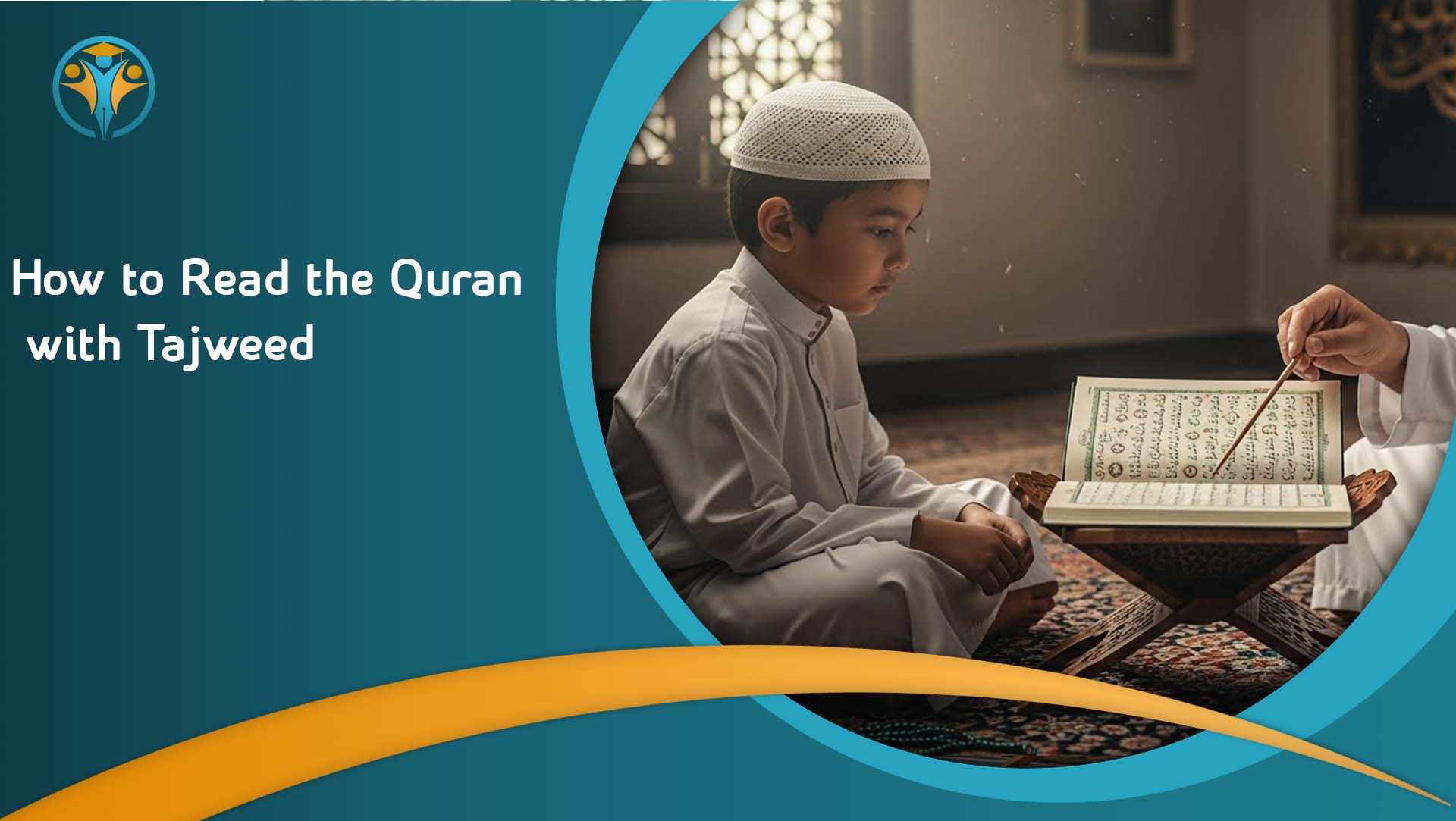
Learning to read the Quran with Tajweed is a noble and rewarding journey that requires dedication, consistent practice, and proper guidance. Here’s a step-by-step guide to help beginners master basic tajweed rules usa and improve their Quranic recitation:
1. Seek Knowledge:
Start by learning the principles and rules of Tajweed. You can enroll in Tajweed classes at a local mosque or Islamic center, or use reputable online resources and courses to understand basic tajweed rules usa.
2. Learn the Arabic Alphabet:
Familiarize yourself with the Arabic letters, their pronunciation, and unique characteristics. Practice writing and pronouncing each letter correctly to build a solid foundation for applying basic tajweed rules usa in your recitation.
3. Practice Regularly:
Dedicate consistent time for Quranic recitation. Begin with short surahs or verses, focusing on applying the Tajweed rules accurately. Practicing aloud helps reinforce correct articulation, pronunciation, and rhythm, which is essential for mastering basic tajweed rules usa.
4. Listen to Recitations:
Listen carefully to skilled reciters who follow Tajweed principles. Observe their pronunciation, rhythm, and melody, and try to emulate their style. This will enhance your understanding and application of basic tajweed rules usa.
5. Recite with Intention and Reflection:
Approach your recitation with sincerity (niyyah) and focus on the meaning of the verses. Reciting with mindfulness and reverence strengthens both your spiritual connection and your adherence to basic tajweed rules usa.
6. Be Patient and Persistent:
Learning Tajweed is a gradual process. Do not get discouraged by mistakes or slow progress. With patience, persistence, and consistent practice, your recitation will improve steadily.
7. Supplicate for Guidance:
Ask Allah for help and guidance in your journey of learning Tajweed. Pray for proficiency in reciting His Quran with accuracy, beauty, and sincerity, and trust that your efforts will be blessed.
Frequently Asked Questions (FAQ) – Basic Tajweed Rules USA
Some readers ask many questions about the topic Basic Tajweed Rules USA. Here are some of those frequently asked questions:
1. What are the Basic Tajweed Rules?
The Basic Tajweed Rules are guidelines that help learners pronounce Quranic letters correctly, observe proper pauses, and follow correct recitation rhythm. They include rules like Madd (elongation), Qalqalah (echoing sounds), Ikhfa (hiding), and Idgham (merging letters).
2. Why is learning Tajweed important?
Tajweed ensures the Quran is recited as revealed, preserving its meaning, beauty, and spiritual impact. Correct recitation is a key part of respecting the sacred text.
3. Who can learn Tajweed in the USA?
Anyone interested in Quranic recitation—children, teenagers, and adults—can learn Tajweed through structured programs like those offered by Super Muslim Academy.
4. How long does it take to learn the basics?
It varies depending on practice and dedication. Most learners can grasp the fundamental rules within a few weeks to a few months with regular study.
5. Are there online classes available?
Yes, many academies in the USA, including Super Muslim Academy, offer both in-person and online classes for flexible learning.
6. Can Tajweed be self-taught?
While self-study is possible, guidance from a qualified teacher ensures correct pronunciation, proper application of rules, and faster progress.
7. Do I need to know Arabic to learn Tajweed?
Basic Arabic reading helps, but it is not mandatory. Tajweed courses often teach pronunciation and rules alongside Arabic letters.
In conclusion, mastering the Basic Tajweed Rules usa is essential for accurate and beautiful Quranic recitation. Through the guidance and structured programs offered by Super Muslim Academy, learners can develop a strong foundation, improve their pronunciation, and gain confidence in their recitation.
Applying these rules consistently not only enhances reading skills but also strengthens the spiritual connection with the Quran. By practicing regularly and following the correct guidelines, every student can achieve clarity, precision, and devotion in their recitation, making the study of Tajweed a rewarding and transformative experience.

You may also like

Tajweed Rules of the Quran UK Essentials 2026